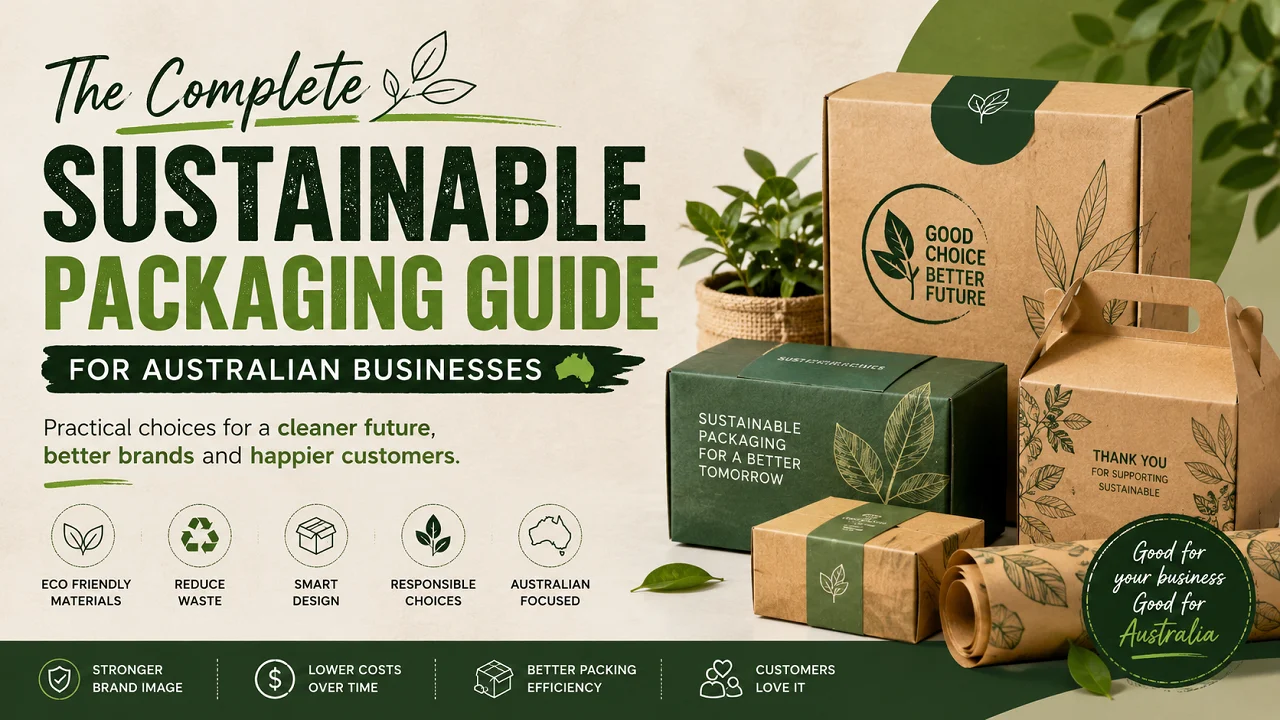
Choosing sustainable packaging can help your business reduce waste while creating a better experience for customers. It can also support a cleaner brand image and make everyday packing more efficient. This guide explains the main materials box styles printing methods and design choices available to Australian businesses. You can also request a free quote for packaging made to suit your products.
Quick Summary
If you are short on time here are the main points covered in this guide.
- Understand what sustainable packaging really means.
- Compare recyclable compostable and biodegradable packaging.
- Learn which packaging materials suit different products.
- Explore sustainable box styles and printing methods.
- Reduce packaging waste through smarter design.
- Choose packaging that suits Australian businesses.
- Build a practical packaging strategy for long term growth.
What Is Sustainable Packaging?
Sustainable packaging is designed to reduce its impact on the environment throughout its useful life. This includes the materials used to make it and the amount of energy required during production. It also considers transport storage reuse and disposal.
A sustainable pack does not need to look plain or unfinished. It can still feature sharp printing strong branding and a professional structure. The key is to make practical choices that avoid unnecessary waste.
For many Australian businesses this means using recyclable paper based materials. It can also mean selecting the correct box size and removing plastic parts that are not needed.
There is no single packaging option that suits every product. A lightweight retail carton may work well for cosmetics while a stronger corrugated box may be needed for delivery. The best choice should protect the item without using more material than required.
Why Sustainable Packaging Matters for Australian Businesses
Customers are paying closer attention to the packaging used by the brands they support. Many people want products that arrive in neat packaging without layers of waste.
Businesses are also looking for ways to manage costs and improve packing operations. A box that fits properly can reduce filler use and save storage space. It may also lower the chance of products being damaged during delivery.
Sustainable packaging can support these goals while helping a business present itself in a more thoughtful way.
It Can Reduce Unnecessary Waste
Oversized cartons often need extra paper or plastic filler. They also take up more room during transport. Choosing a suitable size can reduce both issues.
A simpler structure may use less board while still providing the protection your product needs. Small changes across a large order can make a noticeable difference.
It Can Improve Brand Perception
Packaging often forms part of the first impression. A clean kraft box or a well designed recyclable carton can show customers that your business has considered its packaging choices.
This can be especially useful for natural skincare brands handmade product sellers eco focused retailers and Australian small businesses.
It Can Make Packing More Efficient
A box made to suit the product is usually easier to assemble and pack. It reduces empty space and can help staff work faster.
Flat packed cartons may also use less warehouse space before they are needed. This is helpful for businesses that manage stock in smaller work areas.
It Can Support Long Term Business Goals
Sustainable packaging is not only about following a trend. It can form part of a wider plan to reduce waste improve operations and build a more consistent brand.
The right approach should be realistic for your budget and your products. Customers should be able to understand it without confusion.
Sustainable Packaging in Australia
Sustainable packaging continues to receive more attention across Australia as businesses and customers look for practical ways to reduce packaging waste. Better material choices and smarter box designs are becoming a normal part of retail and ecommerce packaging.
- Many Australian shoppers prefer packaging that is easy to recycle.
- Businesses are reducing oversized boxes to lower shipping costs and material waste.
- Paper based packaging continues to replace unnecessary plastic in many industries.
These changes show that sustainable packaging is becoming part of everyday business rather than a short term trend.
Main Features of Sustainable Packaging
Sustainable packaging usually combines several practical features. A box does not need to meet every point to be a better choice. The goal is to improve the areas that matter most for your business.
- Made from recyclable or recycled materials
- Designed with minimal excess board
- Simple for customers to recycle after use
- Built to match your product size and shape
- Produced in a size that reduces empty space
- Printed with a sensible amount of ink
- Free from unnecessary plastic windows or inserts
- Strong enough to prevent avoidable product damage
Sustainable Packaging Materials
The material has a major effect on the strength appearance and end use of a box. Paper based packaging is widely used because it can suit both retail and shipping applications.
Each material has its own benefits. The correct option depends on your product weight presentation goals and delivery method.
Kraft Paperboard
Kraft paperboard has a natural brown appearance that works well for simple and earthy packaging designs. It is often selected by handmade product brands organic businesses food sellers and eco focused retailers.
Logos and product details can be printed directly onto the surface. Dark colours and simple artwork often create the clearest result.
Kraft packaging can be used for soaps candles cosmetics gifts dry foods and small retail items. It is also suitable for sleeves trays and folding cartons.
Cardboard and Paperboard
Cardboard is a popular option for printed retail packaging. It has a smooth surface and can hold detailed graphics product information and brand colours.
It works well for lightweight products such as skincare electronics accessories toys and apparel items. The board can be cut and folded into many box styles.
Cardboard packaging can often be recycled when it is clean and free from unsuitable coatings or mixed material parts.
Corrugated Board
Corrugated board includes a fluted centre layer between outer liners. This structure provides extra strength and cushioning without making the box overly heavy.
It is commonly used for shipping boxes ecommerce packaging and products that need better support during transport.
Single wall corrugated board may suit standard deliveries. Double wall board can be used for heavier products or items that need extra protection.
Recycled Paperboard
Recycled paperboard is made using recovered paper fibres. It can be used for folding cartons sleeves dividers and other packaging parts.
The exact colour and surface can vary depending on the board. Some recycled materials have a natural finish while others have a coated printable side.
It can be a practical option for brands that want to increase the recycled content used in their packaging.
Rigid Board
Rigid board is thicker than standard folding carton material. It is commonly used for premium gift boxes presentation packaging and high value products.
These boxes are often kept by customers and reused for storage. This may extend the useful life of the packaging.
Rigid boxes are built with thicker board to create a stronger and more premium structure. They should be chosen when the product value and presentation needs justify the stronger structure.
Sustainable Packaging Material Comparison
| Material |
Best For |
Main Benefit |
Common Uses |
| Kraft Paperboard |
Natural brand presentation |
Simple earthy appearance |
Soap boxes sleeves and food cartons |
| Cardboard |
Printed retail products |
Sharp artwork and flexible box styles |
Cosmetics electronics and gifts |
| Corrugated Board |
Shipping and ecommerce |
Added strength and cushioning |
Mailer boxes and shipping cartons |
| Recycled Paperboard |
Brands seeking recycled content |
Uses recovered paper fibres |
Cartons dividers and sleeves |
| Rigid Board |
Premium packaging |
Strong structure that may be reused |
Gift sets jewellery and luxury products |
Recyclable vs Compostable vs Biodegradable Packaging
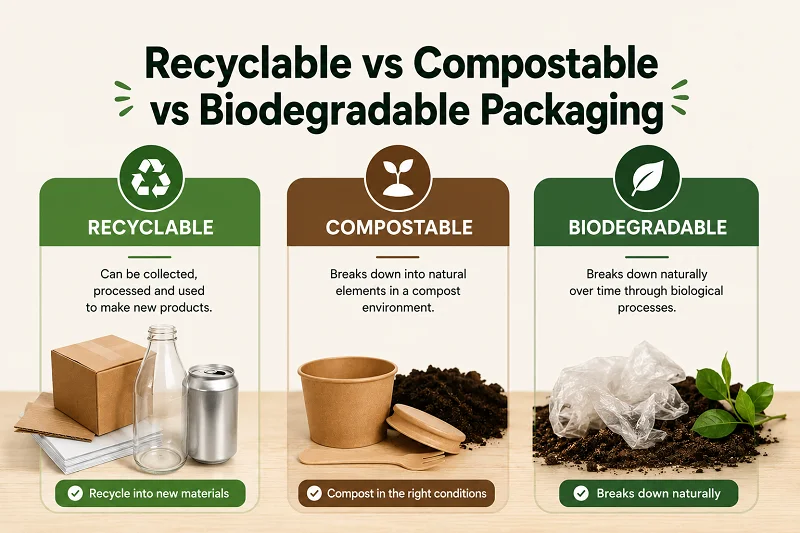
These terms are often used together but they do not mean the same thing. Businesses should understand the difference before making claims on their packaging or website.
Recyclable Packaging
Recyclable packaging can be collected and processed into material for new products where suitable recycling facilities are available.
Clean cardboard and paperboard are common examples. Recycling can become more difficult when the box includes plastic films heavy laminates foam or mixed material parts.
Compostable Packaging
Compostable packaging is designed to break down under certain composting conditions. Some products require commercial composting facilities while others may be suitable for home composting.
A compostable claim should be supported by clear product information. Customers also need simple disposal instructions.
Biodegradable Packaging
Biodegradable materials gradually break down through natural processes over time. The time required can vary widely depending on the material and surrounding conditions.
The word alone does not explain where the item should be placed after use. Clear guidance is still important.
| Packaging Type |
What It Means |
Customer Action |
Important Point |
| Recyclable |
Can be processed into new material |
Place in the correct recycling stream |
Mixed materials may need separation |
| Compostable |
Breaks down under composting conditions |
Use the stated composting method |
Not all compostable packs suit home composting |
| Biodegradable |
Can break down through biological activity |
Follow the disposal instructions |
Breakdown time depends on conditions |
How to Choose the Right Packaging Material
The most sustainable option is not always the thinnest board or the box with the least material. Packaging must still protect the product properly.
If a weak box causes an item to break then the product may need to be replaced and shipped again. This creates more waste and extra transport.
Consider the following points before choosing a material.
- The weight of the product
- The level of protection required
- Whether the box is for retail or delivery
- The distance the product will travel
- Storage conditions
- Customer expectations
- Printing requirements
- Available budget
Right Sizing and Material Reduction
Right sizing means creating packaging that closely matches the product dimensions. This can reduce empty space and the need for extra filler.
A properly sized box may also be easier to stack and store. More units can fit into a shipping carton and fewer cartons may be needed for larger orders.
The box should not be so tight that the product becomes difficult to pack. Space may still be needed for a protective insert or a small movement allowance.
Measure the Product Carefully
Measure your product from the longest side to the widest point and its full height. Include any parts that extend from the main product.
When several items will be packed together you should also consider how they will be arranged inside the box.
Allow for Inserts
An insert can help hold the product in position. It may also reduce the need for loose filler.
Paperboard and corrugated inserts are practical options for many products. Moulded pulp may also suit selected applications.
Avoid Oversized Shipping Cartons
A large carton can appear wasteful when it contains a small item and a large amount of filler. It may also increase shipping volume.
Using a closer fitting carton creates a neater unboxing experience and can support more efficient transport.
Sustainable Box Styles
Box style affects the amount of material used and the way the packaging is assembled. Some structures are designed for retail shelves while others are built for shipping.
Tuck End Boxes
Tuck end boxes are commonly used for cosmetics skincare electronics accessories and other retail products.
They arrive flat and are folded into shape when required. This can help businesses save storage space.
Mailer Boxes
Mailer boxes are often made from corrugated board. They provide a secure structure for ecommerce orders subscription products and gift sets.
The lid is connected to the main box so separate tape may not always be required for light use. The exact closure should still suit the delivery method.
Sleeve Boxes
A printed sleeve can slide over a tray or plain carton. It provides space for branding without printing every part of the pack.
This may allow a business to use the same inner box across several product variations while changing the outer sleeve.
Two Piece Boxes
Two piece boxes include a separate lid and base. They are often used for gifts apparel cosmetics and premium product sets.
Lightweight paperboard styles can be supplied flat. Rigid versions provide a stronger presentation and may be kept for reuse.
Window Boxes
A window allows customers to view the product before buying. However the additional film may make the packaging harder to recycle if it cannot be removed easily.
A cut-out window without plastic may be a better option for some products. It gives a clear view of the product while maintaining a clean box design.
Shipping Boxes
Corrugated shipping boxes are designed to protect products during handling and transport. Regular slotted cartons are widely used because they are practical and easy to pack.
They can be produced in single wall or double wall board based on the product weight.
Box Style Comparison
| Box Style |
Best Use |
Storage Benefit |
Sustainable Design Tip |
| Tuck End Box |
Retail products |
Usually supplied flat |
Use the lightest suitable board |
| Mailer Box |
Ecommerce and gifts |
Can arrive flat packed |
Choose a close fitting size |
| Shipping Box |
Delivery and storage |
Stacks well before use |
Match the wall strength to the product |
| Sleeve Box |
Product ranges |
Sleeves take little space |
Reuse one inner box across several designs |
| Two Piece Box |
Premium presentation |
Depends on the structure |
Use rigid board only when needed |
Sustainable Protective Inserts
Protective inserts keep products from moving inside the box. They can reduce damage and improve the way items are presented.
Businesses should avoid adding an insert only for appearance. It should have a clear purpose and use a suitable amount of material.
Paperboard Inserts
Paperboard inserts suit lightweight products such as cosmetics soaps candles and small accessories. They can be cut with slots or folds to hold the product securely.
Corrugated Inserts
Corrugated inserts provide stronger support for heavier items. They are often used for electronics glass products automotive parts and shipping packs.
Moulded Pulp Inserts
Moulded pulp can be formed around the product shape. It is often used for bottles electronics and fragile items.
The design should be tested to confirm that it provides enough protection during storage and delivery.
Folded Card Dividers
Cardboard dividers can separate several products within one carton. They are useful for bottles jars small parts and product sets.
A simple divider may replace plastic trays or loose bubble wrap in some applications.
Eco Friendly Printing Options
Printing helps customers recognise your brand and understand the product. A sustainable design does not need to avoid printing completely.
The aim is to use printing in a clear and efficient way. Avoid covering every surface when the information does not add value.
| Printing Method |
Best For |
Main Benefits |
| Digital Printing |
Short production runs and product testing |
Produces detailed artwork without traditional printing plates. Makes it easy to update designs when product information changes. |
| Offset Printing |
Large production runs |
Delivers sharp detail and consistent colour across every box. Well suited to high volume packaging with reliable print quality. |
| Flexographic Printing |
Corrugated boxes and shipping cartons |
Ideal for logos handling instructions and simple graphics. A practical choice for high volume corrugated packaging. |
| CMYK Printing |
Full colour retail packaging |
Creates vibrant product images and colourful artwork with smooth colour transitions. |
| PMS Printing |
Brand colour accuracy |
Matches specific brand colours with excellent consistency. Commonly used for logos and corporate packaging. |
Sustainable Finishes and Coatings
Finishes can change the appearance and feel of a box. Some also add a surface layer that affects how the packaging is processed after use.
Businesses should choose finishes based on a real need. A simple uncoated carton may suit the product just as well as a heavily finished box.
Uncoated Packaging
Uncoated paperboard has a natural surface with little shine. It works well for minimal designs and kraft packaging.
The surface may absorb more ink than coated board so artwork should be prepared for the chosen material.
Water Based Coatings
A water based coating can add light surface protection and improve the appearance of printed packaging. The exact coating should be discussed with the packaging supplier to confirm suitability.
Matte and Gloss Lamination
Lamination can provide extra surface protection and create either a matte or glossy finish. The type of film used and the local recycling system can influence whether the packaging can be recycled.
Use it only when the product needs better moisture resistance or a specific presentation.
Spot UV
Spot UV adds shine to selected areas such as a logo or product name. It can create contrast while using less coating than a full surface finish.
Foil Stamping
Foil stamping adds a metallic detail to the packaging. It is commonly used for premium product names logos and decorative elements.
A small amount can create a strong visual effect without covering the full box.
Embossing and Debossing
Embossing raises part of the artwork while debossing presses it into the surface. These methods add texture without requiring additional printed colour.
How Packaging Design Can Reduce Waste
Sustainability begins during the design stage. A smart structure can reduce material before the box reaches production.
Use a Simple Structure
Complicated packaging may need extra panels magnets ribbons or plastic parts. These features can look impressive but they may not be necessary.
A simple box with strong artwork can create a professional result while using fewer components.
Remove Unnecessary Layers
Some products are packed in a bag and then placed inside a retail box before being packed in another delivery carton. Review each layer and decide whether it has a clear purpose.
Keep Materials Easy to Separate
Customers are more likely to dispose of packaging correctly when the materials are easy to identify and separate.
Plastic windows foam inserts and fabric ribbons can make this process harder. Paper based alternatives may be more suitable for many products.
Print Clear Disposal Instructions
Simple instructions can help customers understand what to do with the box after use. Keep the wording easy to read and avoid claims that may cause confusion.
Plan Product Variations Carefully
Businesses with several product flavours or colours may not need a completely different box for every version.
A shared outer carton with printed labels sleeves or stickers can reduce the risk of unused packaging stock.
Sustainable Packaging for Ecommerce Businesses
Ecommerce packaging needs to survive courier handling while still being easy for the customer to open. A weak box may result in damaged goods while an oversized box creates extra waste.
Corrugated mailer boxes and shipping cartons are common options for online orders. The correct style depends on the product size and weight.
Choose the Right Strength
Light products may only need a single wall box. Heavier or fragile items may require double wall board or internal support.
Reduce Loose Filler
A custom insert or smaller carton may reduce the need for loose paper and plastic filler.
Use One Box Where Possible
Some retail cartons are strong enough to be placed directly into a fitted shipping pack. In other cases a corrugated mailer may provide both presentation and delivery protection.
Make Returns Easier
For products with a higher return rate the box can be designed so customers can close and reuse it. This is common for apparel footwear and subscription products.
Sustainable Packaging for Different Industries
Cosmetics and Skincare
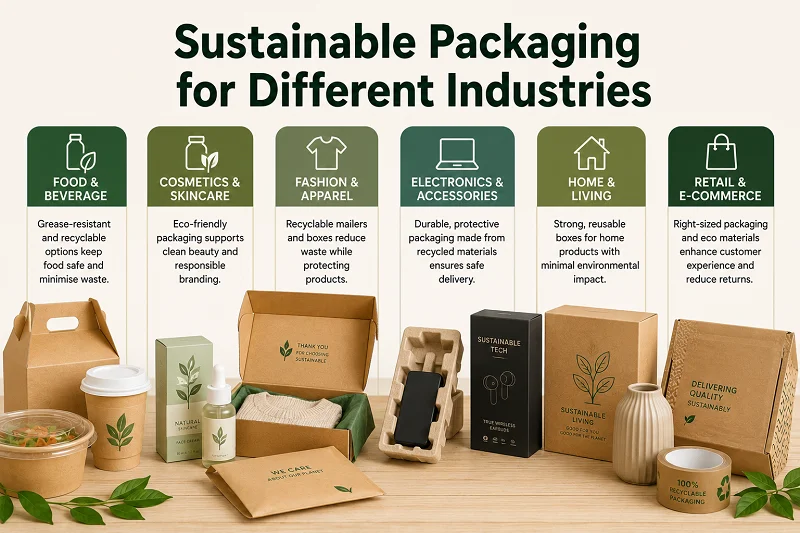
Cosmetic packaging should keep bottles jars and tubes secure while providing enough room for ingredients and product details.
A paperboard carton combined with a fitted insert helps products look organised on the shelf. Kraft packaging is a popular choice for organic and artisan skincare collections.
Food Products
Food packaging must suit the product and any required food contact conditions. Dry products may use paperboard cartons while delivery items may require grease or moisture resistance.
Businesses should avoid adding plastic windows unless product visibility is important.
Electronics
Electronics may need corrugated inserts or folded board supports to prevent movement. A fitted structure can reduce the amount of plastic foam used inside the box.
Clear safety information and product specifications can be printed on the outer packaging.
Apparel
Apparel products often need less protection than fragile goods. Lightweight mailer boxes tissue paper and simple sleeves may provide enough presentation.
The packaging should be easy to store and suitable for customer returns when needed.
Candles and Glass Products
Candles and glass containers need support around the base and sides. Corrugated dividers or paperboard inserts can help prevent movement.
The outer box should be tested for the product weight and delivery conditions.
Gifts and Subscription Products
Gift boxes and subscription packs often focus on presentation. A printed mailer or reusable two piece box can create a strong unboxing experience.
Avoid adding layers of decoration that customers will remove and discard straight away.
Retail Products
Retail packaging should protect the product and communicate key information. It should also fit neatly on shelves or display hooks.
A compact carton can reduce shelf space while making stock easier to organise.
Examples of Sustainable Packaging for Different Products
Different products need different packaging solutions. Choosing the right material and box style helps protect the product while reducing unnecessary waste.
Skincare Products
Skincare products often use printed cardboard cartons with paperboard inserts. Kraft packaging may also suit natural skincare brands that prefer a simple appearance.
Candles
Candles usually require strong cartons with fitted inserts to reduce movement during transport. Corrugated packaging may be preferred for larger gift sets and shipping orders.
Food Products
Food packaging should match the product requirements while keeping the structure simple. Paper based packaging is commonly used for dry food products and takeaway items.
Electronics
Electronics packaging often includes corrugated inserts that hold products securely without relying on excessive plastic protection.
Apparel
Apparel brands often choose lightweight mailer boxes or folding cartons that provide a neat presentation while remaining easy to store and recycle.
Ecommerce Orders
Ecommerce businesses commonly use corrugated mailer boxes or shipping cartons that fit the product closely and reduce the need for loose filler.
Sustainable Packaging for Small Australian Businesses
Small businesses may worry that sustainable packaging will require a large budget or a high order quantity. However practical improvements can be made without changing everything at once.
Start with the packaging you use most often. Review its size material and number of parts. Then identify one or two changes that can reduce waste.
Begin With a Manageable Order
A smaller custom run can help you test the size and design before ordering a larger quantity. This may reduce the risk of unused stock.
Use One Box for Several Products
A shared box size may suit several similar products when used with an adjustable insert or printed sleeve.
Keep Artwork Flexible
A simple branded design may remain useful for longer than packaging that includes short term offers or seasonal details.
Review Customer Feedback
Ask customers whether the packaging was easy to open and dispose of. Their comments can help you improve the next order.
Sustainable Packaging Certifications and Labels
Certifications and disposal labels can help businesses communicate packaging information. They should only be used when the materials and supply chain meet the relevant requirements.
FSC Certified Materials
FSC certification relates to responsible forest management and chain of custody requirements. Businesses interested in FSC certified packaging should confirm material availability and documentation with their supplier.
PEFC Certified Materials
PEFC also supports responsible forest management through an international certification system. Material options may vary between suppliers and board grades.
Recycling Labels
Recycling labels should give customers clear disposal guidance. The instructions need to match the complete packaging structure rather than the main box material alone.
A cardboard carton may need different guidance when it also includes a plastic window or foam insert.
Common Sustainable Packaging Mistakes
Choosing Packaging Based on Appearance Alone
A natural brown box may look sustainable but the full structure still needs to be considered. Coatings inserts adhesives and windows can all affect the final pack.
Using a Box That Is Too Large
An oversized box uses more board and often requires extra filler. It may also increase storage and transport space.
Reducing Material Too Far
A thin box is not a better choice when it cannot protect the product. Damage and replacement deliveries can create much more waste.
Adding Too Many Finishes
Several coatings foils and laminations can make a box harder to process after use. Choose one finish that adds real value instead of using every available option.
Making Unclear Environmental Claims
Broad words such as green natural or earth friendly can confuse customers when no explanation is provided.
Use clear and accurate wording that explains the material or disposal method.
Ordering Too Much Packaging
Large orders may reduce the unit price but they can also leave a business with outdated boxes. Consider expected sales artwork changes and storage space before placing the order.
Ignoring the Product Journey
A retail carton may look suitable in the shop but fail during delivery. Consider how the product will be packed stored handled and transported.
How to Build a Sustainable Packaging Plan
Step 1: Review Your Current Packaging
List every part of the pack including the box insert tape label sleeve and shipping carton.
Note which parts are needed for protection and which are only decorative.
Step 2: Identify the Main Problem
Your main issue may be an oversized box or too much plastic filler. It could also be damaged products or packaging that is difficult to recycle.
Focus on the problem that will create the biggest improvement.
Step 3: Select the Right Material
Choose a material based on product weight delivery conditions and printing needs. Avoid selecting a board only because it appears more sustainable.
Step 4: Improve the Box Size
Measure the product and allow only the space needed for packing and protection.
Step 5: Simplify the Design
Remove parts that do not improve protection product information or customer experience.
Step 6: Test the Packaging
Create a sample or prototype before approving the full production run. Check the fit closure strength and appearance.
Shipping boxes should also be tested under realistic handling conditions.
Step 7: Add Clear Customer Instructions
Explain how to separate and dispose of each part. Keep the wording short and place it where customers can see it.
Step 8: Review the Results
Track product damage packing time customer feedback and unused stock. Use this information to improve future orders.
How to Choose a Sustainable Packaging Supplier
A reliable packaging partner offers more than box production. They help you choose materials that suit your products suggest box styles that work in practice and share advice based on your packaging needs.
Look for a supplier that offers custom sizes design support quality printing and flexible order quantities. It is also helpful to request samples before approving a larger production run.
A reliable supplier should explain material options lead times printing methods and finishing choices clearly. This makes it easier to choose packaging that performs well without using unnecessary materials.
Sustainable Packaging Checklist
| Question |
Why It Matters |
| Does the box fit the product properly? |
A better fit can reduce board and filler use |
| Is every packaging part necessary? |
Removing extra parts can reduce waste |
| Can the materials be separated easily? |
Simple separation can improve disposal |
| Is the board strong enough? |
Suitable strength helps prevent damage |
| Are environmental claims clear? |
Clear wording helps build customer trust |
| Can the packaging be supplied flat? |
Flat packs can save storage space |
| Has the box been tested? |
Testing reduces the risk of poor fit or damage |
| Will the artwork remain useful? |
Flexible artwork may reduce outdated stock |
Sustainable Packaging Trends in Australia
Packaging design continues to move towards simpler structures and clearer material choices. Businesses are looking for solutions that work well without creating unnecessary waste.
Minimal Packaging
Minimal packaging focuses on fewer components and less visual clutter. It often uses simple artwork and a limited number of finishes.
Mono Material Packaging
Mono material packaging is made mainly from one type of material. This can make disposal easier because customers do not need to separate several parts.
Plastic Free Windows
Some brands are replacing plastic windows with open cut-outs or printed product images. This keeps the packaging structure simpler.
Reusable Packaging
Strong boxes can sometimes be reused for product storage or returns. Reuse works best when the packaging has a clear purpose after the product is removed.
Smarter Custom Sizes
Improved measurements and structural design are helping businesses reduce empty space. This supports more efficient packing and delivery.
Brands are providing more direct instructions on how customers should handle each packaging part after use.
Is Sustainable Packaging More Expensive?
The price depends on the material box style order quantity printing and finishes. Some sustainable options may cost more than basic packaging while others can reduce overall costs.
A smaller box may use less board and filler. Flat packed cartons may also reduce storage needs. A strong design can lower the chance of product damage.
Businesses should compare the complete packaging process rather than looking only at the unit price.
This includes packing time transport storage damaged products unused stock and customer experience.
How to Speak About Sustainability Honestly
Customers value clear information. Avoid making broad claims that cannot be explained.
Instead of saying a box is completely green you can describe the specific feature. You may state that the carton uses recycled content or that the paperboard can be recycled where facilities accept it.
Any claim should match the actual material and finishing choices used for the order.
It is also helpful to explain whether customers need to remove a label window or insert before disposal.
Why Choose Fine Packaging for Sustainable Packaging?
Fine Packaging creates custom packaging for Australian businesses across retail ecommerce food cosmetics electronics apparel and many other industries.
Every box can be made in a size that suits your product. This helps reduce unnecessary space and creates a more professional fit.
You can choose from kraft paperboard cardboard corrugated board and other material options based on your packaging needs.
Custom printing is available for logos brand colours product information and disposal instructions. Our team can also help you compare box styles inserts and finishes before production.
Options include low minimum order quantities wholesale pricing free design support and Australia wide delivery.
Make Every Packaging Choice Count
Sustainable packaging does not need to be complicated. Start with the size and material. Then review the structure printing inserts and disposal instructions.
The best packaging should protect your product and support your brand without using more material than needed. A practical design can reduce waste while improving storage packing and delivery.
Fine Packaging can create custom sustainable packaging for your retail products ecommerce orders gifts and shipping needs. Request your free quote today and enjoy free shipping across Australia. Email support@finepackaging.com.au to discuss your packaging requirements.
Frequently Asked Questions About Sustainable Packaging
What is sustainable packaging?
Sustainable packaging is made to reduce waste while still protecting the product. It often uses recyclable or recycled materials and is designed to use only the amount of packaging that is needed.
Which material is best for sustainable packaging?
The best material depends on your product. Cardboard works well for retail packaging while corrugated board is a better choice for shipping. Kraft paperboard is popular for brands that want a natural look.
Can sustainable packaging still be customised?
Yes. Sustainable packaging can be made in custom sizes with your logo brand colours and product information. You can also choose different box styles printing methods and finishing options to suit your business.
Is cardboard packaging recyclable?
Most cardboard packaging can be recycled when it is clean and free from materials that cannot be processed together. Always check your local recycling guidelines before disposal.
Does sustainable packaging cost more?
The cost depends on the material box style printing and order quantity. In many cases a well designed custom box can reduce waste improve packing efficiency and provide better long term value.
What is the difference between recyclable and compostable packaging?
Recyclable packaging is designed to be processed into new materials. Compostable packaging is made to break down under suitable composting conditions. They are different options and should be disposed of in the correct way.