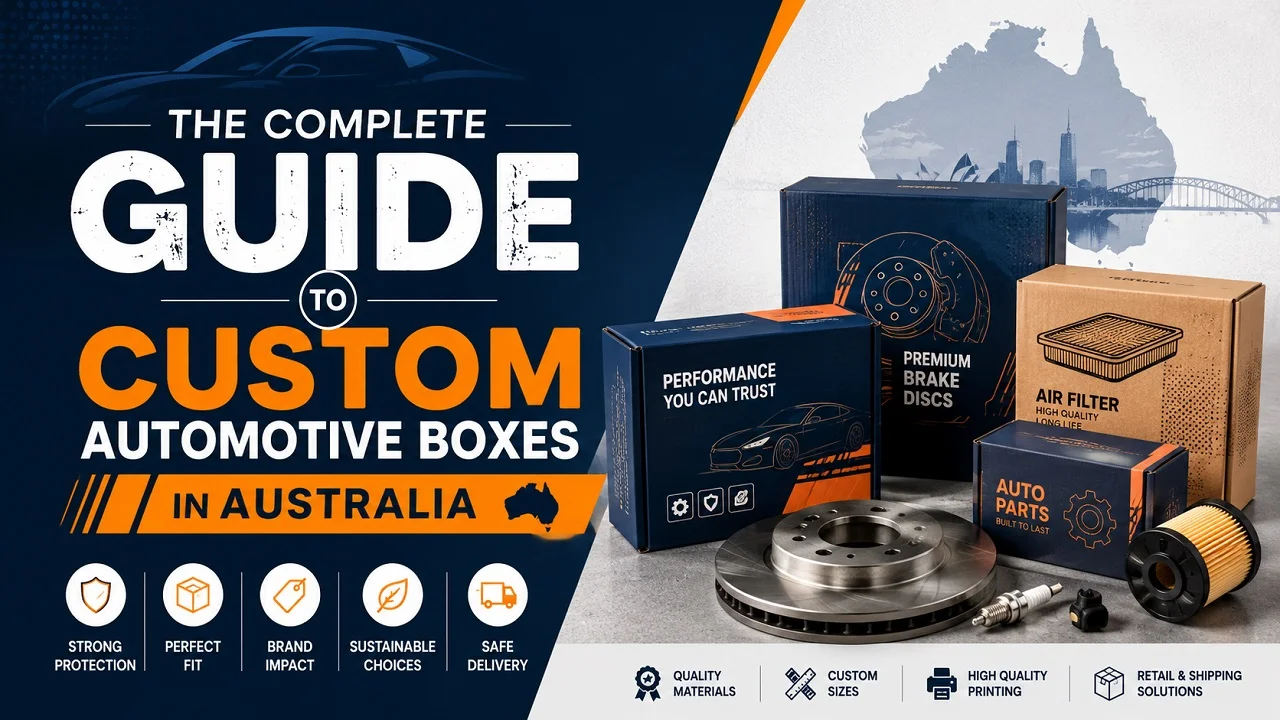
The Complete Guide to Custom Automotive Boxes in Australia
Automotive parts come in many different sizes, shapes and weights. Some components need extra protection during transport while others require clear labelling for retail display and inventory management. Choosing the right packaging helps keep products secure from the warehouse to the customer while supporting a professional brand image. This guide explains how custom automotive boxes work, the materials and box styles available, and what Australian businesses should consider when selecting packaging for automotive parts and accessories.
What Are Custom Automotive Boxes?
Custom automotive boxes are packaging solutions made to suit specific vehicle parts and accessories. Unlike standard cartons that come in fixed dimensions these boxes can be adjusted to match the size weight and shape of the item being packed.
They can be used for small components such as spark plugs and sensors as well as larger products including brake discs headlights filters and suspension parts. The packaging may also include printed branding product details handling instructions and protective inserts.
A better fit reduces unnecessary movement inside the box. It can also limit the need for excessive void fill and make the packing process more efficient.
Why Automotive Packaging Matters
Automotive parts often pass through several stages before reaching the end user. They may move from a manufacturer to a distributor and then to a retailer workshop or customer. Every movement increases the chance of scratches dents moisture exposure or impact damage.
Well-designed automotive packaging helps manage these risks. It keeps products organised during storage and provides a stronger layer of protection during transport.
Packaging also affects how customers view the product. A clean and professionally printed box can make a replacement part feel more reliable. This is especially important when several brands are competing for attention in an automotive shop or online marketplace.
Automotive Products That Need Custom Packaging
Almost any vehicle component can benefit from packaging made around its dimensions. The level of protection will depend on the weight shape and fragility of the product.
Small Mechanical Parts
Spark plugs bearings valves sensors switches fuses and similar components are often packed in compact folding cartons. These boxes help keep small parts together and provide enough space for part numbers barcodes and fitting information.
Filters and Maintenance Products
Oil filters air filters fuel filters and cabin filters need packaging that keeps out dust and helps the product maintain its shape. Cardboard cartons are a popular choice for retail shelves while corrugated boxes are better suited to bulk storage and shipping.
Brake and Suspension Components
Brake pads rotors control arms and suspension parts can be heavy. They usually need stronger board and a structure that will not collapse under the product weight. Internal dividers or shaped inserts may also be added to stop components from shifting.
Lighting and Electrical Parts
Headlights tail lights globes wiring kits and electrical modules can be sensitive to impact. Packaging for these parts often includes foam corrugated supports or moulded inserts to protect delicate surfaces and connection points.
Car Accessories
Phone holders cleaning kits seat accessories dash cameras and decorative items are often sold in retail stores. Their packaging needs to protect the product while clearly showing its features and brand.
Choosing the Right Packaging Material
The right material depends on how the product will be stored displayed and transported. It should be strong enough for the item without adding unnecessary weight or cost.
| Material |
Best For |
Main Benefit |
| Cardboard |
Small and lightweight retail parts |
Easy to print and simple to display |
| Corrugated board |
Heavy parts and delivery packaging |
Greater strength and impact resistance |
| Kraft board |
Eco-conscious automotive brands |
Natural appearance and recyclable appeal |
| Rigid board |
Premium accessories and presentation kits |
Strong structure and high-end finish |
Cardboard Boxes
Cardboard is a practical option for lightweight automotive products. It works well for spark plugs fuses filters and small accessories. The smooth surface also supports detailed printing which makes it suitable for retail shelves.
Corrugated Automotive Boxes
Corrugated board is made with a fluted layer between sheets of linerboard. The fluted layer improves the overall strength of the box while keeping it lightweight enough for everyday use.
It is commonly used for brake parts tools metal components and automotive products sent through courier networks. Single-wall corrugated board may suit medium-weight items while double-wall material can provide more support for heavier parts.
Kraft Packaging
Kraft board has a natural brown appearance that suits brands aiming for a simple and environmentally aware presentation. It gives you plenty of space for your logo product details and handling instructions while maintaining a clean professional appearance.
Rigid Boxes
Rigid Packaging is usually chosen for premium automotive accessories gift sets or specialist products. It gives automotive products a more premium presentation and can be combined with foam inserts magnetic closures or lift-off lids.
Custom Automotive Boxes vs Standard Packaging
| Feature |
Custom Automotive Boxes |
Standard Packaging |
| Size |
Made to fit specific automotive parts |
Limited standard sizes |
| Protection |
Designed to minimise movement and damage |
May require extra void fill |
| Branding |
Custom printing with logos and product details |
Minimal branding options |
| Retail Display |
Professional shelf presentation |
Basic appearance |
| Shipping Performance |
Better protection during transport |
Less secure for delicate or heavy parts |
How to Select the Correct Box Size
A box should leave enough room for the product and any necessary inserts without creating excessive empty space. A carton that is too large may allow the component to move around. A box that is too tight may put pressure on delicate areas or make the product difficult to pack.
Start by measuring the product at its widest longest and highest points. Include any cables fittings or uneven sections that may require extra clearance. The packaging manufacturer can then adjust the box dimensions to allow enough room for inserts and the selected board thickness.
For products with unusual shapes a sample or prototype can help confirm the fit before the full order is produced.
Box Styles for Automotive Parts
Different box structures offer different levels of convenience strength and presentation. Each box style offers different benefits so the best option depends on your product and how it reaches your customers.
Tuck-End Boxes
Straight tuck-end and reverse tuck-end cartons work well for smaller automotive parts. They are easy to assemble and provide a tidy retail appearance.
Auto-Lock Bottom Boxes
Auto-lock bottom boxes have a base that folds into place quickly. They are useful for products that need more support than a basic folding carton can provide.
Corrugated Shipping Cartons
Corrugated cartons are designed for storage and transport. They can be made in custom dimensions and may include reinforced walls for heavier items.
Mailer Boxes
Mailer boxes have a hinged lid and locking tabs. They are often used by Ecommerce businesses because they create a neat unboxing experience without needing a separate retail carton.
Two-Piece Boxes
Two-piece packaging features a separate lid that fits over a sturdy base to create a premium unboxing experience. It can suit premium accessories service kits and products that need a more refined presentation.
Sleeve Packaging
A printed sleeve wraps around a tray or plain box to give the packaging a more professional appearance. This style allows businesses to update branding or product information without changing the full packaging structure.
Protective Inserts for Automotive Components
Some automotive products need more than an outer carton. Inserts can hold the item in position and provide added protection around vulnerable areas.
Heavier components often use corrugated inserts to reduce movement and improve protection during handling and transport. Foam can cushion lighting products electronic modules and delicate accessories. Cardboard dividers help separate several items inside one box while moulded pulp offers a recyclable option for selected products.
The insert should support the product without making the packaging difficult to open. It should also allow staff or customers to remove the item safely.
Automotive packaging needs to do more than display a logo. It often carries important information that helps distributors workshops and customers identify the correct part.
Useful printed details may include:
- Brand name and logo
- Product name and part number
- Vehicle compatibility
- Barcode or QR code
- Installation guidance
- Safety warnings
- Handling and storage instructions
- Warranty details
- Country of origin
- Recycling information
Clear layout is important. A busy design can make essential information difficult to find. Product names part numbers and compatibility details should be easy to read at a glance.
Printing Methods for Automotive Packaging
Digital printing is often suitable for short runs prototypes or packaging with frequently changing artwork. It provides a practical way to produce detailed graphics without the setup required by some traditional methods.
Businesses ordering larger quantities often choose offset printing because it produces clean graphics and reliable colour consistency. Flexographic printing is commonly used on corrugated cartons and can be a cost-effective option for bold logos text and handling symbols.
The right method will depend on the quantity material artwork and finish required.
Finishing Options for a Stronger Presentation
Finishes can improve the appearance of automotive boxes and add protection to the printed surface.
Matte lamination creates a smooth and understated look. Gloss lamination adds shine and can make colours appear stronger. Spot UV adds extra shine to selected design elements such as your logo or product name to help them stand out. Foil stamping can add metallic detail to premium packaging while embossing creates a raised feature that customers can feel.
Finishes should match the product and its price point. A straightforward box with clear printing may be more suitable for workshop parts while premium accessories may benefit from added texture or shine.
Retail Packaging vs Shipping Packaging
Retail packaging is made to attract attention and communicate product information. It is usually lighter and more focused on printing and shelf presentation.
Shipping packaging is designed to handle movement stacking and delivery conditions. It often uses stronger corrugated board and may include cushioning or reinforced corners.
Some businesses use one box for both purposes. Others use a separate outer shipping box to protect the retail packaging while the product is in transit. The second option can preserve the retail packaging when products travel over long distances or pass through several distribution centres.
Storing Automotive Parts in the Right Packaging
Proper packaging helps protect automotive parts even before they are shipped. Strong boxes make products easier to stack in warehouses and reduce the risk of dust, moisture and accidental damage during storage.
Using boxes that fit the product correctly also helps keep shelves organised and makes inventory easier to manage. Clearly printed labels and part numbers allow staff to locate products more quickly and reduce picking errors.
How Australian Automotive Businesses Benefit from Custom Packaging
Custom automotive packaging supports more than just product protection. It helps businesses improve efficiency while creating a more professional experience for customers. Whether you supply parts to workshops, retailers or online buyers, the right packaging can simplify handling and strengthen your brand.
Automotive Parts Suppliers
Suppliers often manage hundreds of different products every day. Clearly printed boxes with part numbers, barcodes and product information make inventory easier to organise and reduce the risk of picking the wrong item.
Automotive Workshops
Mechanics regularly receive replacement parts from different manufacturers. Well-labelled packaging helps technicians identify components quickly and keeps products protected until they are ready for installation.
Online Automotive Stores
Ecommerce businesses rely on packaging that can handle courier networks and long-distance delivery. Strong custom boxes help reduce shipping damage while giving customers greater confidence when their orders arrive.
Retail Automotive Stores
Retail packaging needs to look organised on the shelf while providing customers with clear product information. Professional printing helps products stand out and allows buyers to compare specifications more easily.
Eco-Friendly Automotive Packaging
Australian businesses are paying closer attention to packaging waste. Choosing the right box size is one of the simplest ways to reduce unnecessary material. It also limits the amount of void fill needed inside the carton.
Recyclable cardboard and kraft board can be suitable for many automotive parts. Water-based inks and minimal lamination may also make the packaging easier to recycle depending on local facilities.
Reusable dividers and right-sized shipping cartons can further reduce waste across regular supply chains. Environmental claims should always be clear and accurate so customers understand how to dispose of the packaging properly.
Common Automotive Packaging Mistakes
Using a Box That Is Too Large
Oversized packaging allows the product to move and usually requires more filling material. It can also increase storage and freight costs.
Ignoring Product Weight
A box may look suitable but still fail when lifted or stacked. Material strength should be chosen according to the actual weight of the part.
Forgetting About Sharp Edges
Metal automotive components may have corners or edges that can cut through weak board. Reinforced sections or suitable inserts can help prevent this problem.
Printing Incomplete Product Details
Missing part numbers compatibility information or barcodes can create delays for retailers and workshops. All technical information should be checked before artwork approval.
Skipping Packaging Tests
A box should be tested under realistic conditions. This may include stacking handling vibration or drop testing depending on the product and delivery method.
How Custom Packaging Supports Automotive Brands
Consistent packaging makes a product range easier to recognise. Using the same logo colours layout and information structure across different parts can create a stronger brand presence.
Clear labelling also helps retailers manage stock and allows mechanics to find the correct component more quickly. For online orders a neat box can give customers greater confidence that the part is new genuine and handled with care.
Custom packaging can also be adapted as a product range grows. Different colours or printed codes may be used to separate models sizes or vehicle categories while keeping the overall brand style consistent.
What to Consider Before Ordering Automotive Boxes
Before requesting a quote gather as much product information as possible. This will help the packaging supplier recommend an appropriate structure and material.
- Exact product dimensions
- Product weight
- Number of items packed per box
- Retail or delivery requirements
- Preferred material
- Required inserts or dividers
- Printing colours and artwork
- Order quantity
- Storage and stacking conditions
- Expected delivery method
It is also worth checking whether you need a physical sample or digital mock-up before production. Reviewing the structure and artwork early can help avoid costly changes later.
Why Quality Automotive Packaging Is Worth the Investment
Good packaging is an investment in product protection customer satisfaction and brand reputation. A box that fits correctly helps reduce damage improves storage efficiency and presents your products in a more professional way.
Choosing the right material box style and printing method also supports smoother operations across the supply chain. From manufacturing and warehousing to shipping and retail display, well-designed automotive boxes help businesses work more efficiently while giving customers greater confidence in every purchase.
Choosing the Right Automotive Packaging
The best automotive box is not always the thickest or most expensive option. It is the one that suits the product weight shape sales channel and delivery conditions.
Start with accurate measurements and consider how the part may move during transport. Choose a material that provides enough strength and add inserts where the product needs extra support. Clear printing can then help customers and retailers identify the item without confusion.
Fine Packaging creates custom automotive boxes for spare parts accessories tools and other vehicle products across Australia. Choose custom dimensions strong materials professional printing and practical inserts to suit your packaging needs. Request a free quote today and explore packaging made for safer handling better organisation and a more polished brand presentation.
Frequently Asked Questions About Custom Automotive Boxes
What are custom automotive boxes used for?
Custom automotive boxes are used to pack car parts and vehicle accessories safely. They help protect products during storage shipping and retail display while making them easier to organise and identify.
Which material is best for automotive packaging?
The best material depends on the product. Cardboard works well for lightweight parts while corrugated board is a better choice for heavy items. Kraft and rigid board are also popular depending on the level of protection and presentation you need.
Why is custom packaging important for automotive parts?
Custom packaging helps reduce damage during transport and keeps products organised. It also gives customers clear product information and creates a more professional look for your brand.
Can automotive boxes be made in custom sizes?
Yes. Custom automotive boxes can be made to suit almost any part or accessory. A better fit helps reduce movement inside the box and provides better protection during handling and delivery.
Most automotive boxes include the product name part number brand logo barcode and handling instructions. Clear printing helps workshops retailers and customers identify the correct part more easily.