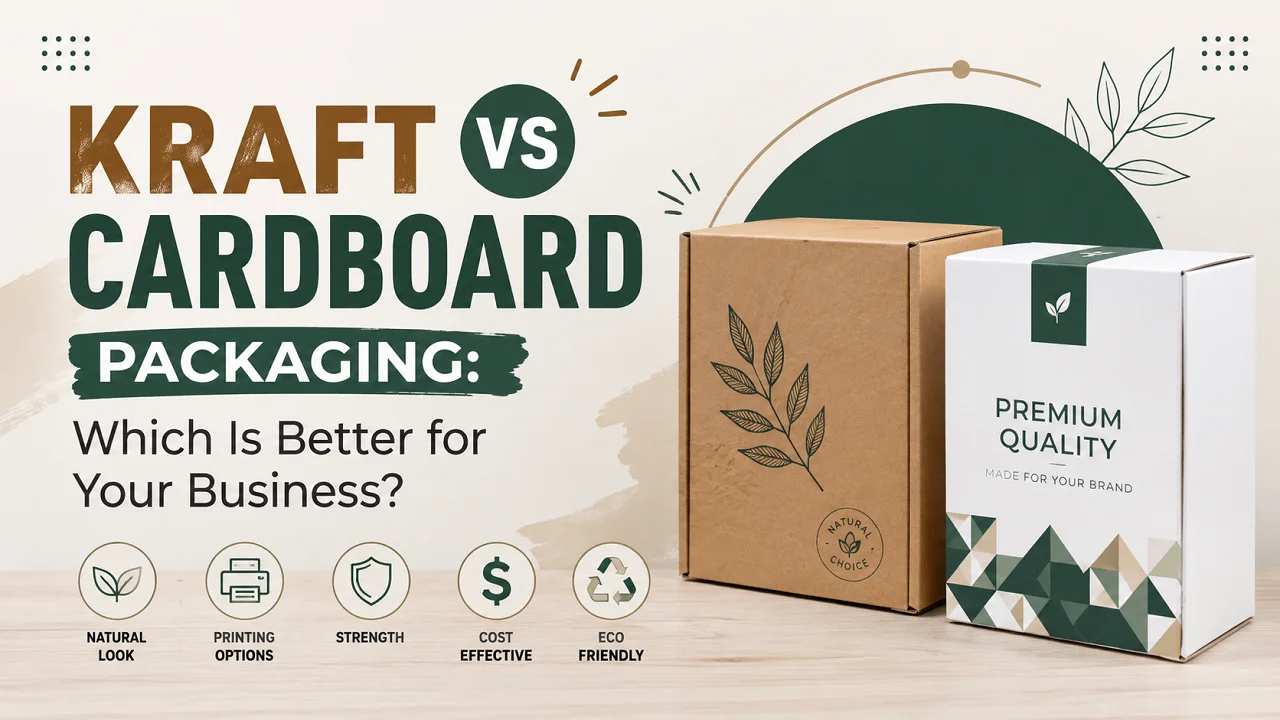
Choosing between kraft and cardboard packaging can feel simple until you start comparing strength, printing, appearance and cost. Both materials are widely used across Australia and each one suits different products. This guide breaks down kraft vs cardboard packaging in plain English so you can work out which option fits your brand. If you still need help, you can also request a free quote for your packaging project.
Quick Answer: Kraft packaging has a natural brown look and works well for brands that want simple packaging. Cardboard packaging offers a smoother surface and is better suited to colourful printing and detailed designs. Both are useful for custom packaging. The better choice depends on your product, brand style, printing needs and how the packaging will be used.
Kraft vs Cardboard Packaging: What Is the Difference?
Kraft and cardboard are both popular choices for product packaging. They can be made into many box styles and both can support custom printing. The main difference comes down to their appearance, surface finish and how they are commonly used.
Kraft packaging usually has a natural brown look. It often suits brands that want packaging with a simple or earthy feel. Cardboard offers more flexibility with colours and printed designs. It is commonly chosen when businesses want bright artwork or a cleaner retail presentation.
Neither material is automatically better. The right choice depends on what you are packing and how you want customers to see your brand.
What Is Kraft Packaging?
Kraft packaging is made using kraft paper or kraft paperboard. It is usually recognised by its natural brown appearance although white kraft options are also available.
The material has become popular with food brands, handmade businesses, skincare companies and retailers. Its simple appearance works well when a brand wants the packaging to feel less polished and more natural.
Kraft can be used for folding cartons, mailer boxes, sleeves, takeaway packaging and many other custom box styles. Logos and product details can also be printed directly onto the surface.
Some businesses leave most of the kraft surface visible and use only a simple logo. Others add full printed designs while keeping the natural texture as part of the overall look.
What Is Cardboard Packaging?
Cardboard packaging is a broad term that usually refers to paperboard packaging used for retail boxes and other lightweight product packaging.
It often has a smooth surface which makes it suitable for detailed printing. Businesses can use strong colours, product images, patterns and other brand elements without losing the clean look of the artwork.
Cardboard boxes are commonly used for cosmetics, soaps, electronics, gifts, food products, clothing accessories and many other retail goods.
The material can also be finished with matte lamination, gloss lamination, foil, embossing or spot UV when a more premium presentation is needed.
Kraft vs Cardboard Packaging: Quick Comparison
| Feature |
Kraft Packaging |
Cardboard Packaging |
| Appearance |
Natural and simple |
Clean and versatile |
| Printing |
Best for simple or bold designs |
Great for detailed artwork |
| Brand Style |
Natural and handmade look |
Retail and premium look |
| Customisation |
Good |
Very flexible |
| Common Uses |
Food, soap, gifts and handmade products |
Cosmetics, electronics, retail and gifts |
| Recyclability |
Often recyclable when kept free from unsuitable coatings |
Often recyclable depending on coatings and finishes |

Key Differences Between Kraft and Cardboard Packaging
The materials can look similar once they are turned into boxes. However, there are a few differences that can affect the final result.
Appearance
Kraft has a warm brown tone that gives packaging a relaxed appearance. The natural surface can become part of the design instead of being covered completely with ink.
Cardboard tends to provide a cleaner base for artwork. White cardboard is especially useful when accurate colours and sharp graphics matter to the brand.
If you want something simple and natural, kraft may suit your idea better. If you want colourful retail packaging, cardboard can give you more design freedom.
Printing Quality
Both materials can be printed. The result can look quite different though.
Kraft has a darker base colour. This can change how some printed colours appear. Dark logos and simple artwork often look great on kraft because they work with the natural surface.
Cardboard usually gives designers a brighter base. That makes it easier to reproduce colourful graphics and detailed product information.
For brands using photography or a wide range of colours, cardboard will often be the easier option.
Strength and Durability
Strength depends on more than whether the box is kraft or cardboard. Board thickness, box structure and product weight all play a part.
A well-designed kraft box can provide reliable support for many small products. Cardboard can also offer good protection for everyday retail goods.
For heavier items or products moving through courier networks, you may need corrugated packaging instead of standard folding board.
Customisation
Kraft boxes can be made in custom sizes and styles. You can add windows, inserts, sleeves and printed branding when required.
Cardboard offers the same sort of structural freedom while usually providing more options for decorative finishes.
If your design depends on foil, detailed printing or premium surface effects, cardboard may give you a little more flexibility.
Cost
The final price depends on size, quantity, board thickness, printing and finishing. That means it is difficult to say that kraft is always cheaper than cardboard or the other way around.
A simple kraft box with basic printing may be economical. A heavily printed cardboard box with several premium finishes may cost more.
The best way to compare price is to work from the same box size and quantity. You can then see how each material affects the overall packaging cost.
Which Material Is Better for Product Packaging?
Cardboard is often a practical choice for products that need strong shelf presentation. It works well when the box carries colourful artwork, instructions or detailed branding.
Kraft can be a better fit when the product already has a handmade or natural identity. Candles, soaps, organic products and small gifts can all work nicely with the simple kraft look.
Think about your customer before choosing. A luxury beauty product may suit smooth printed cardboard. A handmade soap range may feel more at home in a kraft carton.
Kraft vs Cardboard for Ecommerce Packaging
Ecommerce packaging needs to look good while also handling storage and delivery.
Kraft is widely used for ecommerce because its natural look suits mailers and simple shipping presentation. It can be printed with a logo on the outside while keeping the rest of the design clean.
Cardboard can also be used for ecommerce products. It works well when the product has its own retail carton inside a stronger shipping box.
If the package itself will travel through the courier network, strength should come before appearance. A corrugated mailer or shipping carton may be more suitable in that situation.
Kraft vs Cardboard for Food Packaging
Kraft packaging has become a familiar choice for bakeries, takeaway businesses and food brands because of its natural presentation.
Cardboard is also widely used for food boxes. It can provide more space for colourful branding and printed product information.
Food packaging needs to work with what is going inside it. Products that contain oil or moisture may require an appropriate barrier or liner, especially when the food sits directly against the packaging.
Choose the material based on the food first. Branding can come after that.
Which Is Better for Cosmetics and Retail Products?
Cardboard is a common choice for cosmetic and retail packaging because its smooth surface works well with detailed printing.
Brands can use strong colours and product information while keeping the box looking neat on the shelf. Premium finishes can also be added when the product needs a more upmarket feel.
Kraft can still work well for cosmetics. It is especially suitable for handmade skincare or brands that prefer a simpler visual identity.
The better option depends on how you want the customer to feel when they first see the product.
Kraft vs Cardboard Boxes for Shipping
Standard kraft and cardboard folding cartons are not always designed to act as outer shipping boxes.
Small and lightweight products may only need a standard carton for retail display. Products moving through freight or courier networks may need something stronger.
Corrugated board is commonly used when extra protection is required. It can be made with kraft outer liners or printed surfaces depending on the design.
Do not choose a shipping box based only on colour or appearance. Product weight and transport conditions should guide the decision.
Can Kraft and Cardboard Packaging Be Recycled?
Many kraft and cardboard packaging products can be recycled when the material is clean and accepted by local recycling services.
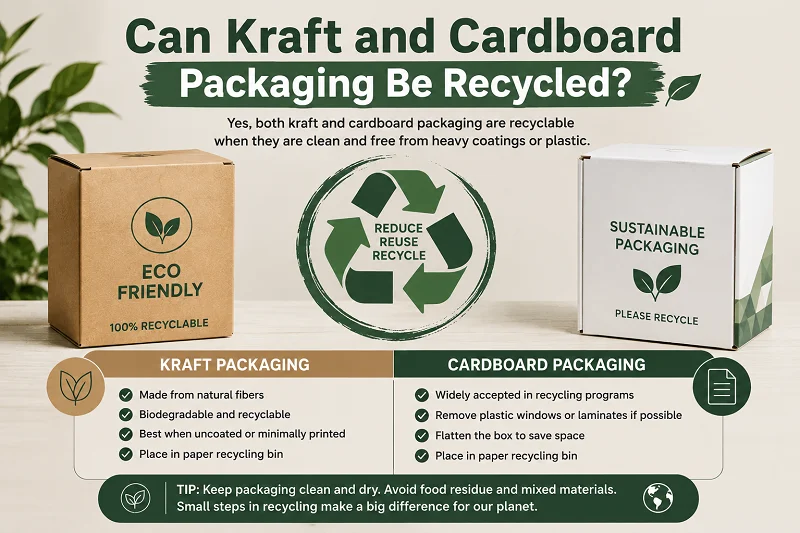
However, coatings and added materials can affect recyclability. Plastic windows, heavy laminates, magnets or certain decorative finishes may need to be separated before the board can be processed.
If sustainability is important to your business, keep the design practical. Use only the finishes you need and ask your packaging supplier about suitable material options.
Kraft vs Cardboard Packaging for Branding
Your packaging material can affect how people read your brand before they even open the box.
Kraft often gives off a simple and relaxed feel. It can suit small businesses and brands that want the packaging itself to look less processed.
Cardboard creates a more open canvas. It can be printed from edge to edge with colours, graphics and product information.
There is no right style for every brand. The material should support the message you already want to send.
How to Choose the Right Packaging Material
Start with your product rather than the box design. Look at its size, weight and how easily it can be damaged.
Next, think about where the box will be used. Packaging made for a retail shelf has different needs from a package that will travel across Australia through a courier network.
| Choose Kraft When |
Choose Cardboard When |
| You want a natural look |
You want bright printed colours |
| Your artwork is simple |
Your artwork has more detail |
| The natural board is part of your branding |
You want a clean retail finish |
| You want understated packaging |
You plan to use premium finishes |
After that, compare printing requirements and budget. These points will usually make the decision much easier.
Expert Tip: Do not choose kraft or cardboard based on appearance alone. Think about the product weight, printing needs, box style and how the packaging will be handled. A material that looks great on a retail shelf may not be the best choice for a product that needs to travel through a courier network.
Kraft or Cardboard: Which Should Your Business Choose?
There is no universal winner in the kraft vs cardboard packaging debate.
Kraft works well when you want the material to become part of the overall design. Its brown surface gives products a natural look without needing much extra decoration.
Cardboard is a strong option when branding takes centre stage. Its smooth printing surface gives you more room to work with detailed graphics and brighter colours.
Some businesses even use both. A product may sit inside a printed cardboard carton and then be packed into a kraft ecommerce mailer for delivery.
The best material is simply the one that matches your product and the way your customers buy it.
Need Help Choosing Between Kraft and Cardboard?
Choosing packaging is easier when you can compare options around the actual product. Fine Packaging works with Australian businesses looking for custom sizes, box styles, printing and material choices. Whether you prefer the natural feel of kraft or the clean surface of cardboard, the box can be built around your product and branding rather than forcing your product into a standard pack.
Ready to Find the Right Fit for Your Product?
Your packaging should make sense for the product inside and the people buying it. Fine Packaging can help you explore kraft and cardboard options based on your size, design and packing needs. Request a free quote today and discuss your custom packaging with our team. You can also enjoy free shipping across Australia on eligible custom packaging orders.
Frequently Asked Questions
Is kraft packaging better than cardboard?
Not always. Kraft is a good choice when you want a natural look. Cardboard may suit you better when you need brighter colours or detailed printing. The right option depends on your product and brand.
Is kraft stronger than cardboard?
Strength depends on the type and thickness of the board. Box construction also matters. Either material can work well for lightweight products when the right grade is used.
Can I print my logo on kraft boxes?
Yes. Logos and other artwork can be printed on kraft boxes. Simple designs often work particularly well because the natural brown surface remains visible around the print.
Which material is better for retail packaging?
Cardboard is often chosen for retail products because it handles detailed printing well. Kraft can also work for retail when your brand suits a more natural presentation.
Are kraft and cardboard boxes recyclable?
Many are recyclable when they are clean and free from materials that interfere with recycling. Coatings, windows and other added parts may affect how the box should be disposed of.