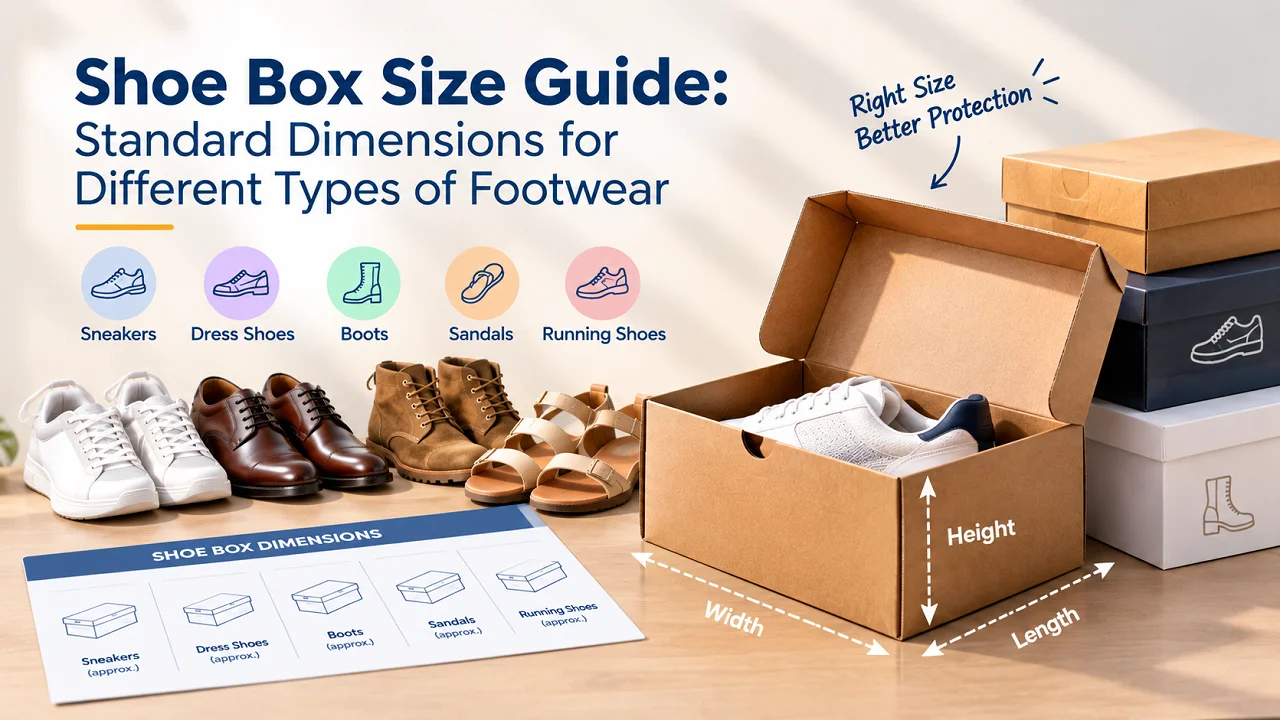
Finding the right box for a pair of shoes sounds simple until you place a slim sandal beside a chunky runner or a tall leather boot. Each style takes up a different amount of room and needs a slightly different approach to packing. This guide explains common shoe box sizes in millimetres and centimetres so Australian footwear brands can plan a practical fit. It also covers product measurement, internal clearance and the extra space needed for tissue paper or inserts.
Quick Answer: There is no single standard size that suits every pair of shoes. As a general starting point, an adult shoe box may measure about 330 x 200 x 120 mm internally. Children's footwear usually fits a smaller box, while sneakers and boots often need extra width or height. The actual packed pair should always be measured before a production size is approved.
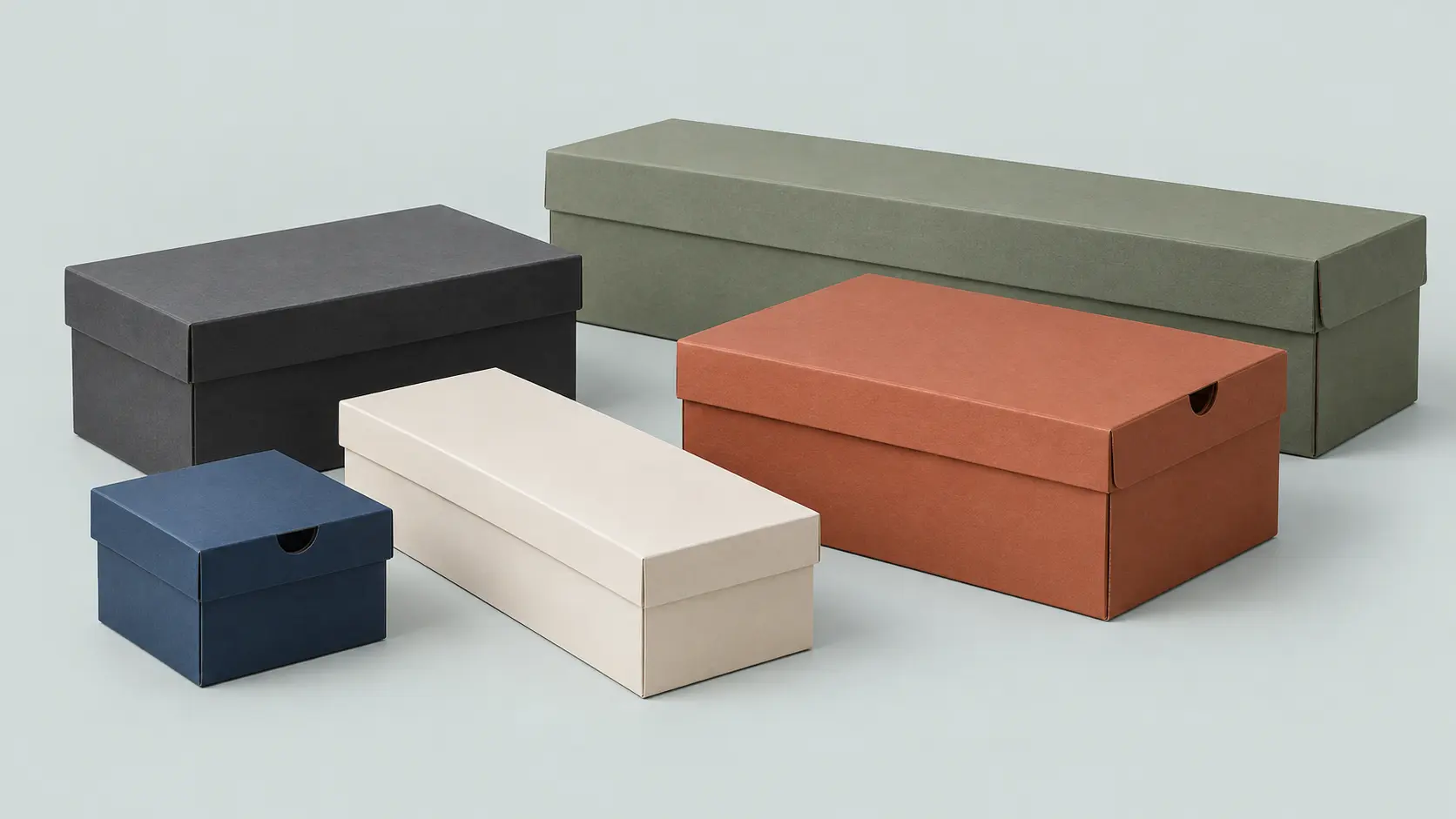
Is There a Standard Shoe Box Size?
People often ask for the standard shoe box size as though every footwear company works from the same template. In practice, there is no universal box that fits every shoe category or brand. A size 9 running shoe can take up more room than a size 9 dress shoe because its sole, upper and heel have a different shape.
Packing position changes the required space as well. Some pairs sit side by side, while others are placed heel to toe or slightly overlapped. The figures in this guide are useful starting ranges rather than compulsory standards. Final shoe box dimensions should always come from a physical product packed with the tissue, inserts and accessories that will be included in the order.
Shoebox Sizes in Australia: What Local Brands Should Know
Australian brands should plan packaging around their own footwear rather than copy a box made for another market. Shoe labels may use AU, UK, US or European sizing, yet two equivalent sizes can still have very different outside shapes. Use millimetres in the packaging brief and check the packed external box against the current limits and pricing method used by your chosen Australian carrier.
Common Shoe Box Sizes at a Glance
The table below provides practical internal size ranges for common footwear categories. Each measurement is written as length x width x height and should be checked against the actual packed shoes before an order is placed.
| Footwear type |
Suggested internal dimensions in mm |
Dimensions in cm |
Planning note |
| Baby shoes |
180-220 x 120-150 x 70-90 mm |
18-22 x 12-15 x 7-9 cm |
Allow for tissue and small accessories |
| Children's shoes |
230-280 x 150-180 x 90-110 mm |
23-28 x 15-18 x 9-11 cm |
Check the largest size in the range |
| Women's flats |
280-320 x 170-190 x 90-110 mm |
28-32 x 17-19 x 9-11 cm |
A shallow box may be suitable |
| Women's heels |
290-330 x 180-210 x 110-140 mm |
29-33 x 18-21 x 11-14 cm |
Protect the heel and decorative details |
| Men's dress shoes |
330-360 x 200-220 x 120-140 mm |
33-36 x 20-22 x 12-14 cm |
Toe shape can affect the required width |
| Adult sneakers |
330-370 x 210-240 x 120-150 mm |
33-37 x 21-24 x 12-15 cm |
Chunky soles usually need more room |
| Work shoes |
340-390 x 220-260 x 130-170 mm |
34-39 x 22-26 x 13-17 cm |
Consider the weight and sole depth |
| Ankle boots |
340-400 x 240-280 x 140-200 mm |
34-40 x 24-28 x 14-20 cm |
Measure the widest packed position |
| Tall boots |
500-650 x 300-380 x 120-180 mm |
50-65 x 30-38 x 12-18 cm |
Avoid crushing the shaft during packing |
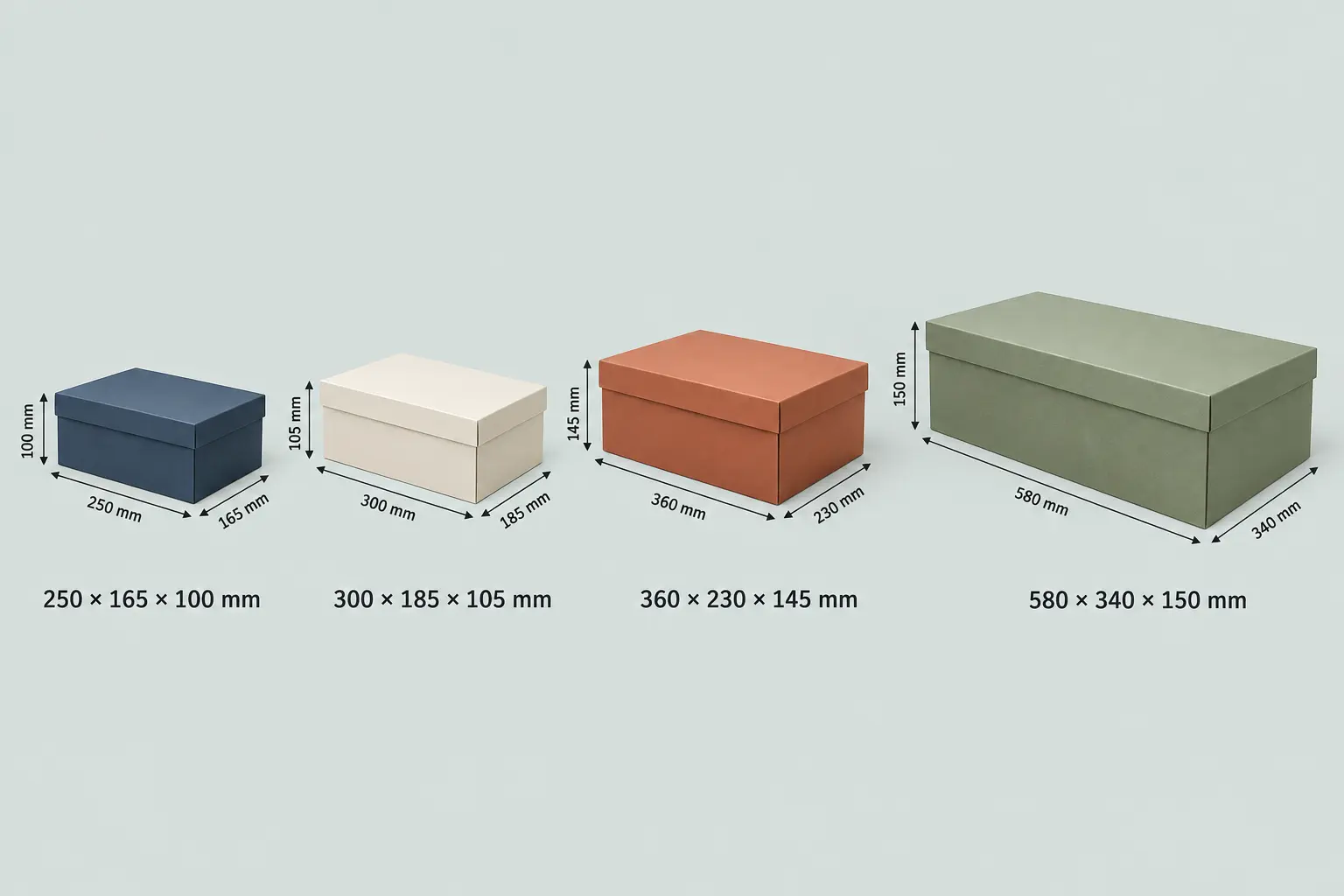
Note: These ranges are intended for planning and are not a substitute for sampling. Two products sold under the same footwear category can have very different proportions. A lightweight canvas sneaker and a heavy trail runner, for example, should not automatically be assigned the same box.
An average shoe box size for adult footwear is often around 330 x 200 x 120 mm internally. This is a useful reference for early quotes and storage planning, but it is not a guaranteed fit for every men's or women's style.
Length is usually determined by the outsole, while width depends on how the pair is arranged inside the box. The height needs to cover the upper without pressing it down. Platform soles, padded collars, large buckles and pronounced heels can all increase the room needed compared with a slim everyday shoe.
Adding a large safety margin is not always the answer. Too much spare room allows the shoes to move during handling and takes up extra shelf and shipping space. When comparing shoe box sizes, use internal measurements to assess product fit and external measurements to plan shelving, freight and master boxes.
Men's Shoe Box Dimensions
Common men's shoe box dimensions may begin at roughly 330 x 200 x 120 mm and increase for larger sizes or bulkier designs. A classic leather lace-up often needs less width and height than a running shoe with a broad sole. Work footwear can require a noticeably stronger and deeper box.
Do not rely on the printed shoe size alone. Australian footwear may be marked in AU, UK, US or European sizes. That number describes the intended fit for the wearer rather than the full external length, width or volume of the finished product.
For a men's range, measure the longest outsole and arrange both shoes in their intended packing position. Check the widest and highest points after the tissue has been added. A broad product range may work better with two shoe box sizes than one oversized box used for every pair.
Women's Shoe Box Dimensions
Typical women's shoe box dimensions vary widely because the category covers flats, trainers, wedges and high heels. A flat may fit comfortably in a box around 290 x 180 x 100 mm, while a structured heel or platform can need extra height and width even when its outsole is shorter.
Heel placement needs careful attention. A fine heel can rub against the opposite shoe or touch the box wall when the pair is packed too tightly. Buckles, bows and metallic trims should not press against the lid either. The most suitable women's shoe box sizes come from the packed pair rather than a broad gender category.
Children's Shoe Box Sizes
Children's shoe box sizes are generally shorter and narrower than adult boxes. A useful starting range is 230-280 mm long, 150-180 mm wide and 90-110 mm high. Baby shoes may need an even smaller format.
Children's footwear changes quickly across age groups, so group the range by actual measurements rather than treating a toddler sandal and a junior school shoe as one packaging size. Small boxes still need enough strength for safe stacking. For online sales, also check how the retail box sits inside its outer mailer.
Sneaker Box Dimensions
Modern sneakers often have thick midsoles, wide toe areas and padded uppers. For that reason, common sneaker box dimensions may sit between 330-370 x 210-240 x 120-150 mm. Oversized basketball shoes and high-top designs can require even more height.
Collectors often keep the original packaging, which makes strong board and an accurate fit particularly important for premium releases. Measure high-tops with the collar in its natural packed position and include tissue, spare laces and product cards in the trial pack. Suitable shoe box sizes protect the sneakers without relying on excessive filler.
Boot Box Dimensions
There is more variation in boot box dimensions than in most other footwear packaging. An ankle boot might fit within 340-400 x 240-280 x 140-200 mm, while a tall boot may need a box 500-650 mm long depending on its shaft and packing position.
Decide whether the boots will lie flat or use another arrangement. Folding a soft shaft may be acceptable for some styles, but it can mark leather or leave creases in structured materials. Boots are often heavy, so board strength matters as much as the selected cardboard shoe box sizes. Test the packaging with a finished pair and give the total packed weight to your supplier.
Shoe Packaging Sizes for Different Products
A footwear range may include several shapes but that does not mean every model needs its own box. Well-planned shoe packaging sizes can cover groups of similar products. The aim is to find a small number of useful sizes without compromising fit.
Start by recording the packed length, width and height of every style, then group products with similar measurements. Keep unusual items in a separate group when necessary. A tall boot should not dictate the box used for flats, just as a broad work shoe should not set the size for a narrow dress range.
For each proposed box, check how much room remains around the smaller products assigned to it. Minor variation can be managed with tissue or a simple insert, while large gaps suggest another size may be worthwhile. Fine Packaging can produce coordinated formats with consistent colours, logos and finishes across the range.
How to Measure a Shoe Box Correctly
Knowing how to measure a shoe box prevents confusion during quoting and artwork setup. Packaging dimensions are normally written in the order length x width x height.
- Measure the length. This is usually the longest side of the box opening.
- Measure the width. Take the shorter measurement across the opening.
- Measure the height. Measure vertically from the base to the top edge.
- Confirm whether the figures are internal or external. Internal dimensions describe usable product space. External dimensions describe the box's total footprint.
- Use millimetres. Millimetres reduce ambiguity and make small adjustments easier to communicate.
When checking an existing box, measure the inside with the lid removed. Board thickness creates a difference between internal and external shoe box sizes, especially with corrugated or rigid materials. Write the result as 340 x 220 x 130 mm and label it clearly. A photo or simple sketch is helpful when the opening or structure is unusual.
How to Measure Shoes Before Choosing the Box
The shoes should guide the box rather than being forced into a convenient stock size. Place the pair in the exact position intended for packing and add any socks, tissue, stuffing, care cards, spare laces or other items supplied with the product.
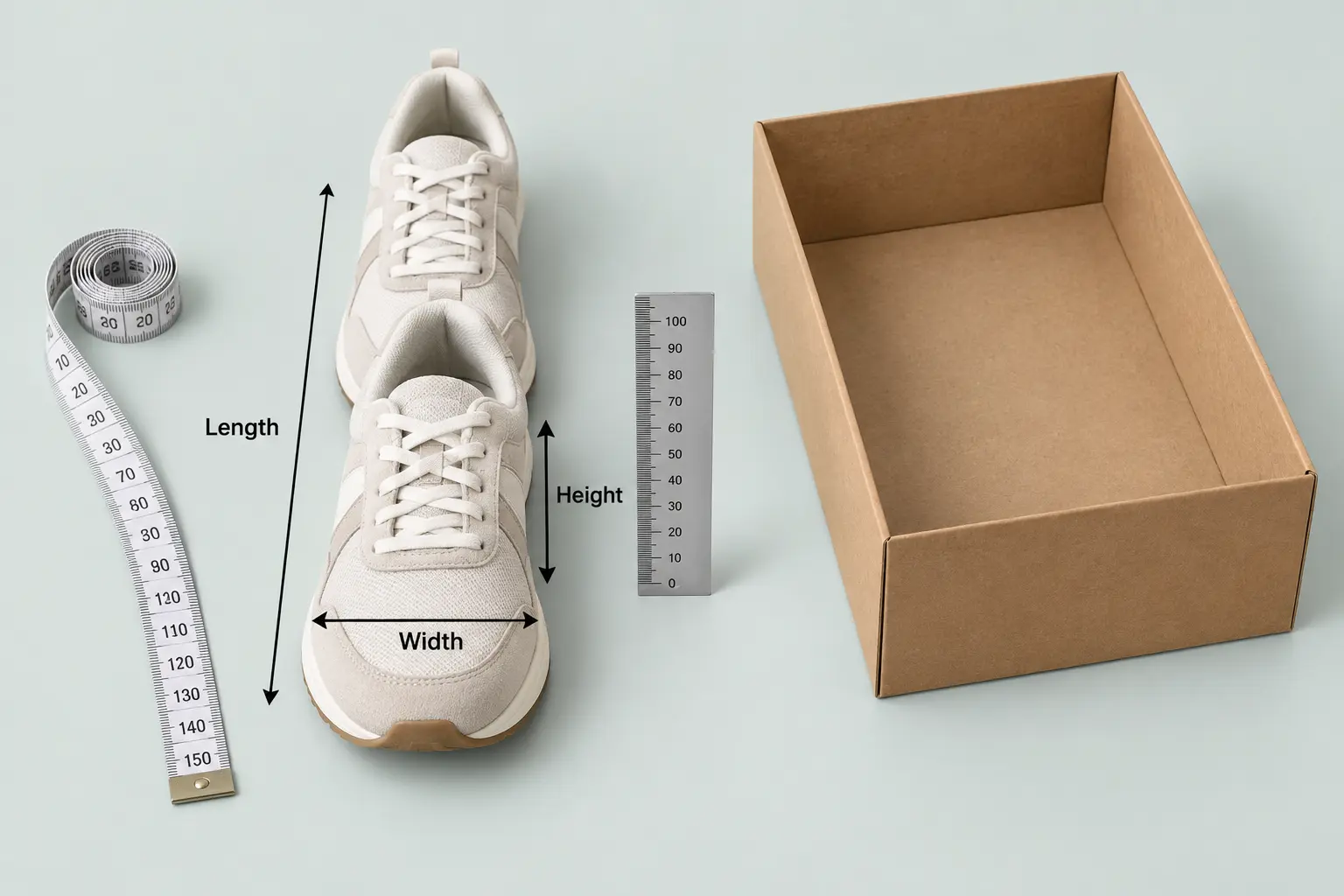
Measure the total occupied length, width and height at the widest and highest points. Do not follow the outline of only one shoe because the second shoe changes the overall footprint. Add a modest working allowance so packing staff can place the pair inside without scraping the uppers or forcing the lid shut.
There is no clearance figure that works for every design. Begin with a few millimetres around close surfaces, then allow more room where tissue, inserts or delicate details require it. Gently turn the closed sample from side to side. The pair should not feel jammed in place or slide freely from end to end. Open the box and check for pressure marks before approving the shoe box sizes.
Expert Tip: Test a plain sample with the largest pair in your range and pack it with the same tissue, insert and accessories planned for the finished order. This quick check can reveal tight corners, unwanted movement or wasted space before printing begins.
Internal and External Shoe Box Dimensions
Internal and external measurements serve different purposes. Internal shoe box dimensions in mm determine whether the footwear will fit, while external dimensions are used for shelving, master boxes, pallets and delivery calculations.
A box quoted as 340 x 220 x 130 mm internally will be larger on the outside. The difference depends on board thickness, box structure and the way the lid fits over the base. Fine Packaging generally needs the required internal length, width and height along with the product details. Send both sets of measurements when they are available.
Online stores should also check the packed external size. A retail shoe box may be placed inside a separate shipping box for protection. The final parcel size can affect cubic volume and freight charges even when the actual shoes are light.
Shoe Box Dimensions in Centimetres and Millimetres
Australian packaging specifications are commonly prepared in millimetres because they allow precise dielines and fewer decimal points. Customers may find shoe box dimensions in cm easier to picture. Converting between them is straightforward:
- 1 centimetre equals 10 millimetres
- Multiply centimetres by 10 to get millimetres
- Divide millimetres by 10 to get centimetres
For example, 34 x 22 x 13 cm equals 340 x 220 x 130 mm. Keep the length x width x height order and use one unit consistently throughout the quote, dieline and approval process. A difference of only 5 or 10 mm can affect closely fitted shoe box sizes.
Choosing a Custom Shoe Box Size
A custom shoe box size is useful when a stock box leaves too much empty space or does not protect the product properly. It also allows the packaging structure to match how the footwear is sold and handled.
Common options include a two-piece lid and base, a folding box, a corrugated mailer or a rigid presentation box. Lightweight retail footwear may suit paperboard, while heavy boots and direct-to-customer orders may need a stronger construction. Material choice should reflect the box dimensions, packed weight, stacking conditions and delivery method.
Printed branding, tissue paper, inserts, finger notches and ventilation holes can all be planned into the structure. These features occupy space and may change the required depth. Fine Packaging can prepare a dieline once the dimensions are approved. When the fit is unusual, check an unprinted sample before the artwork moves into production.
How Box Size Can Affect Storage and Delivery
Oversized packaging occupies more warehouse room and reduces the number of products that fit on a shelf or pallet. It may also require a larger shipping box. Across a substantial order, even a small reduction in each retail box can make storage and transport more efficient.
Delivery pricing can take parcel volume into account. Australia Post explains cubic weight by multiplying a parcel's volume in cubic metres by a conversion factor. Other carriers may use their own rules. Check the current method used by your chosen service before finalising shoe box sizes for ecommerce orders.
Do not shrink a box solely to chase a lower delivery cost. Remove space that serves no protective or presentation purpose, but retain enough clearance to prevent pressure and scuffing. Review shoe box sizes alongside the outer shipping box because a neat combination can reduce filler and movement.
Materials for Different Shoe Box Sizes
Paperboard can suit lightweight retail footwear, while corrugated board adds strength for heavier products and ecommerce handling. Rigid boxes creates a more substantial presentation for premium ranges. Larger shoe box sizes need careful material selection because wide panels can flex under load. Discuss the packed weight and expected stacking height with the supplier. Recycled content and recyclable material options may also be available for suitable structures.
What Details Help Us Plan the Right Shoe Box?
Reviewing shoe box sizes with a clear product brief helps the supplier recommend a suitable structure.
Provide:
- The internal length, width and height required in millimetres
- Photos and measurements of the packed pair
- The size range and largest product in each group
- Total packed weight
- Preferred box style and material
- Tissue inserts cards or accessories going inside
- Required quantity for each format
- Printing colours and finishing preferences
- Delivery postcode and target date
Explain whether the box is intended for retail display, online delivery or both. Fine Packaging can then assess the full packaging job rather than relying on footwear size labels alone.
Final Checks Before Ordering Shoe Boxes
Start with the largest real pair that each box must hold and pack it exactly as the customer will receive it. Check that the lid closes naturally and inspect delicate areas for contact. Repeat the test with the smallest pair assigned to the same box. This will show whether the proposed shoe box sizes leave too much room for movement.
Confirm that each label has enough space for the product size, colour, barcode and any other required details. Review the external box against shelving, master boxes and carrier limits. Charts are useful during early planning, but dependable shoe box sizes come from accurate product measurements and a tested sample.
If you need made-to-order footwear packaging, Fine Packaging can help with sizing, materials, printing and structural planning. Request free quotes for custom boxes designed around your shoes and receive free shipping across Australia on eligible orders. Email support@finepackaging.com.au with your product dimensions, required quantity and preferred box style.
Frequently Asked Questions
No. Footwear brands use different shapes and size ranges. A slim dress shoe may need less room than a chunky sneaker marked with the same shoe size. The safest approach is to measure the packed pair instead of copying another brand's box.
Leave enough space for tissue and easy packing without letting the shoes slide around. Delicate trims and raised heels may need a little more clearance. Test the proposed size with a plain sample before approving the final box.
Yes. One box may suit several sizes when their packed measurements are reasonably close. Test the largest and smallest pairs planned for that carton. A wide product range may need two or more box sizes to maintain a secure fit.
Should shoe box dimensions be measured internally or externally?
Use internal dimensions when checking whether the shoes will fit. External dimensions are useful for shelving and shipping calculations. Tell your packaging supplier which measurements you are providing so there is no confusion during production.
Does the printed shoe size determine the required box size?
Not by itself. The printed size relates to the wearer's foot rather than the full shape of the finished shoe. Sole width and heel height can all affect the required carton. Measure the actual product in its planned packing position.
Which material is suitable for larger shoe boxes?
The right material depends on the box size and packed weight. Paperboard may suit lightweight retail shoes. Corrugated board can provide more support for heavy footwear or online delivery. Rigid board may be chosen when the presentation needs a more premium feel.