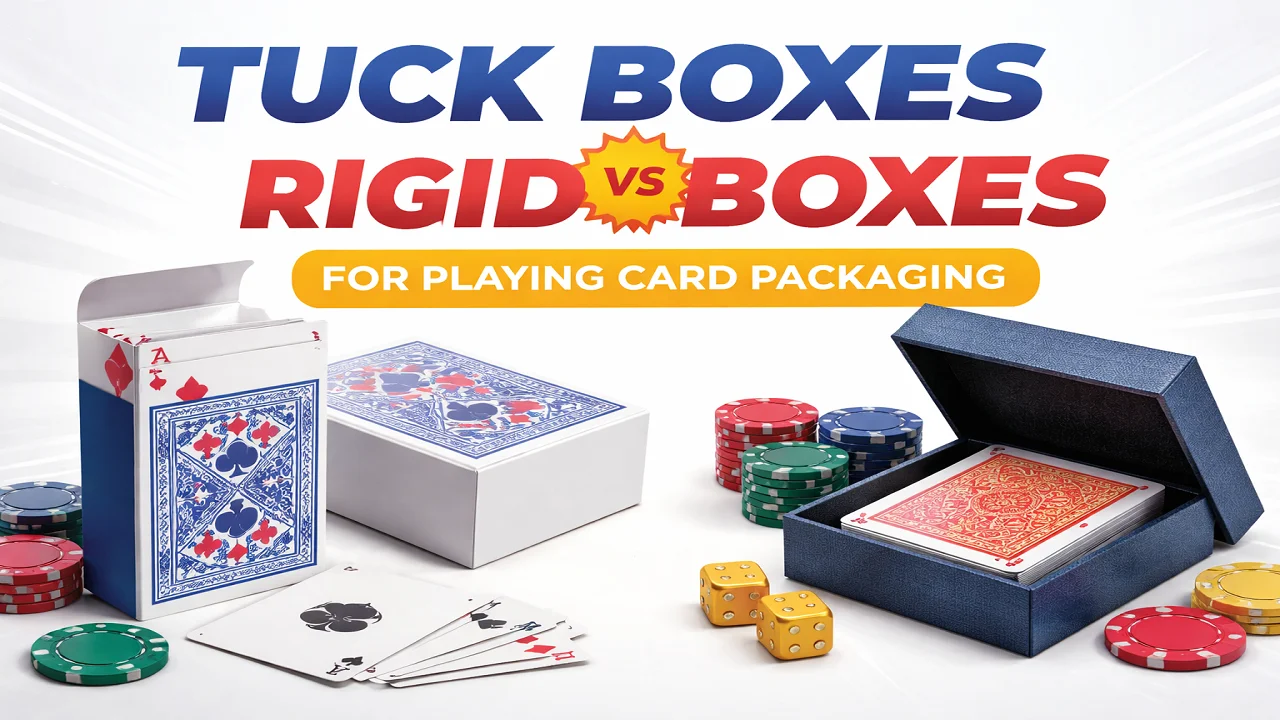
When people create a deck of playing cards most of the attention usually goes to the cards themselves. Designers often focus on the artwork, finish, card stock, and how the deck feels in hand. But there is another part of the product that matters just as much and that is the box.
The custom packaging is the first thing people see. It is also the first thing they touch. Before the cards are shuffled or used the box already gives the customer an opinion about the product. A well made box makes a deck feel more complete, more professional, and more valuable.
For card creators choosing the right packaging is not just about finding a box that fits. It is about protection, presentation, storage, shipping, and brand image. A good box keeps the deck safe supports the look of the brand and helps the product feel right for its market.
Two of the most common options used in branded playing card packaging are tuck boxes wholesale and rigid packaging boxes. Both are widely used but they do very different jobs. One is practical and cost effective. The other feels stronger and more premium.
If you are comparing playing card box packaging styles, it also helps to understand how deck size affects the final box. You can read our guide on playing card measurements in Australia to see how measurements influence card box design, fit, and protection.
In this guide we will look at the difference between tuck boxes and rigid boxes in simple language. We will compare cost, durability, presentation, shipping performance, and when each option makes the most sense for a card deck.
Why Packaging Matters for Playing Card Decks
A box does more than hold cards together. Good playing card packaging helps with product protection, customer experience, and brand presentation. It can also affect how people judge the value of the deck before they even open it.
This is why packaging should never be treated like a last minute detail. It is part of the product.
Protection During Shipping and Storage
Playing cards can get damaged quite easily if the packaging is weak. Corners can bend. Edges can rub. The deck can shift around inside the box. If the product is being shipped through warehouses and courier networks, those risks become even higher.
A strong box helps protect the deck during:
- shipping
- warehouse handling
- retail display
- long-term storage
- everyday customer use
This matters even more for online orders. Customers expect their deck to arrive in excellent condition. If the box looks crushed or worn when it arrives the product immediately feels less impressive.
Branding and First Impressions
Packaging also helps shape the customer’s first impression. The material, print quality, finish, and structure all contribute to how the product feels.
A simple box can still look professional if it is designed well. A premium box can make the whole product feel more special. In both cases the structure supports the message of the brand.
For brands selling custom card decks, promotional packs, collector releases, or gift products. The custom box becomes part of the story. It tells people whether the deck is practical, premium, playful, collectible, or gift ready.
What Is a Tuck Box?
A tuck box is the classic style most people recognise from standard playing cards. It is usually made from folding carton board and includes a flap that folds over and tucks into the box to keep the deck inside.
This style has been used for decades because it is simple, practical, and efficient. Most standard retail decks use this structure because it gives enough protection without making the packaging too expensive.
How a Tuck Box Is Made
A tuck box is normally made from a single sheet of printed paperboard. That sheet is die cut, creased, folded, and glued into shape. The top and bottom flaps close the box while the side seam holds the structure together.
One major advantage is that these boxes can be supplied flat before they are assembled. This makes them easier to store and easier to ship in bulk during production.
Once assembled, the box forms a neat and compact pack that holds the cards inside. Good fit is very important here. The deck should sit securely without being too tight or too loose.
Benefits of Tuck Boxes
Tuck boxes are popular for a reason. They offer a good balance of cost, function, and print quality.
- Lower cost: They use less material and are easier to produce.
- Lightweight: They do not add much extra weight to the deck.
- Efficient shipping: Flat packing helps reduce storage and transport costs.
- Strong print surface: They work well with graphics, branding, and decorative finishes.
- Familiar opening style: Most customers already know how to use them.
For many brands, tuck boxes are the most practical option for custom playing card boxes because they keep the product commercially sensible while still looking sharp.
Limitations of Tuck Boxes
Tuck boxes are useful, but they do have limits.
- The board is thinner than rigid packaging.
- Heavy pressure can crease or bend the box.
- The tuck flap can weaken over time with repeated use.
- Some premium decks may feel too ordinary in a basic tuck carton.
That does not make tuck boxes a bad option. It simply means they work best when practicality, lower cost, and high-volume production matter more than luxury presentation.
What Is a Rigid Box?
A rigid box is made from thick chipboard or heavy board that keeps its shape permanently. Unlike a tuck box, it does not fold flat once made. The structure is firm, solid, and much more substantial in the hand.
In the world of premium playing card packaging, rigid boxes are often used for collector decks, limited editions, high-end tarot cards, luxury card sets, and gift products.
Rigid boxes are commonly used in other industries too, including cosmetics, jewellery, electronics, and premium retail goods. The reason is simple. They feel stronger and more expensive.
How a Rigid Box Is Made
Rigid boxes are made using thick board that is wrapped with printed or textured paper. They are built during manufacturing and stay in that shape. Because of this, they feel much sturdier than folding carton boxes.
This structure gives more support and better protection for the deck inside. It also creates more options for the opening style and presentation.
Common Types of Rigid Playing Card Boxes
There are several rigid box styles used in card deck packaging, including:
- two-piece lid and base boxes
- magnetic closure boxes
- drawer style slide boxes
- rigid boxes with inserts
Each style gives a different experience. Some feel more like a gift box. Others feel more like collector packaging. The best choice depends on the purpose of the product.
Benefits of Rigid Boxes
Rigid boxes offer a stronger and more premium packaging solution.
- Better durability: Thick board protects the cards more effectively.
- Premium feel: The structure feels heavier and more luxurious.
- Improved protection: Cards are less likely to get bent during shipping.
- Better unboxing experience: The opening moment feels more special.
- Higher perceived value: Customers often connect heavier packaging with better quality.
For limited edition decks or gift products, this can make a big difference. The box becomes part of the experience, not just a container.
Limitations of Rigid Boxes
Rigid boxes also come with a few drawbacks.
- They cost more to produce.
- They use more material.
- They take up more storage space.
- They are heavier to ship.
- They may feel excessive for basic retail decks.
In simple terms rigid boxes are great when presentation and protection matter most. But they are not always the smartest choice for everyday decks sold at a lower price point.
Tuck Boxes vs Rigid Boxes: The Main Difference
When comparing these two packaging styles the biggest difference comes down to efficiency versus presentation.
Tuck boxes are usually better for:
- mainstream retail decks
- promotional card products
- lighter packaging
- larger production runs
- lower packaging costs
Rigid boxes are usually better for:
- collector card decks
- gift-ready products
- premium launches
- higher perceived value
- extra protection and presentation
Neither box style is better in every situation. The best choice depends on what the deck is meant to do, how it will be sold, and what the target customer expects.
How Card Dimensions Affect Packaging Design
The size of the cards inside the box has a direct effect on playing card box dimensions. Poker cards, bridge cards, and specialty decks all vary slightly in width, height, or thickness.
That means the packaging has to be designed around the exact deck measurements.
If the fit is too tight:
- the deck can be hard to remove
- the card edges may rub or scuff
- the box may feel awkward to use
If the fit is too loose:
- the cards can shift around inside
- corners may become damaged in transit
- the product can feel less premium
This is why accurate sizing matters so much in custom card box packaging. Good packaging feels effortless because the measurements have been planned properly from the start.
If you are comparing common deck sizes, you can also read our related guide on bridge vs poker card size to better understand how card sizes influence packaging decisions.
Material and Durability in Playing Card Packaging
The material of the box has a major impact on durability. Thin paperboard gives flexibility, lighter weight, and lower cost. Thick rigid board gives strength, shape retention, and stronger protection.
The right and smart choice depends on how the deck will be used.
For Everyday Use
If the deck is made for normal retail play, a tuck box is often enough. It protects the cards reasonably well and keeps the product affordable.
For Premium or Collector Use
If the deck is a collector release, a gift item, or a luxury deck, rigid packaging usually gives better long-term performance. It is more resistant to wear, pressure, and repeated handling.
This is especially important for people who keep decks in storage or display them over time.
Cost Considerations When Choosing a Card Box
Cost is one of the biggest deciding factors in playing card packaging design. Tuck boxes are more affordable because they use less material and involve simpler production methods.
Rigid boxes cost more because they need thicker board, more labour, and more complex assembly.
When comparing the two brands should think about:
- production budget
- target retail price
- shipping cost
- storage space
- expected customer perception
A cheaper box is not always the better option if it makes the product feel weak. At the same time, a premium box is not always the right move if it makes the final retail price too high for the market.
The best result usually comes from balance. The packaging should support the product not work against it.
Branding Opportunities with Tuck and Rigid Boxes
Both tuck boxes and rigid boxes can be customised with strong branding. Printing technology now gives brands a lot of flexibility when building printed playing card boxes.
Common finishing options include:
- foil stamping
- embossing
- debossing
- spot UV
- matte lamination
- gloss lamination
- textured paper wraps
These details help a product stand out on shelves and online listings. They can also help strengthen the visual identity of a deck.
But branding is not just about print. The structure matters too.
A practical deck often works best in a clean tuck box. A luxury or collector deck usually feels stronger in a rigid box. The structure should match the promise of the product.
When Tuck Boxes Are the Best Choice
Tuck boxes are usually the best option when the goal is efficiency, value, and easy production.
They are well suited for:
- standard retail playing cards
- promotional decks
- corporate branded cards
- educational card products
- large production runs
- products with tighter packaging budgets
In these cases tuck boxes make sense because they are simple, familiar, and commercially practical.
When Rigid Boxes Are the Better Choice
Rigid boxes are a stronger option when the deck needs to feel special, more durable, or more premium.
They are often the better fit for:
- collector edition playing cards
- luxury tarot and oracle decks
- gift-ready card products
- limited edition releases
- premium branded merchandise
- high-value custom deck launches
In these situations, the box does more than hold the product. It becomes part of the customer experience.
Choosing the Right Packaging for Your Deck
The right packaging choice depends on the full picture not just the look of the box.
Before deciding, it helps to ask:
- Is this deck for everyday use or premium presentation?
- Will it be sold in high volume or limited quantities?
- Does the product need stronger shipping protection?
- Will customers expect a gift-style unboxing experience?
- Does the packaging match the price point of the deck?
Answering these questions makes it easier to choose between a practical tuck box and a premium rigid box.
Final Thoughts
Both tuck boxes and rigid boxes have an important place in playing card packaging. Tuck boxes are efficient, lightweight, and cost-effective. They are a smart choice for standard decks, promotional products, and large retail runs.
Rigid boxes offer stronger protection, better structure, and a more premium presentation. They are ideal for collector decks, luxury card products, and gift ready packaging where presentation matters more.
The best result comes when the box matches the purpose of the deck. If the packaging fits the product properly, protects it well, and supports the brand image, the whole deck feels more complete.
At Fine Packaging, we understand that strong packaging design is not only about appearance. It is also about fit, function, protection, and how the product feels in the customer’s hands. If you are planning custom card packaging for your brand finepackaging.com.au can help you choose a packaging direction that suits your deck, your market, and your presentation goals.
FAQs (Tuck Boxes vs Rigid Boxes)
What is the difference between tuck boxes and rigid boxes?
Premium tuck boxes are made from folding carton board and usually have a flap that tucks into the box. They are lightweight and affordable. Custom rigid boxes are made from thicker board so they feel stronger and more premium.
Which box is better for playing cards?
It depends on the type of deck. Tuck boxes work well for everyday playing cards and retail decks. Rigid boxes are better for gift sets and premium card products.
Why do most playing cards use tuck boxes?
Tuck boxes are popular because they are simple cost effective and easy to produce in large quantities. They also keep the deck lightweight and easy to ship.
Are rigid boxes better for protecting playing cards?
Yes rigid boxes usually offer stronger protection because they are made from thicker board. They help reduce the chance of bent corners or damage during shipping.
How do card dimensions affect the box size?
The box must match the exact size of the cards inside. If the box is too tight the cards can get damaged when removed. If it is too loose the deck may move around and feel less secure.
Related Packaging Guides
If you want to learn more about playing card packaging and box design, these guides may help.