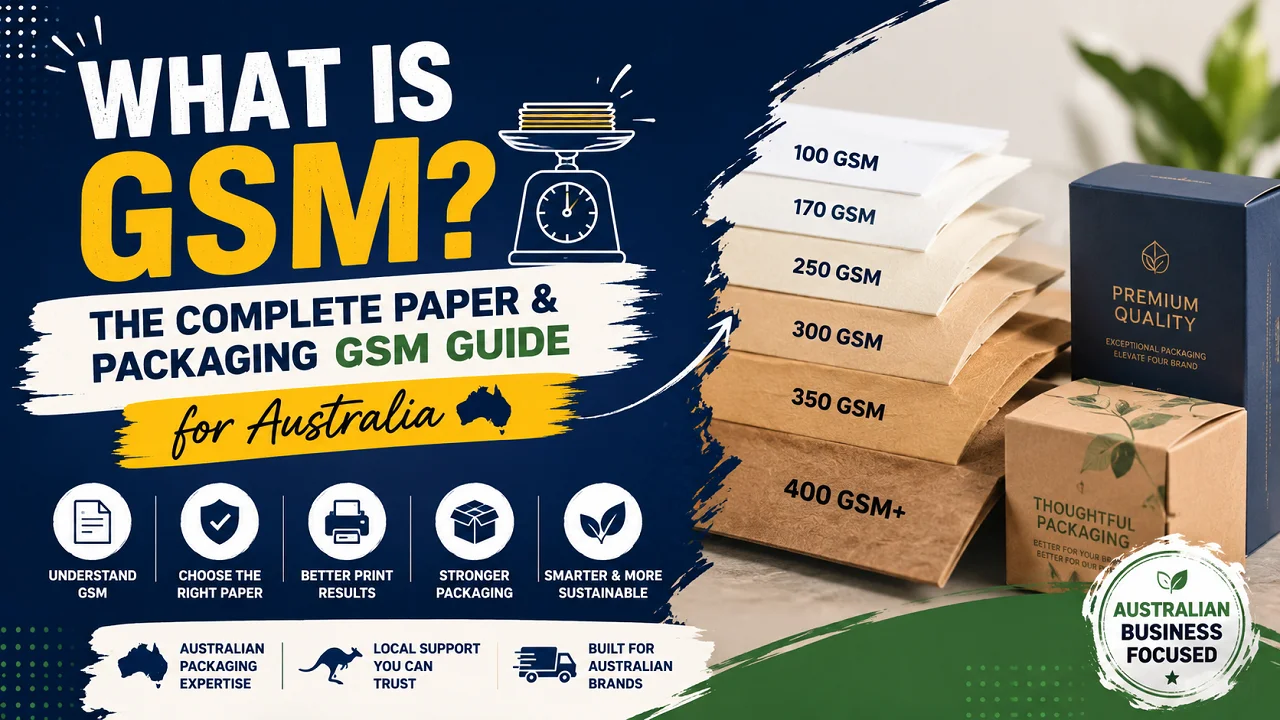
Choosing the right material is one of the biggest decisions when creating packaging. Many businesses focus on artwork, colours and finishes but forget about the paper itself. The weight of the material can change how a box feels, how well it protects a product and even how customers judge your brand. This guide explains everything you need to know about GSM in simple language so you can confidently choose the right material for your packaging.
Quick Answer: GSM stands for Grams per Square Metre. It measures the weight of paper and paperboard rather than the physical thickness of the material. A higher GSM usually means a heavier and stronger sheet. However, the best GSM depends on the product weight, box style, printing method and whether the packaging is used for retail display or shipping.
What Does GSM Mean?
GSM stands for Grams per Square Metre. It is the standard measurement used to describe the weight of paper, paperboard and many packaging materials.
In simple terms, GSM tells you how much one square metre of a material weighs. If one square metre weighs 300 grams then the material has a weight of 300 GSM.
This measurement is used throughout the printing and packaging industry because it provides a reliable way to compare different materials.
For example:
- 80 GSM paper weighs 80 grams per square metre.
- 170 GSM paper weighs 170 grams per square metre.
- 350 GSM paperboard weighs 350 grams per square metre.
Although the numbers are simple, choosing the correct GSM can make a big difference to the quality and performance of your packaging.
Why Is GSM Important in Packaging?
When customers pick up a product, one of the first things they notice is how the packaging feels. A box that feels too thin may look cheap even if the printing is excellent. A box with the right GSM feels stronger, more premium and better suited to the product inside.
GSM is not only about appearance. It also affects durability, printing quality and how well a package performs during transport.
The right GSM can help you:
- Create a stronger retail box.
- Improve the overall customer experience.
- Reduce the risk of damaged products.
- Support premium printing finishes.
- Choose a material that suits your budget.
- Avoid using more material than necessary.
Whether you sell skincare, candles, electronics, food or ecommerce products, selecting the correct GSM helps create packaging that looks professional and performs well from production through to delivery.
How Is GSM Measured?
The measurement process is straightforward. Manufacturers cut a sheet of material that measures exactly one square metre. That sheet is then weighed using precision equipment.
If the sheet weighs 250 grams, the material is classified as 250 GSM. If it weighs 400 grams, it becomes 400 GSM.
Because the test follows the same method worldwide, GSM provides a consistent standard that printers, packaging manufacturers and designers can all understand.
This consistency makes it much easier to compare different materials before production begins.
Why Packaging Manufacturers Use GSM
Packaging companies use GSM because it allows them to recommend materials based on the product being packed rather than simply choosing the thickest board available.
Every product has different requirements.
A lightweight skincare carton does not need the same board weight as a heavy glass candle or an electronic device. Choosing the right GSM helps balance strength, appearance and cost.
Professional packaging manufacturers also consider several other factors alongside GSM including:
- Board construction.
- Material quality.
- Printing method.
- Protective coatings.
- Product weight.
- Shipping requirements.
Looking at all these factors together produces packaging that performs better in real-world conditions.
Does Higher GSM Mean Better Quality?
It’s something plenty of businesses wonder about when sorting out the right board for their packaging.
The short answer is not always.
Many people assume a higher GSM automatically means better packaging. While heavier materials are often stronger, they are not always the best choice.
For example, using a very heavy paperboard for a lightweight cosmetic carton may increase production costs without adding any real benefit.
Likewise, using material that is too light for a heavy product could result in damaged packaging during shipping.
The best GSM is the one that matches your product, branding and intended use.
A good packaging supplier focuses on finding the right balance rather than simply recommending the highest GSM available.
GSM vs Thickness
Many people believe GSM and thickness are exactly the same. They are actually different measurements.
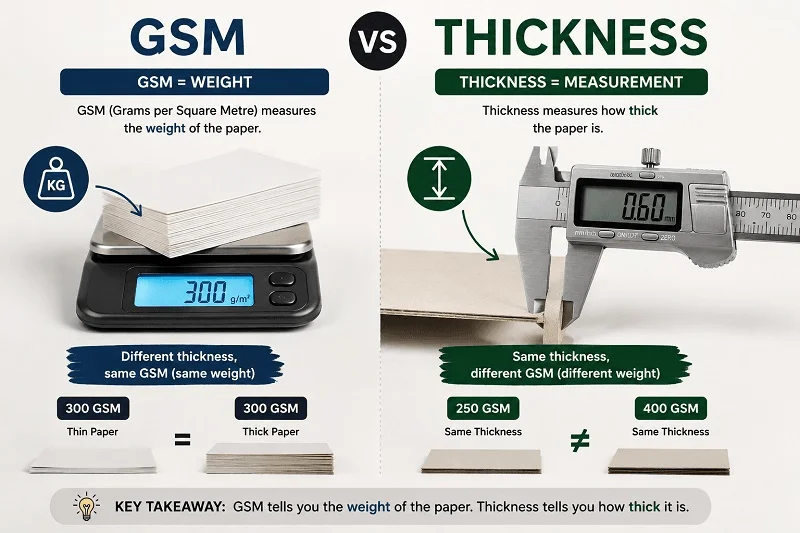
GSM measures weight.
Thickness measures how thick the material is.
Two materials can have the same GSM but different thickness because they are made from different fibres or manufacturing processes.
For example, recycled paperboard may feel thicker than virgin paperboard even when both have the same GSM.
This is why packaging manufacturers consider both GSM and board thickness when selecting materials.
| GSM |
Thickness |
| Measures material weight. |
Measures physical depth. |
| Expressed in grams per square metre. |
Usually measured in microns or millimetres. |
| Used to compare paper and board weight. |
Used to compare material thickness. |
| Higher GSM does not always mean thicker material. |
Thickness depends on the material structure as well. |
Detailed Paper and Packaging GSM Guide
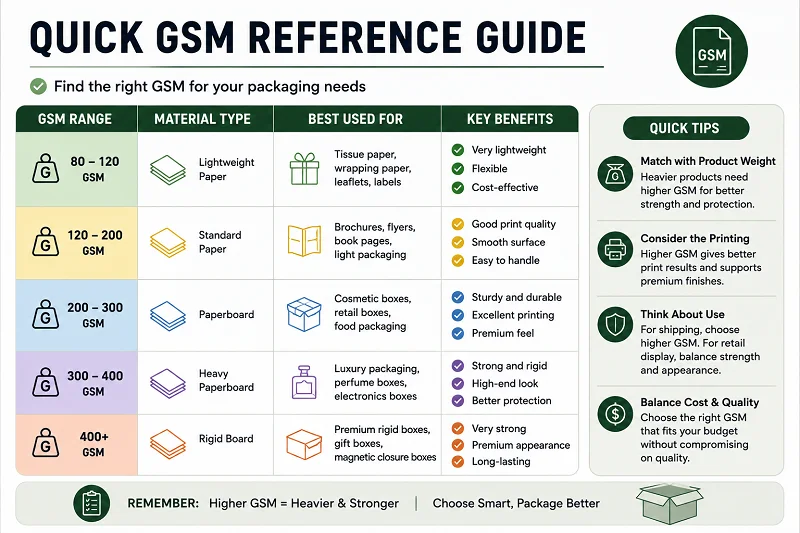
Paper and paperboard are available in many different weights. The guide below provides a practical overview of common GSM values and where they are often used. These recommendations are general because the final performance also depends on the board quality, thickness and structure.
| Paper Weight |
General Feel |
Common Uses |
| 80 GSM |
Light and flexible |
Office documents, instruction sheets and inserts |
| 100 GSM |
Slightly heavier paper |
Letterheads, manuals and promotional sheets |
| 120 GSM |
Smooth and more substantial |
Flyers, menus and lightweight brochures |
| 150 GSM |
Medium-weight paper |
Brochures, catalogues and promotional cards |
| 170 GSM |
Firm and smooth |
Premium brochures, posters and printed sleeves |
| 200 GSM |
Light card |
Product sleeves, backing cards and light packaging |
| 250 GSM |
Medium paperboard |
Small retail cartons and lightweight product boxes |
| 300 GSM |
Strong retail board |
Cosmetic boxes, skincare boxes and food cartons |
| 350 GSM |
Premium and sturdy |
Gift boxes, candle boxes and luxury retail cartons |
| 400 GSM |
Heavy paperboard |
High-end packaging and heavier retail products |
| 450 GSM |
Very heavy folding board |
Premium presentation cartons and speciality packaging |
These GSM ranges provide a useful starting point. Product weight, box dimensions, folding lines and delivery conditions should still be checked before the final material is approved.
Common GSM Ranges for Paper and Packaging
Different products require different paper weights. The table below shows the most common GSM ranges used across the printing and packaging industry.
| GSM Range |
Typical Use |
Common Products |
| 70–100 GSM |
Lightweight paper |
Office paper, documents and manuals |
| 120–170 GSM |
Marketing materials |
Flyers, brochures and catalogues |
| 200–250 GSM |
Light paperboard |
Product sleeves and lightweight cartons |
| 250–300 GSM |
Retail packaging |
Cosmetic boxes, skincare boxes and food packaging |
| 300–350 GSM |
Premium packaging |
Luxury cartons and gift boxes |
| 350–450 GSM |
Heavy-duty paperboard |
High-end retail packaging and presentation boxes |
Why Choosing the Right GSM Matters
Picking the right GSM comes down to how the packaging needs to look feel and perform. It helps create packaging that looks professional, protects your products and supports your brand image.
The board needs to suit the job without making the box heavier or more complicated than it needs to be.
Businesses that understand GSM often make better packaging decisions because they can balance quality, durability and cost instead of relying on guesswork.
In the next section, we'll look at the best GSM for different packaging products, explain which materials suit specific industries and help you choose the right board weight for your next packaging project.
Best GSM for Different Types of Packaging
There is no single GSM that works for every packaging project. The right choice depends on the product weight, how the box will be used and the type of experience you want customers to have.
A lightweight retail carton does not need the same board weight as a shipping box. Likewise, luxury packaging often uses heavier materials to create a premium feel even when the product itself is not heavy.
The following recommendations provide a good starting point for many common packaging products.
Cosmetic Packaging
Cosmetic products are often displayed on retail shelves where presentation is just as important as protection. Most cosmetic cartons use paperboard between 250 GSM and 350 GSM. This range provides a clean appearance while supporting high quality printing and premium finishes.
Skincare Packaging
Skincare products such as cleansers, serums and moisturisers are usually packed in cartons that need to feel sturdy without becoming bulky. A board weight between 300 GSM and 350 GSM is a popular choice because it offers a premium feel while remaining practical for retail display.
Food Packaging
Food packaging can vary depending on the product. Lightweight bakery items may require a lower GSM while premium chocolate or gift packaging often uses a heavier board. Food safe materials should always be selected where required.
Candle Packaging
Candles are generally heavier than many retail products. Choosing a stronger board helps support the product during transport while creating a premium presentation. Many candle boxes use material between 300 GSM and 400 GSM.
Electronics Packaging
Electronic accessories and small devices benefit from stronger materials that provide extra protection. Higher GSM paperboard combined with inserts can help reduce movement inside the box.
Gift Packaging
Luxury gift boxes often use heavier paperboard or rigid board to create a premium unboxing experience. These materials feel more substantial and help reinforce a high quality brand image.
GSM Recommendations by Industry
Different industries place different demands on packaging. Some products need a premium shelf presence while others require extra support during delivery. The examples below provide a practical starting point for Australian businesses.
| Industry |
Suggested GSM |
Important Considerations |
| Skincare and Cosmetics |
250–350 GSM |
Retail presentation, sharp printing and premium finishes |
| Candles |
300–400 GSM |
Product weight, glass protection and insert support |
| Chocolate and Confectionery |
250–350 GSM |
Food-safe materials, presentation and moisture resistance |
| Electronics |
300–400 GSM |
Product protection, inserts and shipping conditions |
| Ecommerce Products |
Depends on board construction |
Courier handling, product weight and corrugated flute type |
| Luxury Gifts |
350–450 GSM |
Premium feel, unboxing experience and presentation |
Recommended GSM Guide for Common Packaging
| Packaging Type |
Recommended GSM |
Suitable For |
| Brochures |
120–170 GSM |
Marketing material |
| Product Sleeves |
200–250 GSM |
Light retail products |
| Cosmetic Boxes |
250–350 GSM |
Beauty products |
| Skincare Boxes |
300–350 GSM |
Premium retail packaging |
| Candle Boxes |
300–400 GSM |
Heavier products |
| Luxury Gift Boxes |
350–450 GSM |
Premium presentation |
How Different Packaging Materials Affect GSM
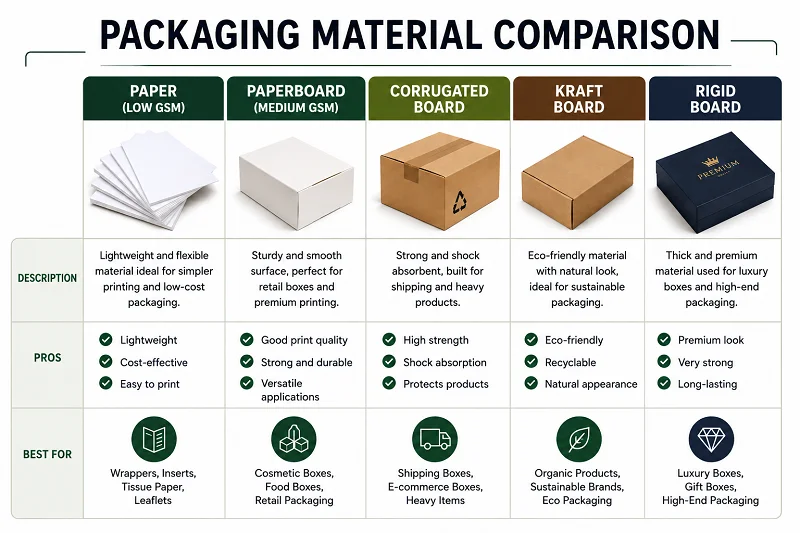
Although GSM measures weight, the material itself also plays an important role. Two packaging boards with the same GSM may perform differently because they are manufactured in different ways.
Understanding the most common packaging materials makes it easier to choose the right option for your products.
Cardboard
Cardboard is one of the most widely used packaging materials in Australia. It offers a good balance between strength, print quality and affordability. Cardboard is commonly used for retail cartons, cosmetic packaging and ecommerce products.
Kraft Paperboard
Kraft paperboard has a natural appearance that suits eco friendly brands. It is popular for organic food packaging, skincare products and businesses that want a sustainable image. Even with the same GSM as white paperboard, kraft can have a different texture and appearance.
Corrugated Board
Corrugated board is designed for shipping rather than retail presentation. Instead of relying only on GSM, it gains much of its strength from the fluted layer between the liner boards.
Because of this construction, corrugated packaging is often classified by flute type and board grade as well as paper weight.
Rigid Board
Rigid board has a solid feel that you simply don’t get with a regular folding carton. It’s a popular pick for gift boxes and high-end packaging where the box needs to look the part while giving the product plenty of support.
Packaging Material Comparison
| Material |
Typical GSM |
Main Advantage |
Common Applications |
| Cardboard |
250–400 GSM |
Excellent print quality |
Retail packaging |
| Kraft Paperboard |
250–350 GSM |
Natural appearance |
Eco friendly packaging |
| Corrugated Board |
Varies by board grade |
Excellent shipping strength |
Delivery cartons |
| Rigid Board |
Usually specified by thickness |
Luxury presentation and structural strength |
Premium gift boxes and presentation packaging |
How GSM Affects Printing Quality
Paper weight does more than influence durability. It also affects how your printed packaging looks once production is complete.
Choosing the correct GSM helps achieve sharper printing, cleaner folds and a better finished product.
Heavier paperboard generally provides a more stable surface for printing. This helps colours appear more consistent across the finished packaging.
Image Sharpness
High quality paperboard supports detailed graphics, fine text and product photography. This is especially important for premium retail packaging where presentation influences purchasing decisions.
Premium Finishes
Many finishing options perform better on stronger paperboard. These include matte lamination, gloss lamination, soft touch coating, Spot UV, foil stamping and embossing.
Choosing an appropriate GSM helps these finishes achieve a cleaner and more professional appearance.
Can Lower GSM Still Produce Great Packaging?
Absolutely.
Higher GSM is not always necessary. Many successful retail products use lighter paperboard because it suits the product and keeps production costs under control.
The goal is to match the material to the application rather than selecting the heaviest board available.
A lightweight skincare tube, for example, may not need the same board weight as a premium candle in a glass jar.
Factors to Consider Before Choosing GSM
Before selecting a paper weight, it helps to think about how the packaging will actually be used.
- Product weight.
- Retail display or shipping.
- Required durability.
- Printing method.
- Finishing options.
- Storage conditions.
- Budget.
- Brand positioning.
Looking at these factors together helps create packaging that is practical, attractive and cost effective.
Expert Tip: Do not choose paperboard by GSM alone. Ask your packaging supplier to check the board thickness, fibre quality, product weight, box dimensions and intended use. A well-designed box made from a carefully selected board can often perform better than a heavier material with the wrong structure.
Should You Choose GSM Yourself?
Many businesses try to select a GSM before speaking with a packaging supplier. While researching paper weights is useful, the final recommendation should also consider the board type, box style and intended use.
An experienced packaging manufacturer can recommend the most suitable material after reviewing your product dimensions, weight, artwork and shipping requirements.
This approach helps avoid unnecessary costs while ensuring your packaging performs exactly as expected.
In the final part of this guide, we'll explain common GSM mistakes, how to choose the right paper weight with confidence, sustainability considerations and practical tips that help Australian businesses order better packaging.
Finding the GSM That Works Best for Your Packaging
Now that you understand what GSM means and how it affects packaging, the next step is choosing the right paper weight for your own products.
The best board weight really comes down to what you’re packing and what the box has to handle. A light retail pack and a box travelling across Australia can call for two very different setups.
Instead of asking for the highest GSM, it is better to choose a material that matches your product and how it will be used.
Before selecting a paperboard, think about these questions:
- How heavy is the product?
- Is the box going on the shop shelf or making its way across Australia to a customer?
- Does the box need to support premium finishes?
- Will customers keep the packaging after purchase?
- Is your focus on affordability, presentation or maximum protection?
Answering these questions makes it much easier to select a suitable material without spending more than necessary.
Simple Steps to Select the Best GSM
Many businesses feel overwhelmed by paper weights because there are so many options. It’s a fair bit easier once you know what to look for.
- Identify the weight of your product.
- Choose the right packaging style.
- Select the most suitable board material.
- Decide whether the packaging is for retail or shipping.
- Consider any premium printing or finishing options.
- Ask your packaging supplier for recommendations before production.
This method helps create packaging that looks professional while remaining practical and cost effective.
Common GSM Mistakes to Avoid
Get the paper weight wrong and your box can end up looking ordinary, feeling flimsy or costing more than it should. Fortunately, most mistakes are easy to avoid once you understand how GSM works.
Choosing the Highest GSM Without a Reason
A heavier board is not automatically better. If the product is lightweight, using a much heavier material may increase production costs without improving performance.
Ignoring Product Weight
The packaging should always match the product inside. Heavy items usually require stronger materials while lighter products often perform well with standard retail paperboard.
Confusing GSM With Thickness
Plenty of people get these two measurements crossed when working out which board to use. GSM measures weight while thickness measures the depth of the material. Two boards with the same GSM may still feel different because of the fibres and manufacturing process.
Forgetting About Shipping Conditions
A box that looks great in a retail shop may not be suitable for courier delivery. Products that travel long distances often require stronger materials or additional protective packaging.
Choosing Material Before Finalising the Box Design
The box style, product dimensions and insert design all influence the most suitable GSM. Finalising the packaging structure first usually leads to better results.
How GSM Supports Better Printing Results
Printing quality depends on several factors including artwork, printing technology and the paperboard itself.
Choosing an appropriate GSM helps improve the finished appearance of your packaging in several ways.
- Creates a more stable surface for printing.
- Supports sharper graphics and fine text.
- Produces cleaner folds and edges.
- Works well with premium finishing techniques.
- Helps retail packaging feel more substantial.
Combined with quality printing, the right GSM can make packaging look more refined and help strengthen your brand image.
GSM and Sustainable Packaging
Sustainability has become an important consideration for Australian businesses. Many brands want packaging that protects their products while reducing environmental impact.
Choosing the correct GSM can support this goal.
Using material that is heavier than necessary may increase material consumption and shipping weight. On the other hand, selecting material that is too light could lead to damaged products and additional waste.
The best approach is to use only the amount of material your product genuinely requires.
Many packaging manufacturers also offer responsibly sourced paperboard, recycled materials and recyclable packaging solutions that perform well while supporting more sustainable packaging practices.
Does Every Packaging Product Need the Same GSM?
No.
Every packaging project is different.
Retail cartons, ecommerce packaging, luxury presentation boxes and shipping cartons all have different performance requirements.
For example:
- Cosmetic packaging focuses on presentation.
- Food packaging often balances appearance with food safety.
- Shipping cartons focus on strength.
- Gift boxes aim to create a premium unboxing experience.
- Luxury packaging often combines heavier board with premium finishes.
This is why experienced packaging manufacturers recommend materials based on the specific product rather than using the same GSM across every project.
When Should You Ask a Packaging Expert?
If you are launching a new product or changing your packaging design, professional advice can save both time and money.
A packaging specialist can recommend the right combination of:
- Paperboard material.
- Suitable GSM.
- Box style.
- Printing method.
- Protective inserts.
- Premium finishes.
This ensures every part of the packaging works together instead of making decisions based on paper weight alone.
Quick GSM Reference Guide
| Application |
Suggested GSM |
Recommended Material |
| Business Documents |
80–100 GSM |
Paper |
| Brochures |
120–170 GSM |
Coated Paper |
| Light Retail Packaging |
200–250 GSM |
Paperboard |
| Cosmetic and Skincare Boxes |
250–350 GSM |
Cardboard |
| Luxury Packaging |
350–450 GSM |
Premium Paperboard |
| Rigid Presentation Boxes |
Usually 1.2–2.5 mm thick |
Rigid Greyboard |
Key Takeaways About GSM
- GSM stands for Grams per Square Metre.
- It measures the weight of paper and paperboard rather than thickness.
- A higher GSM usually feels heavier but it is not always the best choice.
- The ideal GSM depends on the product, box design and intended use.
- Retail packaging often uses paperboard between 250 and 400 GSM.
- Corrugated packaging should also be assessed by flute type and board grade.
- Rigid boxes are normally specified by board thickness rather than GSM alone.
- The correct material can improve strength, print quality and customer experience.
Using these points as a guide can help you discuss your packaging requirements more confidently and choose a material that delivers the right balance of presentation, protection and value.
Why Working With the Right Packaging Supplier Matters
Choosing the correct GSM is only one part of creating successful packaging. Material quality, structural design, printing accuracy and production experience all contribute to the finished result.
An experienced packaging supplier looks at the complete project rather than recommending a paper weight based on a single number.
By understanding your product, branding goals and delivery requirements, they can recommend a packaging solution that offers the right balance between appearance, durability and value.
Final Thoughts
GSM is one of the most important measurements in the printing and packaging industry. It helps businesses compare paper and paperboard, understand material quality and choose packaging that suits their products.
While a higher GSM often creates a stronger and more premium feel, it is not always the best choice. The ideal paper weight depends on your product, packaging style, printing requirements and intended use.
By understanding how GSM works and selecting the right material from the beginning, you can create packaging that looks professional, protects your products and delivers a better customer experience.
Need Help Choosing the Right GSM?
Finding the right paper weight does not have to be complicated. At Fine Packaging, we help Australian businesses choose packaging materials that suit their products, branding and budget. Whether you need retail cartons, ecommerce packaging, luxury presentation boxes or custom printed packaging, our team can recommend the most suitable GSM for your project.
Contact Fine Packaging today for a free quote and let our packaging specialists help you create packaging that looks great, performs well and leaves a lasting impression on your customers.
Frequently Asked Questions About GSM
What does GSM stand for?
GSM stands for Grams per Square Metre. It measures the weight of paper or paperboard. A higher GSM usually means the material is heavier. It helps businesses choose the right paper for printing and packaging.
Is higher GSM always better?
Not always. A higher GSM can make packaging stronger but it is not the best choice for every product. The right GSM depends on the product weight, the box style and whether the packaging is for retail or shipping.
Which GSM is best for packaging?
There is no single GSM that suits every project. Many retail packaging boxes use paperboard between 250 GSM and 350 GSM. Heavier products or luxury packaging may need a stronger board, while lighter products often work well with a lower GSM.
What GSM is used for cardboard boxes?
Cardboard boxes are commonly made from 250 GSM to 400 GSM paperboard depending on the product and the packaging style. Shipping cartons are different because they use corrugated board, which is usually selected by board grade and flute type rather than GSM alone.
Does GSM affect printing quality?
Yes. Choosing the right GSM can improve printing results. A suitable paperboard provides a stable surface for sharp text, clear images and premium finishes such as matte lamination, foil stamping and Spot UV.
What is the difference between GSM and thickness?
GSM measures the weight of the material, while thickness measures how thick it is. Two sheets can have the same GSM but feel different because they are made from different fibres or manufacturing processes.