Turn Every Folded Set into a Shelf-Ready Collection
Bedding is soft but its packaging still needs careful planning. A poorly sized box can crush the folded arrangement or leave too much empty space. Weak panels may bow under the weight of a thick quilt. An oversized pack can also increase storage needs and delivery costs. Well-planned bedding packaging in Australia brings product protection presentation and practical handling into one design.
Your packaging may need to display a sheet set in a department store or protect a doona sold online. It could hold a lightweight mattress protector or a premium linen collection. We design custom bedding boxes for these different uses rather than applying one standard structure to every textile product. The final design can reflect the product weight folded dimensions retail position and intended customer experience.
What Are Custom Bedding Packaging Boxes?
Custom bedding packaging refers to boxes designed around bedding and household textile products. They can be produced for bed sheets quilt covers doonas blankets pillowcases mattress protectors towels and coordinated linen sets. The size structure material and printed artwork are selected for the packed product. A custom box can also include a handle window sleeve insert or internal support when the design requires one.
A bedding box performs several jobs. It contains the folded textile and helps keep the set together. It provides space for the brand name product photograph care details size and material information. It can also make stock easier to stack and identify in a shop storeroom or distribution centre.
Unlike ready-made cartons that come in fixed dimensions custom printed bedding packaging can be made to suit the complete packed arrangement. This is important because a fitted sheet set has a different volume from a winter quilt. Even two products labelled as queen size can need different boxes when their fabric weights and folding methods differ.
Packaging Made for Different Bedding Products
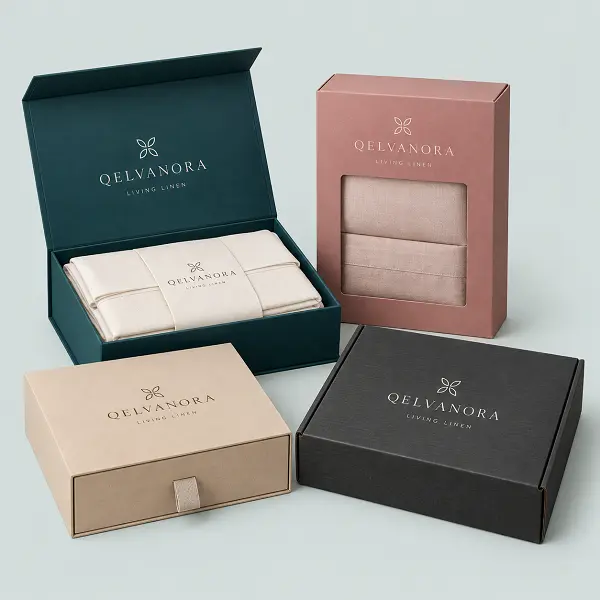
A broad bedding collection often requires more than one box size or construction. Creating a related packaging family can give each item a suitable fit while keeping colours logos typography and imagery consistent across the range.
Bed Sheets and Sheet Sets
Bed sheet packaging boxes can hold fitted sheets flat sheets pillowcases or complete coordinated sets. Folding cartons may suit compact cotton or polyester sets. A heavier paperboard or rigid format may be more appropriate for premium linen. A clear window can reveal the fabric colour or pattern without exposing the entire product.
The box should allow enough room for the planned fold and any internal paper wrap. It should not place heavy pressure on the textile or make repacking difficult. Size labels for single double queen king and super king products should be easy to distinguish. A colour strip or prominent size panel can help store staff and customers identify each option.
Quilts Doonas and Quilt Covers
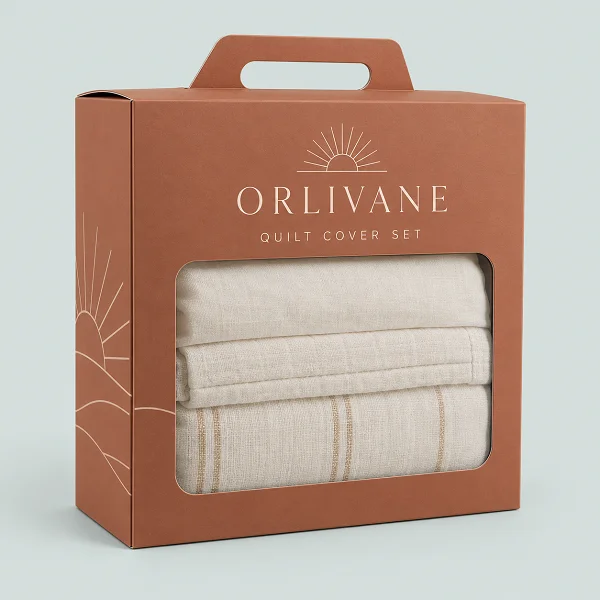
Quilt packaging boxes can be designed for quilt covers as well as lightweight quilts and filled products. Australia commonly uses the word doona so doona packaging boxes may also be relevant for local retail ranges. These products can be bulky and their packed depth may change with filling weight and compression.
A deeper carton with reinforced panels can help hold a fuller product. Carry handles may improve movement within a store or warehouse. The handle area needs enough support for the total packed weight. Pack the actual folded product into a trial box to check the depth closure and handle strength before ordering a larger quantity.
Blankets and Bedspreads
Blanket packaging boxes need to account for fabric thickness and weight. A light summer blanket may fit a folding carton while a dense wool blanket may require corrugated board or a stronger presentation box. The internal dimensions should be based on the blanket after it has been folded in the intended production pattern.
For premium blankets the package can include a lid and base construction or a reusable rigid format. More economical retail ranges may use a printed carton or a branded sleeve around a carefully folded product. The right choice depends on the selling price presentation goal and distribution process.
Mattress Protectors and Pillow Products
Mattress protector packaging can be made for fitted protectors waterproof products padded protectors and mattress toppers. These items may look similar when folded so clear product naming and size identification are important. Packaging should leave enough room for any added padding without forcing the closure.
Pillowcases and pillow protectors can be sold in compact cartons or as part of a larger bedding set. Full pillows require much deeper packaging and need a material that can hold their volume. Product weight handle strength and storage space should all be reviewed before choosing the structure.
Towels and Coordinated Linen Sets
A design for towel and linen set packaging can combine bath towels hand towels face washers and related household textiles. A window may help show colour and texture. Dividers or folded board supports can keep each component in its intended position when the box is displayed upright.
Coordinated collections can share the same artwork system across bedding bath and household products. This creates a recognisable family on the shelf while individual labels show the contents dimensions and colour of each set.
Match the Bedding with the Right Box Construction
The structure should respond to how the product will be packed displayed lifted stored and delivered. A visually attractive design will not perform well if its base cannot carry the packed weight or its opening makes the bedding difficult to remove.
Folding Cartons for Lightweight Sets
Cardboard bedding boxes are often suited to folded sheets pillowcases quilt covers and lightweight linen products. Paperboard can be printed across the outer surface and supplied flat when the style permits. This can reduce the space needed before packing.
Straight tuck end reverse tuck end crash-lock base and sleeve designs may be considered. The correct format depends on the dimensions weight and preferred opening experience. Larger cartons may need stronger board or an alternative structure to reduce bending.
Corrugated Boxes for Greater Support
Corrugated bedding boxes provide greater structural support for thick blankets doonas heavy linen sets and ecommerce orders. Flute selection and board grade should be matched to the load and distribution conditions. A retail-quality corrugated box can be printed while still providing the strength needed for handling.
For online orders the retail package may be placed inside a separate shipping carton. In other cases the corrugated package can act as both the branded box and delivery container. This decision should consider exposure to labels tape moisture scuffing and courier handling.
Rigid Boxes for Premium Collections
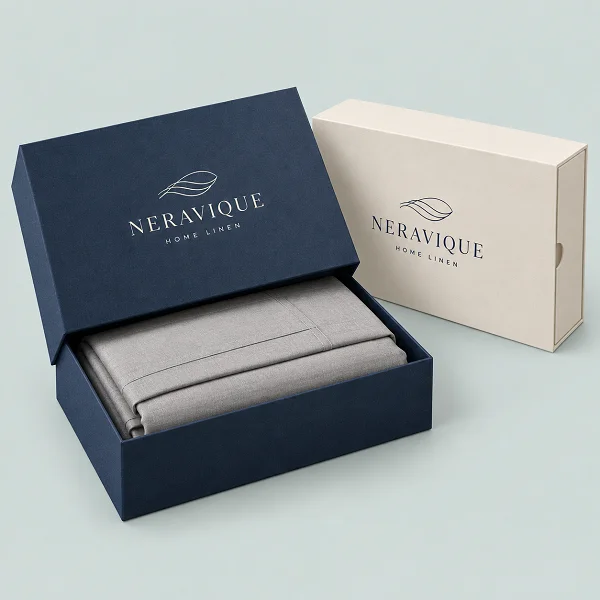
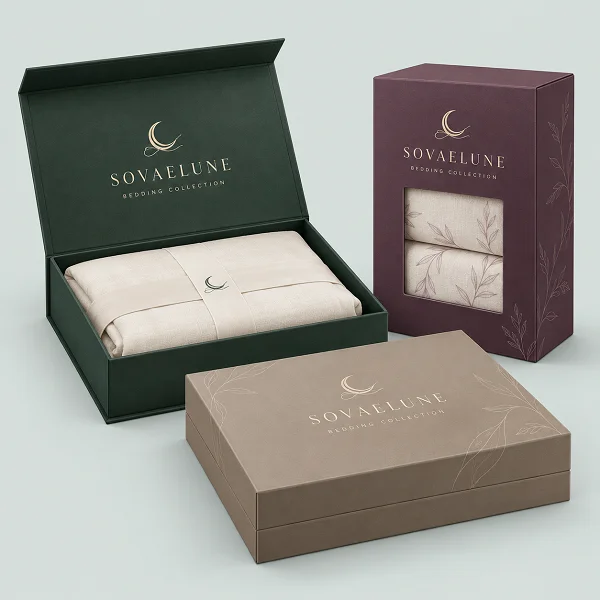
Rigid bedding boxes create a substantial presentation for high-value sheets silk pillowcases luxury throws or gift collections. Common structures include magnetic closures lift-off lids book-style boxes and drawer formats. They are normally supplied assembled and require more storage space than flat cartons.
Luxury bedding packaging should still be practical. The lid needs to open without excessive resistance. The base needs to support the product and any accessories. Decorative features should complement the artwork instead of making important product information difficult to read.
Bedding Gift Boxes
Bedding gift boxes may be used for wedding sets housewarming gifts seasonal collections hotel welcome packs or corporate presents. Custom tissue paper ribbons sleeves and printed message cards can support the unboxing experience. The interior can also be printed with care guidance or a short brand story.
A gift design should allow the recipient to remove and return the products without damaging the package. This is especially important when the box is intended for continued storage.
Add Useful Features without Overcomplicating the Box
Custom bedding packaging can include structural features that improve display access or handling. Each addition should have a clear purpose because unnecessary components can increase material use assembly time and cost.
Handles for Easier Carrying
Die-cut handles or attached handles can make bulky bedding easier to carry. Their suitability depends on the material and packed weight. Reinforcement may be needed around the handle opening. Testing is important because a handle that performs well with sheets may not support a thick quilt or weighted blanket.
Windows for Product Visibility
A window can show the fabric colour weave print or texture. It may be left as an open cut-out or fitted with a transparent film where suitable. The location should maintain panel strength and avoid hiding important artwork. Large windows can reduce rigidity so the size and position need to be planned carefully.
Inserts and Internal Supports
Folded paperboard supports can help preserve the arranged presentation of a bedding set. Dividers can separate pillowcases accessories or care cards. Tissue paper and paper wraps can create a clean interior without requiring a complex insert.
Not every product needs internal support. A precisely sized bedding box may hold the folded set neatly on its own. Removing an unnecessary insert can lower material use and make packing simpler.
Sleeves and Belly Bands
A printed sleeve can wrap around an inner tray or plain box. A belly band can carry product details while leaving part of the textile visible. These formats can work well when several products share the same base package but require different labels or artwork.
Create Bedding Boxes with Clear Brand Communication
Bedding boxes with a logo help customers connect the product with its maker. The logo can appear on the front panel lid sides or interior. Its position should remain visible in the intended shelf orientation. Branding can also include a colour palette patterns photography icons and a short product message.
Personalised bedding boxes can be produced for individual collections retailers accommodation providers or private-label brands. Personalisation may include a collection name fabric composition size care instructions barcode batch details and country of origin information.
The front panel should communicate the most important details quickly. These may include the product name bed size colour and number of pieces. Additional panels can explain fabric properties washing instructions and what is included in the set. Any claims should be accurate and supported by the product itself.
Printing and Finishes for Bedding Presentation
Printing establishes the main colours imagery and product information across the box. Finishes can then add surface protection or draw attention to selected design elements. The best combination depends on the packaging material artwork retail environment and position of the bedding range.
| Printing or finish |
Visual result |
Often suited to |
Design consideration |
| CMYK printing |
Photographs illustrations gradients and multicolour artwork |
Retail bedding ranges with detailed printed designs |
Printed colours can appear different across coated board and kraft |
| Pantone colour printing |
More controlled reproduction of selected brand colours |
Established brands with defined colour standards |
Stock colour and surface texture can influence the result |
| Matte lamination |
Smooth surface with low shine and subdued colour |
Modern or understated custom bedding packaging |
Very dark colours may make handling marks more noticeable |
| Gloss lamination |
Shiny surface with stronger colour contrast |
Bright photography patterns and colourful retail artwork |
Reflections can affect readability under strong shop lighting |
| Soft-touch lamination |
Velvety surface with a refined tactile quality |
Luxury bedding packaging and premium linen sets |
Suitability and cost should be checked for the chosen material |
| Foil stamping |
Metallic or coloured detail on selected artwork |
Logos borders collection names and small design accents |
Very fine lines may need to be enlarged for cleaner production |
| Embossing |
Raised artwork that adds visible and tactile depth |
Logos monograms and simple decorative patterns |
Bold uncomplicated artwork normally produces a clearer effect |
| Debossing |
Artwork pressed into the packaging surface |
Minimal branding and rigid bedding boxes |
Depth and clarity depend on the board and wrapped paper |
| Spot UV |
Glossy contrast applied to chosen printed areas |
Logos patterns product names and selected imagery |
The artwork must clearly identify every area receiving the coating |
The final appearance should be reviewed against the selected board because the same artwork can look different on coated paper kraft stock and textured wrap. Use finishes selectively so the logo product name and essential bedding information remain clear.
Measure the Folded Product Before Choosing Dimensions
Accurate internal dimensions are essential for custom bedding packaging. Measure the product after it has been folded exactly as it will be packed. Include every component such as pillowcases care cards tissue paper wraps inserts and promotional items.
Record the internal length width and depth in millimetres. Do not rely only on the bed size because queen sheet sets from different ranges may use different fabrics piece counts and folding methods. A thick flannel set can occupy more space than a lightweight cotton set with the same mattress dimensions.
Allow practical clearance for packing and removal without creating a loose fit. Excess space can let the textile shift and may make the package look underfilled. Too little space can cause bowed panels compressed corners or difficulty closing the box.
Example Sizes for Custom Bedding Boxes
The following measurements are general starting points. The final internal dimensions should be based on the complete bedding product after it has been folded and prepared for packing.
| Bedding product |
Example internal size |
Suitable box format |
Sizing consideration |
| Pillowcase pair |
260 × 200 × 55 mm |
Folding carton or sleeve and tray |
Include the paper wrap and any display insert |
| Single sheet set |
320 × 260 × 80 mm |
Paperboard folding carton |
Measure every folded piece in the complete set |
| Double sheet set |
350 × 280 × 95 mm |
Folding carton or corrugated box |
Leave enough clearance for packing and removal |
| Queen sheet set |
380 × 300 × 110 mm |
Reinforced carton or lid and base box |
Use the thickest fabric variation when checking depth |
| King sheet set |
420 × 330 × 125 mm |
Corrugated or rigid bedding box |
Check the packed weight and required panel strength |
| Quilt cover set |
400 × 320 × 120 mm |
Lid and base box or corrugated carton |
Include pillowcases and accessories before measuring |
| Mattress protector |
420 × 340 × 140 mm |
Corrugated carton with handle option |
Padding and waterproof layers can increase the depth |
| Blanket or lightweight doona |
500 × 400 × 180 mm |
Corrugated or rigid presentation box |
Measure the natural folded depth without over-compressing it |
Note: These are example internal sizes rather than fixed industry standards. Fabric thickness filling piece count and folding method can affect the required dimensions. Fine Packaging can produce custom bedding packaging around your actual packed product.
Test the Heaviest and Bulkiest Variation
If several colourways use the same fabric one representative sample may be enough for initial sizing. When the range includes different fibres weights or piece counts test the largest packed variation. Review the box in its retail orientation and check how it performs when stacked.
A plain structural sample can reveal issues that are difficult to judge from measurements alone. It allows your team to check the fit opening method handle position panel strength and packing sequence before printed production.
Retail Packaging and Ecommerce Packaging Need Different Priorities
Retail bedding set packaging is designed to present the product clearly on a shelf or display table. It may use photography a window premium finishes and a handle. Ecommerce packaging must also withstand movement stacking and delivery handling.
A rigid presentation box can look impressive but may still need an outer corrugated carton for shipping. A printed corrugated box may offer a more direct solution for online bedding brands. The appropriate setup depends on the value of the product delivery method and condition expected on arrival.
Consider how shipping labels and tape will be applied. If the branded package should remain clean then it should not be used as the exposed courier carton. A correctly sized outer shipper can help protect the retail box without adding excessive unused space.
Material Choices for Performance and Environmental Goals
Eco-friendly bedding packaging starts with a design that uses an appropriate amount of material and performs its intended job. Paperboard kraft and corrugated options may be recyclable through suitable local collection systems. Actual recyclability can depend on coatings laminations windows adhesives and local facilities.
Recycled-content stocks may be available for selected applications. Uncoated kraft can create a natural appearance while coated white board supports brighter printed colour. A reusable rigid box may provide ongoing storage value although it uses more material than a lightweight folding carton.
Avoid broad environmental claims that cannot be verified. Clear disposal guidance can help customers separate removable components where necessary. Material selection should balance protection presentation production needs budget and the realistic end-of-life pathway.
Plan Bedding Packaging for Wholesale Orders
Bedding packaging wholesale orders require careful version planning. A range may include several bed sizes colours patterns and product types. Confirm the quantity for every artwork variation rather than providing only the combined order quantity.
Ordering bedding packaging in bulk can reduce the unit cost because setup expenses are distributed across more boxes. However you should also consider available storage and the likelihood of product details changing. An oversized order may become unsuitable if barcodes care information collection names or legal details are updated.
Affordable bedding packaging boxes are not necessarily the thinnest or simplest option. A box that bends during packing or requires an additional shipping solution can create avoidable costs. Value comes from selecting a structure that performs reliably while using materials and finishes with a clear purpose.
MOQ and Production Preparation
Fine Packaging can produce custom bedding packaging from a minimum order of 50 boxes. The available structure material printing method and finish may depend on the required size and quantity. Larger boxes can have different production requirements from compact sheet-set cartons.
Prepare the internal dimensions product weight quantity delivery postcode and preferred box style when requesting a quote. Supply your logo and artwork in suitable print-ready formats where possible. If the artwork is still being developed our team can provide dieline and design support for the chosen structure.
Proofing and Sampling before Full Production
A flat artwork proof allows you to review text positioning colours dimensions and panel orientation. A three-dimensional mock-up can help show how the assembled design may appear. Neither replaces every aspect of a physical sample when exact fit or structural performance needs to be assessed.
Check spelling barcodes product sizes piece counts fabric descriptions care information and contact details during proofing. Bedding ranges often contain similar versions so each artwork file should be reviewed against the correct product record.
Manufacturing can be scheduled after the structure artwork and order details have been approved. Standard production commonly takes 10-12 business days depending on the box construction materials quantity and finishes. Shipping is arranged when manufacturing is complete. The expected arrival period varies according to the destination and selected delivery service.
Work with a Supplier That Understands the Complete Pack
When comparing custom bedding packaging suppliers in Australia look beyond the printed surface. A capable supplier should ask about folded size packed weight sales channel storage conditions and handling. These details influence the board grade construction closure and delivery setup.
Home textile packaging should also support range management. Related boxes can share a consistent design while using different dimensions and product labels. This makes it easier to present sheets quilts blankets protectors and towels as one recognisable collection.
Bed linen packaging is sometimes described as Manchester packaging in Australia. The term may cover sheets pillowcases towels quilt covers and related household textiles. Using clear individual product names alongside the broader category helps both customers and search engines understand what the page offers.
Give Your Bedding Range a Stronger First Fold
Bring your sheets quilts doonas blankets and linen sets together with Custom Bedding Packaging designed for the real packed product. Fine Packaging can help with custom dimensions materials printing structural choices and proofing for Australian brands. Contact support@finepackaging.com.au for free quotes and free shipping on your order from Fine Packaging.