A Better Outer Layer for a Brilliant Purple Product
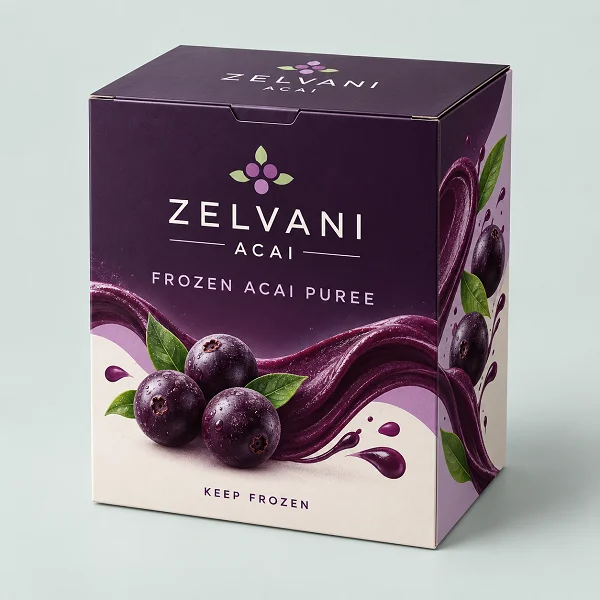
Acai already has a bold colour and a strong connection with active lifestyles. Its outer packaging should carry that same energy. A well-planned carton can bring together your logo flavour artwork serving directions and storage details in one tidy format. It can also help different products look like part of the same range when they sit together in a retail freezer.
The right result starts with the actual product format. A tub needs different support from a flexible pouch. A group of frozen portions may need a carton with dividers while a foodservice pack may require a strong corrugated case. Fine Packaging develops custom acai packaging around the primary container and the way it will be packed stored transported and displayed.
What Are Custom Frozen Acai Boxes?
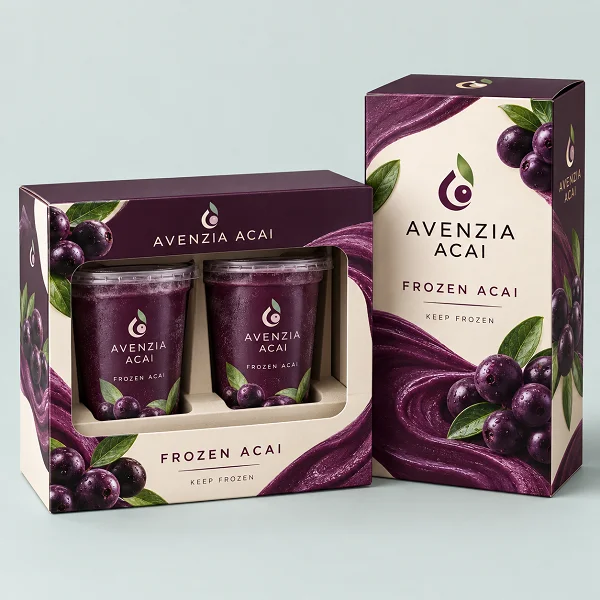
Custom frozen acai boxes are printed cartons sleeves or corrugated cases produced to hold sealed acai tubs pouches cups or portion packs. They usually act as secondary packaging rather than the container that touches the food. The sealed tub or pouch holds the acai while the outer carton provides branding product identification and added physical support throughout storage and retail handling.
A frozen acai box can be produced for an individual retail product or a multipack. It may also be designed as an outer case for moving larger quantities between a cold-storage facility distributor café or shop. The correct structure depends on product weight freezer conditions packing method stacking pressure and the amount of moisture the carton may encounter.
Match the Carton to the Way You Sell Acai
Frozen acai reaches buyers in several forms. Some brands sell puree in flat pouches. Others use round tubs for cafés and dessert bars. Retail products may include portion sachets packed inside a printed carton. Choosing a structure without checking the primary container can create wasted space weak corners or a pack that is difficult to load.
Cartons for Frozen Acai Pouches
Flexible pouches can move and settle inside an oversized carton. A closely fitted paperboard box can keep a group of pouches organised and provide flat panels for nutritional details artwork and preparation directions. When the pouch has wide heat-sealed edges we allow enough internal room so those seams are not folded or forced against the carton walls.
Sleeves for Sealed Tubs
A printed sleeve can wrap around a tub without covering the entire container. This format provides a visible branding panel while allowing the tub shape to remain recognisable. The sleeve must be measured against the top rim base and side profile. Tapered tubs need especially careful sizing because the upper and lower circumferences are different.
Single-Product Retail Cartons
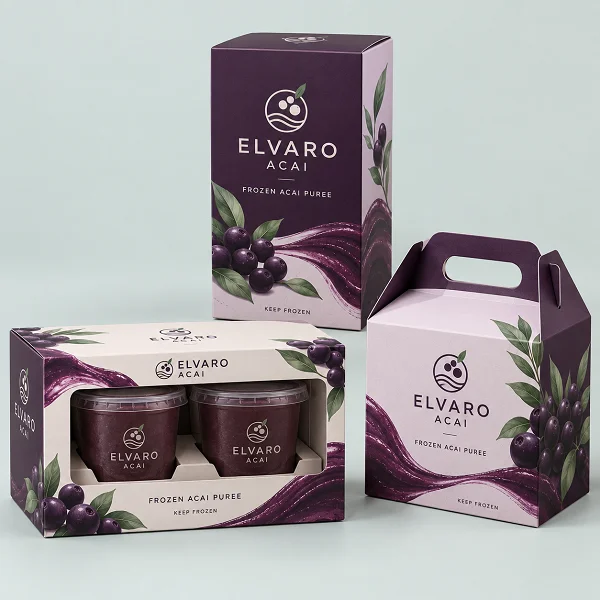
Retail frozen acai boxes can fully enclose a sealed cup tub or pouch. Tuck end cartons are useful when the product is packed by hand. An auto-lock base may be considered when faster assembly is important. The best closure will depend on product weight packing speed and whether the carton is filled manually or with packing equipment.
Multipack Acai Boxes
Multipacks can hold several portions or small tubs in one unit. Paperboard partitions may keep each product in place. A fitted tray can also reduce movement if the primary packs have an unusual profile. The complete packed arrangement should be tested because the total weight can place more stress on the base than a single product would.
Wholesale Distribution Cases
E-flute or stronger corrugated board can be used for wholesale cases that carry several retail units. These cases are built to make lifting and stacking easier while still keeping the packaging presentable. Wholesale custom frozen acai boxes should be planned according to the number of units per case as well as the pallet pattern and expected distribution route.
Materials Suited to Frozen Acai Packaging
Cold storage can be demanding on fibre-based packaging. Condensation may form when a product moves between environments. A carton can also lose stiffness if it absorbs too much moisture. Material selection should therefore reflect the full supply chain rather than only the appearance of the finished box.
SBS Paperboard
SBS paperboard offers a smooth white printing surface and clean colour reproduction. It is commonly considered for consumer-facing cartons and sleeves. Its consistent surface can suit detailed artwork small text and bright acai imagery. The board thickness and coating should be chosen after reviewing the product weight and expected exposure to cold and moisture.
Recycled Paperboard
Recycled paperboard may be suitable for selected secondary packaging applications. It can support an environmentally aware brand direction while providing ample room for printed information. Availability and performance vary between grades. Any recycled content claim printed on the pack should match the material specification selected for the order.
Kraft Board
Kraft board creates a natural brown appearance that can work well for organic or minimally styled branding. Printed colours look different on an unbleached surface so artwork may require a white underlayer in selected areas. Kraft is not automatically suitable for direct food contact or every freezer application. The grade and coating still need to be checked.
Corrugated Board
Corrugated board provides more strength for larger packs and distribution cases. E-flute can offer a relatively neat print surface with added rigidity. Heavier flute profiles may be used when the case carries more weight or faces greater stacking pressure. Corrugated frozen food cartons can also hold multiple retail units during movement through the cold chain.
Coatings and Laminations
A suitable surface treatment can help the printed carton cope with handling and occasional condensation. Options may include aqueous coatings or selected laminations. The final choice depends on the board print process recycling goal and storage conditions. Samples should be tested when the pack will face repeated temperature changes or prolonged freezer exposure.
Understand Primary and Secondary Food Packaging
The printed box and the sealed food container do different jobs. A pouch tub or lidded cup may be the primary pack because it directly contains the acai. The carton around it is usually secondary packaging. It provides a printable surface and may offer added structure but it does not replace a properly specified sealed container.
If the carton will touch unpackaged food then it must be treated as food-contact packaging. That changes the material ink coating and manufacturing requirements that need to be considered. Tell our team exactly how the product will be packed. We can then discuss an appropriate packaging route rather than assuming the outer box will remain separated from the food.
Custom frozen acai boxes do not control product temperature by themselves. Frozen quality depends on the primary container and an uninterrupted cold chain. Refrigerated transport freezer storage and correct handling remain essential. The carton should be described accurately so customers are not given unrealistic claims about thawing shelf life or freezer burn.
Custom Sizes for Tubs Pouches and Portion Packs
| Acai Packaging Format |
Measurements Required |
What To Include |
Sizing Consideration |
| Round acai tub |
Top diameter × base diameter × full height |
Tub lid rim and any tamper seal |
Measure the widest part of the lid rather than the tub body alone |
| Single frozen acai pouch |
Filled length × width × thickness |
Filled pouch and sealed edges |
Use the filled measurements because a flexible pouch can expand after packing |
| Acai portion multipack |
Combined length × width × height |
Every portion pack divider and insert |
Arrange all portions in their final position before measuring the complete set |
| Tub with a fitted insert |
Insert length × width × total packed height |
Tub insert tabs and finger-access space |
The insert and lid clearance affect the final internal box size |
| Wholesale acai case |
Complete packed length × width × depth |
All retail units dividers and protective material |
Confirm the number of units per case and the planned stacking arrangement |
Note: There is no universal size for acai packaging boxes. A 100 g pouch needs a very different carton from a large foodservice tub. Dimensions should come from a physical sample or an accurate technical drawing. The internal size must account for sealed seams lids rims and any divider or insert included in the finished pack.
Printing That Keeps Your Brand Recognisable
Acai branding often uses deep purple berry tones alongside green white or earthy colours. CMYK printing can reproduce photographs gradients and detailed illustrations. PMS colour matching may be considered when a consistent brand colour is important across cartons labels and other marketing materials.
Well-designed premium food boxes with logo can give frozen acai products a more polished identity in supermarket freezers and health-food stores. Your logo can be combined with flavour colours berry illustrations and clear product information. This creates consistent packaging that customers can recognise across different tub sizes pouches and multipack options.
Custom printed frozen acai boxes can display your logo flavour name net weight preparation directions storage statement and supplier details. A clear visual hierarchy helps shoppers identify the product quickly. The front panel should not become crowded with every available claim. Secondary details can be organised across the side and rear panels.
Leave clear space for barcodes lot details and date coding when required. These areas should not sit across folds or textured finishes. If information will be added after printing then tell us which coding process you plan to use. The coating and printed surface must be compatible with that method.
Acai Boxes with Logo
Acai boxes with logo help connect each flavour and pack size to the same business. The logo can appear on the main display panel as well as the top or side panel. Repeating the mark can help with recognition when cartons are stacked in different directions. It should still leave room for legally required information and useful product guidance.
Artwork Across a Product Range
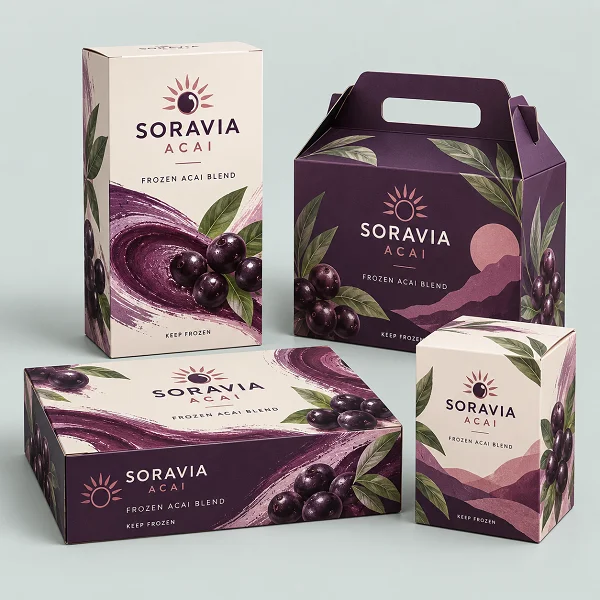
A shared layout makes it easier to expand a range later. You may keep the logo typography and panel structure consistent while changing the colour or fruit illustration for each flavour. This approach gives branded acai packaging a recognisable family look without making every product identical.
Finishes for Printed Acai Boxes
Finishing can influence both appearance and surface performance. Matte treatments suit understated natural branding while gloss can make rich colours look brighter. Premium features should be chosen with the freezer environment in mind. A visually impressive finish has limited value if it does not cope with the intended handling conditions.
| Finish |
Appearance |
Possible Use |
Planning Consideration |
| Matte lamination |
Low-shine and smooth |
Natural or premium branding |
Test for the expected condensation exposure |
| Gloss lamination |
Bright and reflective |
Fruit photography and vivid artwork |
Confirm material recovery goals |
| Soft-touch finish |
Velvety and subdued |
High-end retail ranges |
Check suitability for cold handling |
| Foil stamping |
Metallic highlight |
Logo or product name |
Use on selected details for balance |
| Embossing or debossing |
Tactile raised or pressed detail |
Brand marks and short wording |
Board thickness affects definition |
| Spot UV |
Gloss detail over a contrasting surface |
Berry graphics or selected text |
Requires a compatible base finish |
Not every decorative option will suit every freezer application. We can discuss the finish alongside the chosen board and storage conditions. This keeps the design of your printed acai boxes connected to practical requirements.
Cold Conditions Change the Packaging Brief
A carton may move from a packing room into frozen storage before travelling through a refrigerated distribution network. It might then be handled in a warehouse and placed in a supermarket freezer. Each change can expose it to rubbing pressure or surface moisture. Packaging trials should reflect these real conditions as closely as practical.
Condensation and Moisture
Condensation can appear when cold packaging meets warmer humid air. It may soften an unsuitable board or mark the printed surface. A moisture-resistant specification can reduce this risk but no fibre carton should be described as completely waterproof unless verified testing supports that statement.
Adhesive Performance
A standard glue may behave differently at low temperatures. A suitable low-temperature adhesive should be considered for cartons that will remain in freezer storage. The manufacturer needs to know the intended temperature range and whether the boxes will be packed before or after freezing.
Stacking Strength
Weight can build quickly when cartons are stacked in a case or on a pallet. Board grade flute profile and grain direction may all influence performance. The packed product should be included in testing because an empty carton does not show how the base and side panels will react under load.
Custom Frozen Acai Packaging for More Than One Sales Channel
The same acai producer may supply supermarkets cafés gyms juice bars and online customers. Each channel can need a different pack. Supermarket cartons require strong shelf recognition and organised information. Foodservice cases focus more on quantity handling and clear identification. Direct orders may need extra protection during refrigerated delivery.
Custom frozen acai boxes in bulk can be produced with consistent artwork across several sizes. Ordering related formats together may also simplify brand management. Quantities still need to be confirmed for each size and design because printing plates cutting tools and production setups can vary.
Packaging for Related Frozen Foods
The experience gained from acai packaging can also support related products. Fine Packaging can discuss frozen pizza boxes for sealed pizzas and frozen dessert boxes for cakes slices or portion packs. Other applications may include frozen fruit packaging and outer frozen seafood boxes. Every food type requires its own review because moisture weight shape and handling conditions are not the same.
Eco-Conscious Choices Without Vague Claims
Brands can reduce unnecessary material by choosing a box that fits the product properly. Fibre-based cartons may also use responsibly sourced or recycled board where the application allows. Simple printing and fewer mixed materials may support a clearer disposal route after the primary container has been removed.
Coatings laminations foil and windows can affect recyclability. Local collection rules also differ between Australian councils. Rather than placing a broad green claim on the pack it is better to confirm the chosen material and give disposal guidance that matches the final construction.
Freezer-safe paperboard cartons still need to balance cold-storage performance with environmental goals. The lightest possible board is not always the best option if it becomes damaged and causes product loss. A sensible design uses enough material for the job without adding structure that serves no practical purpose.
Proofing and Sampling Before Production
A dieline maps out the carton’s cutting edges fold lines and glue areas. It also identifies bleed areas and safe zones for text. Fine Packaging can supply dieline support so your designer can place artwork on the correct structure. We can review submitted files for common production issues before a proof is prepared.
A digital proof helps you check wording layout and general artwork placement. A 3D mock-up can make the assembled shape easier to understand. Physical samples may be considered when size fit or material behaviour needs closer review. Colours displayed on a screen can differ from printed results so important brand shades should be discussed early.
Manufacturing is arranged after the final artwork structure order details and proof are approved. Any change to dimensions material or artwork after approval may affect price and timing. It is worth checking every panel carefully before giving production approval.
What We Need for an Accurate Quote
Clear details help us recommend a suitable structure and prepare accurate pricing for custom frozen acai boxes. Start by explaining whether the acai is packed in a tub cup pouch sachet or another sealed container. Tell us if you need an individual retail carton a multipack or an outer shipping case.
- Internal length width and height in millimetres
- Top and base diameter for a round or tapered tub
- Filled product weight
- Number of units inside each carton or case
- Expected storage temperature
- Whether the carton will touch the food
- Preferred board and printing style
- Required finishes or inserts
- Quantity for each size and artwork design
- Delivery postcode and required date
If you do not have final measurements you can provide a physical sample or supplier drawing for review. We can also discuss affordable acai packaging boxes that focus the budget on board performance and clear printing rather than unnecessary decorative features.
Put Your Acai Brand in a Stronger Position
Bring your tubs pouches or portion packs together with custom frozen acai boxes developed for your product format and branding. Fine Packaging supplies custom sizes design assistance proofs and practical material options for businesses across Australia. Email support@finepackaging.com.au for free quotes and discuss your required dimensions quantity and storage conditions. We also provide free shipping on your custom packaging order.