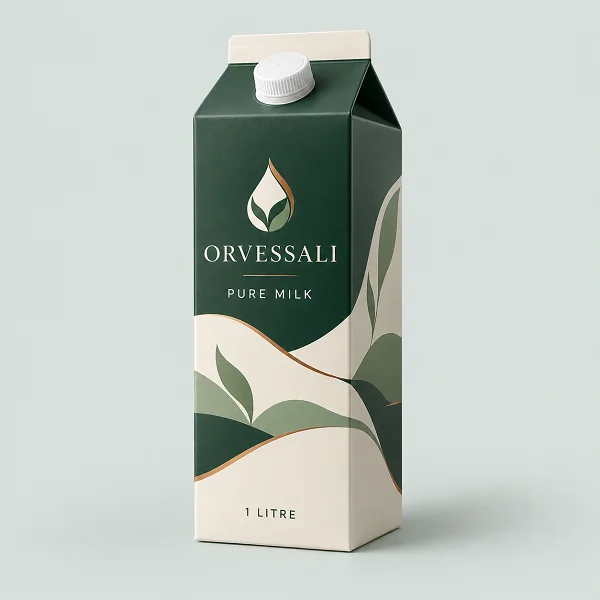
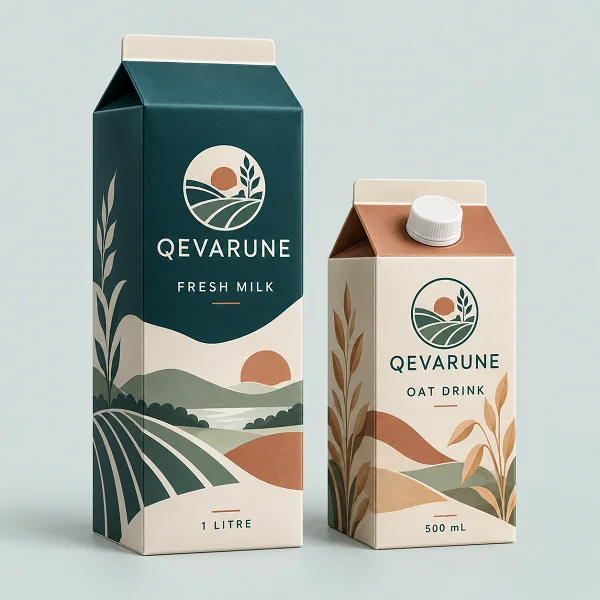
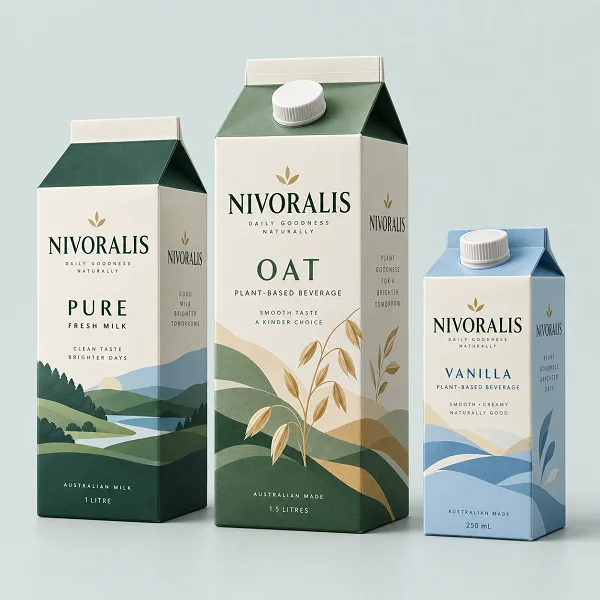
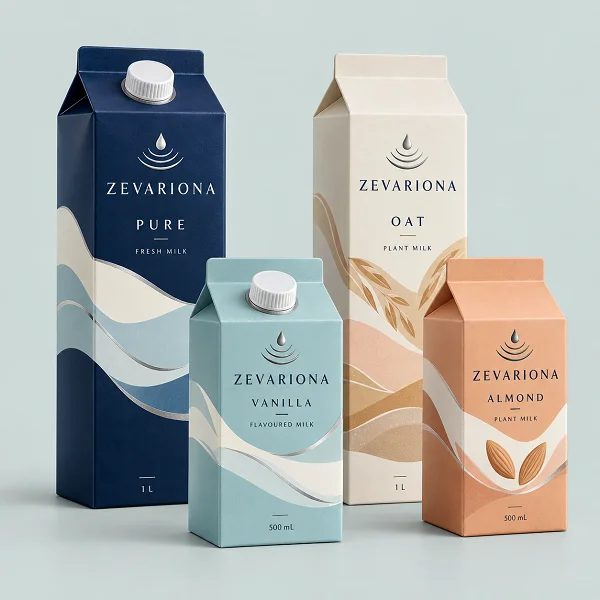
Turn Everyday Beverage Packaging Into a Recognisable Brand Asset
A milk carton has a demanding role. It needs to present the product clearly while supporting storage transport pouring and shelf display. When its dimensions artwork and closure suit the intended use it can make handling easier from the packing line to the customer’s fridge. The broad printable panels also give dairy businesses valuable space for brand information ingredients nutrition details and preparation instructions.
Fine Packaging develops milk carton packaging around the supplied product requirements rather than treating every application in the same way. We provide milk-carton-style boxes for dry or separately wrapped products. Specialist cartons intended to hold beverages directly are subject to material filling-system and manufacturing-partner confirmation.
What Are Custom Milk Cartons?
Custom milk cartons are made-to-order cartons developed to suit a particular product volume filling process and visual identity. A direct-liquid version is normally manufactured from liquid packaging board with suitable barrier layers and sealed seams. A milk-carton-style box may instead use folding carton stock for dry foods, gifts, or promotional items. Both can have the familiar peaked gable shape but they are not technically interchangeable.
Businesses can customise the dimensions artwork colours opening method and external finish. Direct-contact applications may also require documented materials that suit the beverage filling temperature shelf-life target and sealing system. These details must be confirmed before manufacturing because an attractive carton is not automatically safe or suitable for holding liquid.
Choose the Correct Carton for the Intended Product
The first decision is whether the carton will contain liquid directly or act as secondary packaging. This affects almost every part of production. It influences the board structure barrier material seams closure equipment testing and order quantity.
Fresh Milk Cartons
Fresh milk is pasteurised and normally kept chilled throughout distribution and retail display. Cartons made for this use need a moisture-resistant food-contact structure and dependable sealed edges. Traditional gable-top milk cartons provide a familiar shape and may use a folded pouring top or a fitted cap.
The exact structure must suit the dairy’s filling and sealing machinery. Carton blanks cannot be selected from appearance alone. Fine Packaging will need information about the filling line carton former closure method filling temperature and required storage period before confirming what can be supplied.
Shelf-Stable and UHT Formats
Shelf-stable beverages generally require an aseptic packaging system with a more complex barrier structure. This may include paperboard polymer layers and an oxygen or light barrier selected for the product. The carton must also work with specialist filling equipment under controlled conditions.
A standard coated paper box should never be described as an aseptic carton. Shelf-life performance depends on the complete system which includes product processing carton material filling conditions seals and closure integrity. Businesses seeking cartons for UHT products should provide their filling-line specifications and required certification at the quotation stage.
Milk-Carton-Style Boxes for Dry Products
Not every milk carton shape is intended to hold a drink. Milk carton boxes made from folding boxboard or kraft stock can package chocolates tea sweets powdered products gifts favours and promotional items. They may have a tuck closure locking base handle or decorative gable top.
These boxes are often more affordable because they do not require the specialised barrier system used for liquid filling. They should still use an appropriate lining or inner bag when a food product may touch the packaging. The product manufacturer remains responsible for confirming the full packing arrangement.
Materials and Barrier Structures
The right material depends on what the carton will hold and how it will be filled stored and transported. Direct-liquid cardboard milk cartons are not made from ordinary uncoated cardboard. They normally use purpose-made liquid packaging board with protective layers applied to the paperboard.
Liquid Packaging Board
Liquid packaging board provides stiffness for forming and stacking. Barrier layers can protect the fibres from moisture and help contain the liquid. The final construction may need to resist fat acidity aroma migration oxygen or light depending on the beverage.
Fresh dairy products and shelf-stable drinks can require different laminates. Fine Packaging can review the requested application with the manufacturing partner but the buyer should supply technical requirements from the filler or food technologist. Material declarations and food-contact documents should be checked before approval.
Folding Boxboard and Kraft Stock
Solid bleached board can provide a clean white printing surface for premium graphics. Unbleached kraft has a natural appearance that may suit organic products or promotional gift packs. Recycled-content board may be available for suitable secondary packaging.
These materials are commonly used for decorative carton-shaped boxes rather than unlined liquid containers. If food will sit inside the box it may need a certified liner bag tray or wrapped inner product. The chosen combination should be assessed for the actual food and storage conditions.
Plant-Based Material Options
Interest in plant-based milk cartons can refer to two different things. It may mean cartons for oat soy almond or other non-dairy drinks. It can also describe packaging that includes renewable plant-derived polymers. These claims should be kept separate so customers receive clear information.
Availability depends on the board mill barrier technology and production run. Any renewable content compostability or recyclability statement should be supported by supplier documentation. We avoid treating the word plant-based as automatic proof that the entire pack is plastic-free or recyclable through every Australian council.
Filling Capacities and Indicative Dimensions
Common filling volumes include 200 mL, 250 mL, 330 mL, 500 mL, 750 mL, 1 litre, 1.5 litres, and 2 litres. The external dimensions can vary even when two cartons hold the same nominal volume. Headspace panel width closure design board thickness and filling machinery all affect the final measurement.
The table below provides planning examples only. Final dimensions must come from the approved structural drawing and the technical requirements of the filling line.
| Nominal capacity |
Indicative use |
Possible closure |
Planning consideration |
| 200–250 mL |
Single serves and school portions |
Folded gable or straw opening |
Confirm filling speed and opening format |
| 330 mL |
Flavoured milk and plant-based drinks |
Gable top or fitted cap |
Allow suitable headspace |
| 500 mL |
Personal and small household use |
Folded spout or screw cap |
Check grip and pour control |
| 750 mL–1 L |
Retail dairy and alternative milk |
Resealable cap or gable top |
Confirm refrigerator shelf fit |
| 1.5–2 L |
Family-size beverage products |
Resealable screw cap |
Assess carrying strength and pouring balance |
Note: Provide the target filling volume rather than choosing a carton from external measurements alone. We also need the required headspace and closure details. For a milk-carton-style dry box we need the product’s packed length width and height plus any allowance for an insert or inner bag.
Closure and Pouring Options
The opening affects convenience leakage control tamper evidence and filling-line compatibility. A traditional folded gable can create a simple pouring spout. A plastic screw cap offers resealing for larger household formats. Small individual cartons may use an opening designed for a straw.
The cap position and panel orientation should be considered during artwork preparation. Important text should not sit across folds seals or opening areas. Closure components may also affect the pack’s recycling pathway because they can introduce another material.
Decorative personalised milk cartons can use tuck flaps tabs ribbon holes handles or locking gable tops. These closures are intended for dry or separately wrapped products. They are not substitutes for heat-sealed beverage closures.
Compatibility With Filling Machinery
A direct-liquid carton can have the correct capacity and still fail to run on the customer's machinery. Businesses seeking this specialist format should provide the make and model of their filling equipment along with the blank specification forming sequence sealing method and required tolerances. Availability must be confirmed with the manufacturing partner before an order is accepted.
Other useful details include the filling temperature production speed cap application method and whether blanks enter the machine flat or preformed. A trial should be completed before a large production run where practical. Fine Packaging cannot guarantee compatibility when machinery information has not been supplied or verified.
Custom Printing and Brand Colour Control
Custom printed milk cartons give brands several panels for product names flavours serving information and shelf-facing graphics. CMYK printing suits illustrations photographs gradients and designs with several colours. Pantone matching may be preferable when a particular brand colour needs closer control.
Colour can shift between a digital screen and printed board. The white point of the material coating ink system and surface finish can all influence the result. A printed proof or production sample provides a more useful reference than an uncalibrated monitor.
Planning the Artwork Panels
The front panel should make the brand product type and flavour easy to identify. Side and rear panels can hold ingredients nutrition information storage directions barcodes recycling guidance and business details. Mandatory information must remain readable after forming and sealing.
Fine Packaging supplies a dieline for artwork placement. Designers should keep important elements inside the safe area and extend backgrounds through the bleed. Copy should be proofread carefully because a visually attractive layout cannot correct inaccurate regulatory information.
Milk Cartons With Logo
Milk cartons with logo can carry consistent branding across several flavours or product sizes. A controlled layout system lets each variety feel related while colour illustrations or naming distinguish the range. This can improve recognition without forcing every carton to look identical.
Logos can be placed on the front side and rear panels when the dieline allows. Small marks should not sit too close to a fold or sealed edge. We can review supplied artwork for print setup but ownership and permission to use logos remain with the customer.
Finishes for Visual and Surface Protection
Finishes should be selected for the carton construction and intended filling process. Options used on decorative mailer boxes may not be suitable for direct-liquid beverage lines. Confirm compatibility before approving embellishments.
| Finish |
Visual result |
Often suited to |
Main consideration |
| Matte coating |
Low-shine controlled surface |
Modern or natural-looking ranges |
Check rub resistance and production compatibility |
| Gloss coating |
Brighter colour with more shine |
Bold retail graphics |
Reflections may affect small text |
| Foil stamping |
Metallic accent on selected artwork |
Premium dry-product carton boxes |
May not suit high-speed liquid filling formats |
| Embossing or debossing |
Raised or recessed detail |
Logos on gift and promotional boxes |
Keep clear of folds seals and barrier areas |
| Spot UV |
Localised glossy contrast |
Secondary or decorative packaging |
Confirm adhesion to the chosen surface |
Note: A simple coating and confident colour palette can be more effective than several decorative processes. Product safety sealing and machine performance should take priority for any carton used in a beverage line.
Food-Contact Documentation and Product Responsibility
Direct food and beverage packaging should be supported by documentation relevant to the supplied material and intended conditions of use. Depending on the project this may include supplier declarations migration information material specifications and statements about inks adhesives or barrier layers.
Tell us whether the product is dairy or plant-based as well as its fat level acidity filling temperature storage temperature and expected shelf life. This information helps identify questions that must be addressed with the material supplier.
The food business is responsible for confirming that the finished pack is suitable for its formulation process and market. Laboratory testing or specialist advice may be necessary. Fine Packaging does not present a general food-grade statement as approval for every beverage and every filling condition.
MOQ Bulk Orders and Wholesale Supply
The minimum order quantity depends on the carton type. Milk-carton-style folding boxes for dry goods may start from 50 units. Genuine direct-liquid cartons normally require a substantially larger production run because specialist materials forming tolerances and filling systems are involved.
Businesses ordering milk cartons in bulk can spread printing and setup costs across more units. The lowest unit price is not always the best decision though. Storage space artwork changes use-by planning and product demand should be considered before selecting the quantity.
We can quote tiered quantities for wholesale milk cartons after reviewing the specification. Send the required volume carton type annual usage and expected ordering schedule. For ongoing ranges a planned supply program may provide better consistency than unrelated short production runs.
Affordable Milk Carton Boxes Without Misleading Shortcuts
Affordable milk carton boxes begin with a structure that fits the real application. Standardising a footprint simplifying artwork or choosing a practical finish can control costs. Removing a required barrier or using an untested closure is not a sensible saving.
For decorative packaging a correctly sized folding carton can reduce board use and unnecessary internal space. For liquid applications cost discussions should consider the full packing system including machine setup sealing performance spoilage risk and distribution conditions.
Samples Proofs and Approval Process
The project begins with a review of the product filling volume carton application quantity and artwork needs. We then prepare a quotation and confirm the structural information required. A dieline can be supplied once the basic format has been established.
A digital proof helps check artwork position spelling colours and panel order. An unprinted structural sample may assist with shape and dimensions. Printed samples can be discussed when colour or surface appearance needs closer evaluation. Samples produced without the intended liquid barrier or production method should not be used as evidence of shelf-life performance.
Production is scheduled after the specification artwork and proof are approved. Direct-fill cartons may also need a machinery trial or filling test. Changes made after approval can affect cost and timing so all technical and regulatory information should be checked beforehand.
Recycling Milk Cartons in Australia
There is no single recycling answer for all milk cartons in Australia. Fresh beverage cartons may use paperboard with polymer coatings. Long-life formats can contain additional barrier materials. Local processing facilities and council collection rules determine whether a particular construction is accepted.
Customers should check their council’s current instructions or use an Australian recycling directory. The carton should not carry a broad recyclable claim unless the claim accurately reflects its material structure and available recovery pathway. Caps and closures may also have separate disposal directions.
A pack with renewable fibre is not necessarily plastic-free compostable or accepted in every kerbside bin. Clear material information is more useful than vague environmental language. Where options are available we can discuss responsibly sourced board right-sizing lower-coverage finishes and structures that avoid unnecessary components.
Australia-Wide Production and Delivery Planning
Fine Packaging supplies custom packaging to businesses across Australia. Delivery planning considers the production method order quantity carton format final packing arrangement and destination postcode. Flat-packed decorative cartons can usually use space efficiently while specialist beverage cartons may require different protection and handling.
Share your required delivery date when requesting the quote. A fixed launch supermarket review or seasonal promotion should be identified early. Manufacturing time begins after all artwork and specifications have been approved. Transit time is then calculated separately for the delivery location and selected freight service.
Information Required for an Accurate Quote
For custom milk cartons provide the product name and whether the carton will directly hold liquid. Include the filling volume expected headspace beverage type filling temperature storage method shelf-life target and closure preference. We also need the filling-machine details and any technical drawing supplied by its manufacturer.
Tell us the order quantity number of artwork versions printing requirements material preference and delivery postcode. Supply current logos brand colours barcode files and mandatory label copy where available. For a dry-product box include the packed product dimensions weight inner packaging and preferred opening style.
These details allow Fine Packaging to assess the project accurately. They also reduce the chance of choosing a visually suitable carton that does not work with the product or packing process.
Build a Better Carton From the Product Outwards
Speak with Fine Packaging about custom milk cartons for dry foods, gifts, promotional products, or other separately packed goods. Specialist beverage cartons can be reviewed where the required material and filling specifications are available. Email support@finepackaging.com.au to request free quotes. Eligible orders include free shipping Australia-wide so you can plan branded packaging with clearer costs from the start.