A Better Shelf Position for Products People Reach For
The expandable base helps a filled pouch stand on a shelf or in storage. That simple feature gives the front panel room to show your product name and key details while helping the pack use shelf space efficiently.
Stand up pouch packaging can be considered for coffee beans and ground coffee as well as snack foods and pet treats. It may also suit powders and other dry products. The best format depends on the product's weight and texture along with the way you plan to fill and seal each pouch.
Flexible packaging gives brands room to consider different shapes and features. A pouch can be plain or printed. Depending on available stock and production options it may include a resealable closure or a clear window. Fine Packaging can help you check which choices suit your product and order requirements.
What Are Custom Stand Up Pouches?
Custom stand up pouches use flexible material and an expandable base that lets them stand once filled. Before filling the gusset folds flat. Once product is added it opens out to form a base that can support the pouch in an upright position.
The packaging layers are chosen to suit what the pouch will hold and how it will be used. Its front and back panels provide space for branding and product information. The top is sealed after filling. Some formats can also be opened and resealed by the customer if they include a suitable zip closure.
Unlike a flat pouch, this style opens out at the base when filled. This can be useful for shelf display and repeated access to dry products. It does not mean every pouch will suit every filling line or product. Confirm dimensions and construction against your packing method before ordering.
Stand Up Pouch Styles for Different Products
Think about how customers will open and store the product before choosing a pouch style. The features below are common in the market but availability can vary. Ask Fine Packaging which options are currently offered for your size and quantity.
Resealable Stand Up Pouches
Resealable stand up pouches usually have a press-to-close zip below the top seal. The customer opens the top seal for first use then presses the zip together after each opening. This format can be handy for snacks and coffee when the product is used over several occasions.
A zip does not replace the original heat seal. It also does not guarantee freshness on its own. The product and its storage needs should guide the material and closure choice. If resealing matters to your customers mention that when requesting a quote.
Stand Up Pouches With a Window
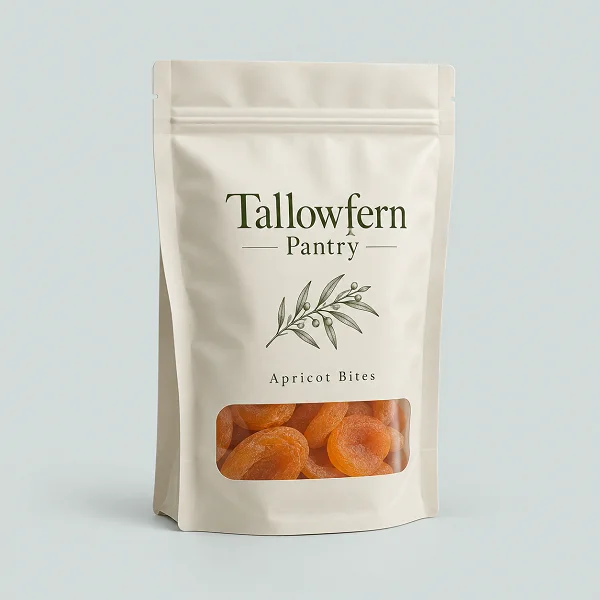
Pouches with a window can let shoppers see part of the product through a clear panel. A window may suit goods where colour or texture helps customers understand what is inside. Its position and size need to work with the artwork and any required product information.
Ask how the window affects the printable area and whether the pouch construction is suitable for your product. For some goods a fully printed panel may be more useful than a viewing section.
Kraft and Foil-Lined Options
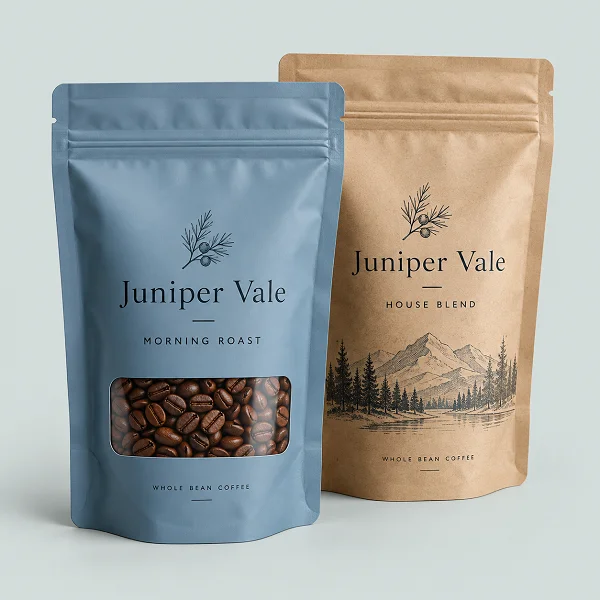
Kraft stand up pouches have a paper-like outer appearance that can suit a natural or handmade brand style. The word kraft describes the look or paper layer. A kraft-look outer layer doesn't mean the entire pouch is paper-based or recyclable. Check the exact structure before making a material claim.
The term foil stand up pouches can describe a pouch with a foil layer or one with a metallic-looking finish. These are different options. A metallic print effect can look like foil without using a foil barrier layer. Ask for the material specification that matches the option being quoted.
Spout and Valve Features
Spouts and valves are specialised features. A spout may be used for certain pourable products while a one-way valve is often considered for products such as freshly roasted coffee. These options depend on product compatibility and filling requirements. Include them in your enquiry only after confirming they are available for your pouch type.
Choose a Pouch for What You're Packing
The product gives you the starting point. Its weight and shape affect how the pouch sits. Its sensitivity to air or moisture can affect material selection. Your filling process may also determine which pouch dimensions and seals are workable.
Stand Up Pouches for Coffee
A front panel gives coffee roasters room to show the blend name and roast information. Think about the quantity of coffee in each pack and whether customers need a resealable zip. If a degassing valve is required confirm compatibility with the pouch and filling setup before artwork is prepared.
Stand Up Pouches For Snacks
Stand up pouches for snacks may work for items such as nuts and dried fruit or confectionery. Consider the snack's size and whether sharp edges could affect the packaging. A window can help display the product while a zip may suit packs intended for more than one serving.
Stand Up Pouches For Pet Food
Stand up pouches for pet food can be considered for treats and smaller portions of dry food. Check the loaded weight as well as the pack dimensions. A heavy pouch needs suitable construction and seals. Include the product and fill weight in your quote request so the pouch can be sized to suit.
Powders and Other Dry Products
Protein powders and drink mixes may need a different pouch size from snacks even when the net weight is similar. Powder settles differently and can take up more or less space depending on density. Tell your supplier how the product is filled and whether a scoop or other item will be included.
Stand up pouches can also be used for non-food products where the material and construction suit the contents. Do not assume a pouch is appropriate for liquids or sensitive products without checking its specification first.
Example Pouch Sizes and Approximate Capacities
There is no single pouch dimension that works for every product. How much a pouch holds comes down to its width and height, gusset depth and the product's density. Treat the examples below as planning prompts rather than guaranteed size recommendations.
| Pouch Size Guide |
Approximate Capacity |
Possible Product Use |
Sizing Consideration |
| Small — about 100 × 150 mm |
About 50–100 g |
Samples, small snack portions or lightweight powders |
Allow room above the product for the top seal |
| Small-medium — about 130 × 200 mm |
About 150–250 g |
Coffee, nuts, confectionery or pet treats |
Product density and gusset depth affect the fill amount |
| Medium — about 160 × 230 mm |
About 300–500 g |
Snacks, coffee beans or dry goods |
Check the filled pouch sits upright and remains easy to handle |
| Large — about 200 × 300 mm |
About 750 g–1 kg |
Larger pet treat packs or bulk dry products |
Confirm loaded weight and seal strength with the supplier |
Note: For a useful size recommendation provide the product's net weight and approximate dimensions. If you have an existing pack share its measurements or a sample reference. Also mention how much headspace is needed for filling and sealing. The final fit should be checked with the actual product because volume alone may not predict how a pouch will sit.
Materials and Barrier Options
A pouch's material layers affect its feel and performance. Some structures are designed to provide a barrier against moisture or oxygen. The level of protection depends on the complete material specification and the product being packed. Ask for details based on your product’s storage and shelf life requirements.
Paper-look finishes and kraft outer layers can create a different appearance from clear or metallic films. They do not automatically make a pouch recyclable or compostable. If environmental claims are important request documentation for the exact pouch structure and check that it applies to the market where the product will be sold.
For food products confirm that the proposed packaging is suitable for the intended food contact and filling conditions. Do not rely on a general phrase such as "food grade" without checking the supplier's documentation and the requirements for your product.
Printing That Works Across the Pouch
Custom printed stand up pouches give your brand space to identify the product and share useful details. The artwork should account for the front and back panels as well as the bottom gusset and top seal. Keep important text clear of folds and sealing areas.
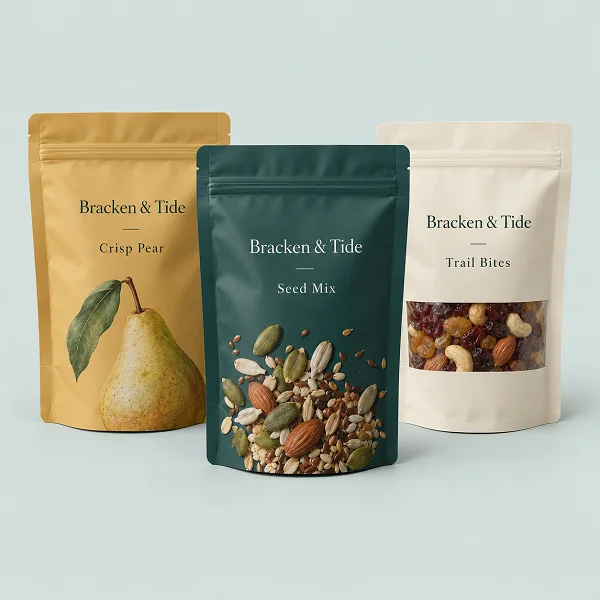
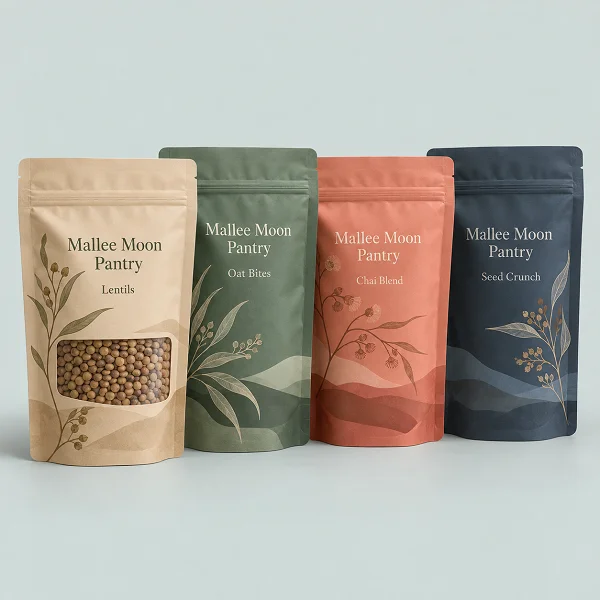
Stand up pouches with logo can use a simple brand mark or a fuller design with colour and product information. Consider how the pouch will look upright on a shelf. A readable product name and clear contrast can help customers find the right variant across a range.
Before production check spelling and product details carefully. Confirm the print area and the position of any window or closure. Ask for a proof where offered so you can review the layout before approving it. Print methods and finishes depend on the order size and pouch construction.
Ordering Stand Up Pouches in Bulk
If you are comparing bulk stand up pouches options or looking for wholesale stand up pouches start with the quantity you can use within a sensible period. Larger orders may affect the unit price but they also require more storage and working capital. Ask for pricing at quantities that suit your sales forecast.
To keep stand up pouches affordable, focus on the features that matter most. A standard size may be more practical than a highly specialised format. A straightforward print design can also help keep the brief focused. Check what each quote includes such as material, size and features alongside the price.
Fine Packaging can help Australian businesses discuss stand up pouches Australia requirements for their products. Provide your delivery postcode and preferred timing when asking for pricing. Minimum order quantities and lead times depend on the selected pouch and production method so confirm these details with your quote.
Fine Packaging has a minimum order quantity of 100 pouches. The available options and pricing can vary by pouch style and specifications.
Details to Include When Requesting a Quote
- Product type and net weight
- Preferred pouch dimensions or capacity
- Whether you need a zip or viewing window
- Material or barrier requirements if known
- Print design and number of product variants
- Estimated order quantity
- Filling and sealing method
- Delivery postcode and required timing
If you are unsure about a specification send what you know so far. A product description and expected quantity are a useful start. Fine Packaging can review the brief and advise which details need confirming before a quote can be prepared.
A Stand Up Pouch to Suit What You Sell
Share your product details and order estimate with Fine Packaging to discuss suitable custom stand up pouches. Contact support@finepackaging.com.au for free quotes and free shipping on your order.