Give Every Garment a Cleaner Journey from Packing to Delivery
Clothing can pass through factories warehouses fulfilment centres retail stores and delivery networks before reaching the customer. Each stage creates a risk of dust moisture marks and handling damage. Our Plastic Garment Bags Australia range helps you choose packaging that keeps garments clean and easy to identify throughout this journey. Bags can be produced for folded clothing or items stored and transported on hangers.
What Are Custom Plastic Garment Bags?
Custom plastic garment bags are flexible film bags manufactured to suit the dimensions and packing needs of clothing products. They may be clear frosted coloured or printed with supplied branding. Flat bags are generally used for folded garments while long covers with hanger openings protect suits dresses coats and uniforms. Closures can include an adhesive flap resealable strip or open top depending on how the garment will be packed.
A standard bag may work for common clothing sizes. However custom production provides more control over the width length film thickness ventilation and closure position. It can also reduce excessive material around the product. This creates a neater pack and may help clothing move more efficiently through cartons shelving and fulfilment systems.
Plastic Garment Packaging for Australian Clothing Businesses
Fashion businesses need packaging that works beyond the first impression. It should suit the garment folding method and protect the fabric without slowing down packing. Fine Packaging also develops custom apparel packaging boxes for independent labels online sellers and clothing retailers. Each bag can be planned around the garment type as well as the way orders are stored and distributed.
A lightweight T-shirt does not require the same bag format as a structured blazer or full-length gown. We review the packed dimensions and intended use before recommending a material or closure. This practical approach helps prevent an oversized bag from looking loose or a tight bag from placing unnecessary pressure on the clothing.
Packaging for Folded Clothing
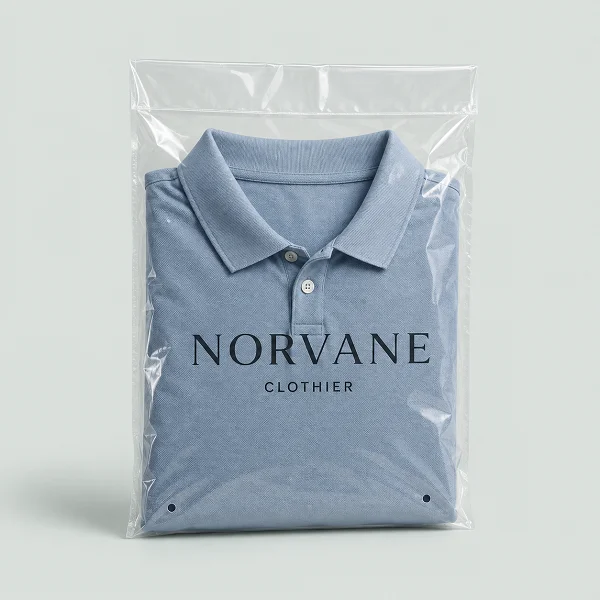
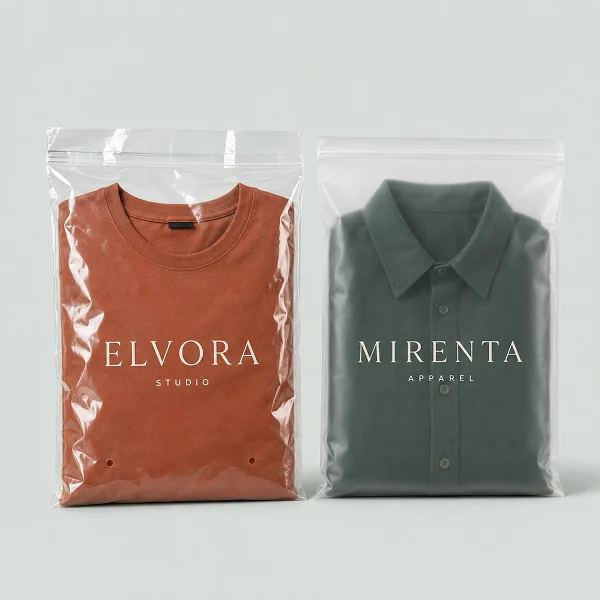
Flat plastic clothing bags are suitable for T-shirts, shirts, trousers, knitwear, activewear, children’s clothing and underwear. The garment is folded before being placed through the bag opening. A flap can then be folded over and sealed to produce a tidy rectangular pack.
These plastic bags for clothes can support inventory handling because the product remains visible while being protected from dust and light contact with moisture. Barcodes size labels care information and stock stickers can be placed on the bag or included within a printed design. Vent holes may be added where trapped air could affect packing efficiency.
Packaging for Garments on Hangers
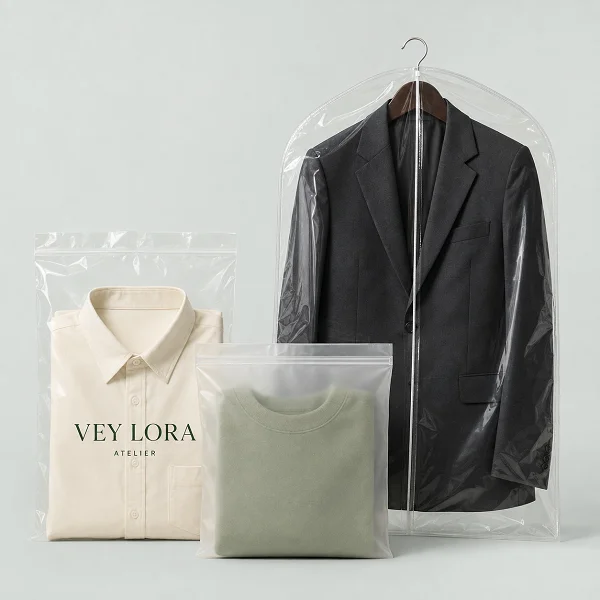
Hanging plastic garment bags are designed for garments that should remain suspended during storage transport or display. A shaped shoulder area follows the outline of the hanger while an opening at the top allows the hook to pass through. This style is useful for suits jackets dresses coats uniforms costumes and formalwear.
The cover length should suit the complete garment rather than the hanger alone. A short cover may leave the hem exposed while excessive length can gather around the bottom. Our team can adjust the shoulders hanger opening and overall dimensions to produce practical plastic garment covers for different clothing collections.
Packaging for Dry-Cleaning Services
Plastic dry-cleaning bags are commonly supplied as continuous rolls with individual covers separated by perforations. Staff can pull one cover from the roll and place it over a cleaned garment on a hanger. This format supports quick dispensing in laundries alteration shops costume departments and commercial dry-cleaning facilities.
Bag length and the number of covers on each roll can vary. Short options may suit shirts and jackets while longer formats are better for gowns coats and full-length garments. A hanger opening and sloped shoulders can be incorporated to make daily use easier.
Choose a Plastic Garment Bag Style
The correct plastic garment bag depends on whether the clothing will be folded hung displayed or returned to the customer after cleaning. It also depends on how often the bag needs to be opened. Fine Packaging can help you compare bag styles before the dimensions and artwork are approved.
Open-Top Garment Bags
An open-top bag provides a straightforward option for fast packing. Folded clothing slides into the opening without the need to remove a liner or seal an adhesive strip. This format may be selected when the bag will remain inside another shipping container or when quick access is required at a store or warehouse.
Open-top bags can be produced in a range of lengths and widths. They can also include vent holes or printed handling information. The open edge should be positioned to match the packing method and reduce the chance of the garment moving out during handling.
Self-Seal Garment Bags
Self-seal plastic garment bags include an adhesive strip that closes the flap after the garment has been inserted. A permanent strip suits packaging that is intended to remain closed until it reaches the customer. This style creates a neat finish and helps prevent the flap from opening during storage or delivery.
The adhesive position can be planned according to the direction in which staff load the garment. A protective release liner covers the adhesive before use. The liner is removed and the flap is folded into place to complete the pack.
Resealable Garment Bags
Resealable plastic garment bags can be opened and closed more than once when the selected adhesive system supports repeated use. They are useful when garments may need quality checks photography labelling or inspection after the initial packing stage.
A resealable closure also allows the customer to keep the bag for temporary clothing storage. The performance of the adhesive will depend on the film surface and environmental conditions as well as contact with dust or fibres. We can discuss the intended use before recommending a suitable specification.
Garment Bags Supplied on Rolls
Plastic garment bags on a roll support high-volume operations where staff need quick access to individual covers. Perforations allow each bag to be separated without cutting. Rolls can be planned for dispensers or work areas used by dry cleaners garment factories and uniform services.
The number of bags per roll will depend on their dimensions and film thickness. Larger or thicker covers create a heavier roll and may require a different core or packing arrangement. These details should be confirmed before production so the finished rolls fit the customer’s workflow.
Clear Frosted and Coloured Film Options
The appearance of the film affects product visibility and brand presentation. Clear plastic garment bags allow staff and customers to recognise the colour style and condition of the garment without opening the packaging. They are well suited to stockrooms fulfilment centres and retail collections with many product variations.
Frosted film creates a softer semi-transparent appearance. It provides some visibility while giving the package a more distinctive surface. Coloured film may be considered when stronger visual separation or added privacy is required. The final colour can appear different depending on film transparency thickness lighting and the garment placed inside.
LDPE Film
Low-density polyethylene is flexible and has a smooth feel. It is often selected for clear retail bags and protective garment covers. The material can be produced in different thicknesses to suit lightweight folded items or larger hanging garments.
LDPE generally offers good clarity and flexibility. It can also accommodate printed branding and safety information. The specification should be based on the garment weight bag size and expected handling rather than appearance alone.
HDPE Film
High-density polyethylene can provide useful strength at a relatively light thickness. It usually has a firmer feel and a more translucent appearance than clear LDPE. It may be used for dry-cleaning covers and other applications where fast dispensing and economical material use are important.
The two materials should not be treated as interchangeable. Film behaviour can change during sealing printing and packing. Fine Packaging will assess the requested format before confirming which material is suitable for your plastic apparel bags.
Selecting the Right Film Thickness
Film thickness affects flexibility durability weight and cost. A very light film may be suitable for temporary protection around a lightweight shirt. A heavier film may be needed for bulky garments or products that move through several handling stages. Using more material than necessary can increase packaging weight without providing a useful benefit.
Plastic film thickness is commonly expressed in microns. The appropriate micron level depends on the material and bag dimensions as well as garment weight and closure type. Samples or prototypes may be useful when a project has unusual performance requirements.
Factors That Affect the Specification
We consider how the bags will be filled and sealed as well as whether they will be packed into cartons. The distance travelled and storage conditions can also influence the required strength. Garments with metal trims sharp fasteners or projecting accessories may need additional protection to reduce the chance of puncturing the film.
The bag should not be relied upon as the only shipping layer unless it has been designed and tested for that purpose. Most garment bags act as internal protective packaging while a mailer carton or satchel provides the main protection during delivery.
How to Measure Custom Plastic Garment Bags
Accurate dimensions create a better fit and help prevent wasted space. Measure the garment after it has been folded into its final packing shape. Record its widest width and longest length as well as the packed thickness. Include labels tissue inserts cards and any other components that will remain inside the bag.
Allow enough clearance for staff to insert the garment without stretching the film. The required allowance depends on the fabric and folding method as well as the bag opening. A thick jumper will require more depth than a lightweight shirt even when their folded width and length are similar.
Measuring Hanging Covers
For a hanging cover measure across the widest part of the hanger or garment shoulders. Measure from the top of the hanger to the lowest point of the garment. Include additional length if the bottom needs to be folded closed or heat sealed.
Tell us the hanger hook dimensions and whether several garments will share one cover. We also need to know if the bag requires sloped shoulders or a straight top. These details help us position the opening and shape the cover correctly.
Testing the Fit Before Production
A sample can help assess fit when the garment has an unusual form or substantial volume. Place the complete packed item inside the proposed bag and check the opening closure and corners. The garment should enter without excessive force and should not move freely in a large amount of unused space.
Artwork dimensions should only be finalised after the bag size and sealing areas are confirmed. This prevents important text or design elements from sitting too close to an edge adhesive strip or perforation.
Common Plastic Garment Bag Sizes
The following dimensions provide a starting point for planning custom plastic garment bags. The correct size will depend on the folded or hanging dimensions of your garment as well as its thickness and packing method. Measure the complete product before confirming an order because clothing sizes and folding methods can vary between businesses.
| Garment Type |
Suggested Bag Size (W × L) |
Bag Format |
Common Use |
| Children’s Clothing |
200 × 300 mm |
Flat Self-Seal Bag |
T-shirts leggings and lightweight sets |
| Folded T-Shirts |
250 × 350 mm |
Flat or Resealable Bag |
Retail and ecommerce packing |
| Shirts and Blouses |
300 × 400 mm |
Self-Seal Bag |
Folded business and fashion clothing |
| Trousers and Jeans |
350 × 450 mm |
Flat Garment Bag |
Denim workwear and folded trousers |
| Jumpers and Hoodies |
400 × 500 mm |
Large Resealable Bag |
Bulky knitwear and casual clothing |
| Suits and Jackets |
600 × 1,000 mm |
Hanging Garment Cover |
Tailoring retail and dry cleaning |
| Coats and Short Dresses |
600 × 1,200 mm |
Hanging Garment Cover |
Outerwear uniforms and formalwear |
| Gowns and Long Dresses |
650 × 1,800 mm |
Long Hanging Cover |
Bridalwear costumes and eveningwear |
| Custom Garments |
Made to Required Dimensions |
Flat Hanging or Roll-Fed |
Unusual shapes and branded collections |
These sizes are general references only. Allow suitable clearance for the garment thickness closure flap hanger and any inserts. Fine Packaging can manufacture Plastic Garment Bags Australia in custom dimensions based on your exact packing requirements.
These bags can be used as an inner protective layer before garments are placed inside custom retail packaging for display or delivery.
Custom Printing for Stronger Clothing Presentation
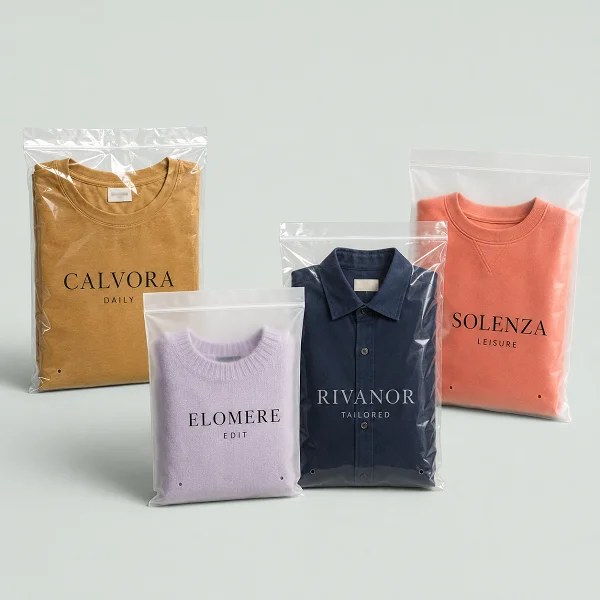
Printed plastic garment bags turn a basic protective layer into a recognisable part of the customer experience. Printing can include a logo website address social media details care reminders product information recycling guidance or handling instructions. The design should remain clear when viewed over both light and dark garments.
Fine Packaging can manufacture custom printed plastic garment bags using artwork supplied in the requested format. The number of colours and printable area will depend on the film and bag structure. We provide an artwork proof for review before production begins.
Plastic Garment Bags With Logo
Plastic garment bags with a logo help identify stock during storage and create a consistent brand presentation when customers open their orders. A simple one-colour logo can provide a clean result while a broader printed design may include patterns instructions or campaign graphics.
Printing should not interfere with barcodes or product visibility. Clear areas can be reserved so staff can inspect the clothing and scan labels. Printed warnings and recycling information should remain legible at the finished size.
Planning Artwork for Transparent Film
Ink printed on clear film can look different from the same colour shown on a white screen or paper proof. The garment behind the artwork may also affect its appearance. A white underprint may be considered for selected designs when stronger opacity is required.
Keep important text away from seals folds adhesive areas hanger openings and ventilation holes. Our team will check the artwork against the approved bag layout and identify basic placement issues before manufacturing starts.
Useful Features for Better Packing
Custom plastic garment bags can include practical features that support packing storage and customer use. Each addition should solve a genuine operational need. Adding unnecessary features can complicate production and increase the material or unit cost.
Ventilation Holes
Small ventilation holes allow trapped air to escape when folded garments are packed into cartons. This can help bags sit flatter and reduce excess volume. The size number and position of the holes should suit the bag and avoid weakening areas that receive regular handling.
Hanger Openings
A centred hanger opening lets the hook pass through the top of a hanging cover. The opening should provide adequate clearance without leaving a large exposed area. It can be combined with shaped shoulders to create a closer fit around suits dresses and coats.
Safety Warnings
Plastic bags may require a suffocation warning based on their size thickness intended market and customer requirements. The warning can be printed in a clear position using legible text. Businesses should confirm the rules and retailer standards that apply to their products and distribution locations.
Barcode and Label Areas
A designated label panel can improve consistency when workers add barcodes sizes colours or order details. The panel may be clear printed or frosted depending on how the information will be applied. Testing the selected label adhesive on the film can help prevent lifting or residue problems.
Recyclable and Lower-Waste Garment Packaging
Recyclable plastic garment bags can be made from a single compatible film where the structure and local collection system allow recycling. Actual recyclability depends on the material colour adhesive printing and facilities available to the end user. A recyclable material does not guarantee that every council or collection service will accept the finished bag.
Using an appropriate size and thickness can also reduce unnecessary material. A bag should provide the protection required for the garment without excessive film around the edges. Businesses may also consider recycled-content film or certified compostable alternatives where these options suit their operations and disposal pathways.
Be Clear About Environmental Claims
Environmental statements should be specific and supported by the selected material. Avoid broad claims that could confuse customers about disposal. Recycling symbols instructions and certification references must match the actual finished bag rather than the base film alone.
Our team can discuss available material choices but the customer remains responsible for confirming claims required by retailers regulators and industry programmes. Clear disposal information gives customers a more useful direction than vague sustainability language.
Plastic Garment Bags for Different Industries
Custom plastic garment bags can support many businesses that manufacture sell clean hire or manage clothing. The bag format should reflect how each organisation handles garments and how long the protection will be required.
Fashion Labels and Online Retailers
Fashion labels use flat bags to separate sizes colours and styles before orders are packed. Clear film makes visual checking easier while printed branding supports a consistent unboxing experience. Self-seal or resealable closures can suit ecommerce workflows where products may be inspected before dispatch.
Uniform and Workwear Suppliers
Uniform providers may pack shirts trousers jackets and complete employee sets. Individual bags help keep items separated by wearer department or size. Printed identification fields can support sorting for corporate healthcare education hospitality and industrial clients.
Dry Cleaners and Alteration Businesses
Dry cleaners commonly require lightweight hanging covers that can be dispensed quickly from a roll. Alteration businesses may use longer covers to protect formalwear before collection. Clear film allows the business and customer to view the garment while it remains on the hanger.
Bridal Formalwear and Costume Businesses
Dresses gowns costumes and tailored suits often need longer covers with extra width. The design should account for structured shoulders layered skirts and decorative details. A bag protects against dust and routine handling but delicate embellishments may require tissue or another soft layer between the garment and film.
Bulk and Wholesale Plastic Garment Bag Supply
Bulk plastic garment bags are suitable for businesses with ongoing production packing or retail requirements. Ordering a planned quantity can help maintain consistent dimensions materials and printing across multiple garment collections. It may also provide a more economical unit cost than repeatedly purchasing small runs.
Fine Packaging supplies wholesale plastic garment bags for Australian businesses. Minimum order quantities depend on the bag dimensions material thickness printing method and required features. Contact our team with your specifications so we can confirm the available quantity for your project.
Information Needed for a Quote
For an accurate quote provide the bag width and length as well as the required film thickness. Tell us whether the bag will hold a folded or hanging garment. Include your preferred material closure colour order quantity and printing requirements.
If you are unsure about the dimensions send the complete measurements of the folded garment or hanging product. Mention any tissue inserts labels hangers or accessories that affect its packed size. These details help us prepare an accurate specification for businesses ordering Plastic Garment Bags Wholesale in Australia.
Proofing and Production
Once the size structure and artwork have been prepared you will receive a proof for review. Check all spelling contact details colours dimensions and artwork positions. Production can move forward after the proof and project specifications have received approval.
Manufacturing time depends on the order quantity printing requirements material availability and current production schedule. Confirm any fixed launch or delivery date before placing the order so the available timeline can be reviewed.
Why Choose Fine Packaging for Garment Bags?
Fine Packaging combines custom sizing material selection and printing support in one ordering process. We work with customers to understand the garment and its movement through storage retail or delivery. This helps us recommend a bag based on practical requirements rather than offering one standard format for every item.
Our custom plastic garment bags can be produced for folded clothing hanging garments and dry-cleaning operations. Choose from clear or frosted film as well as printed designs adhesive closures hanger openings and ventilation features. Wholesale quantities are available for businesses across Australia.
Wrap Your Clothing Brand in a Smarter Finish
Give clothing a cleaner presentation with Custom Plastic Garment Bags made for your sizes branding and packing process. Fine Packaging supplies clear printed self-seal and hanging formats for Australian fashion retailers dry cleaners and ecommerce businesses. Email support@finepackaging.com.au for free quotes and expert assistance. We also provide free shipping on orders delivered within Australia.