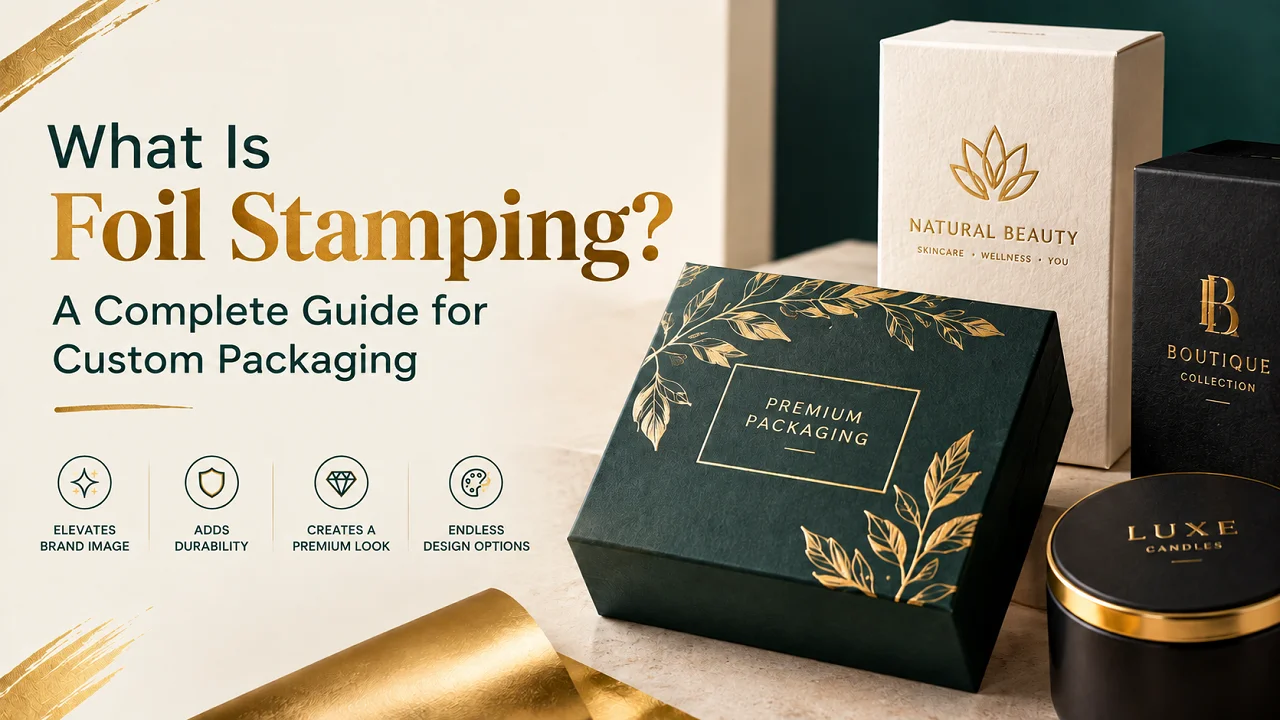
Foil stamping can turn a simple package into something customers notice. It adds a metallic or coloured finish to selected parts of a design such as a logo or product name. This guide explains how foil stamping works and which materials suit it. You will also learn how hot foil and cold foil differ.
Why Foil Stamping Is Used in Packaging
Packaging has to communicate before a customer opens it. Colour and shape play an important role but the surface finish can make just as much difference. Foil catches light and creates contrast against the printed background. This can help a brand name or design feature stand out on a shelf.
Brands often use foil on gift boxes and retail packaging where presentation matters. The finish can look bold or understated depending on the foil colour and the size of the stamped area. A small metallic logo may create a refined result. A larger pattern can give the package a more decorative appearance.
What Is Foil Stamping?
Foil stamping is a finishing process that applies a thin layer of foil to a chosen area of packaging or another suitable surface. The foil may be transferred with heat and pressure or applied through a cold foil process. A custom die is commonly used to define the shape of the finished design.
The foil remains on the surface rather than soaking into the board like ordinary printing ink. This creates a clean decorative effect with a distinct shine and finish. Gold and silver are common choices but foil is available in many other colours and finishes.
Quick answer: Foil stamping transfers a thin decorative film onto selected areas of packaging. It is commonly used for logos and product names. It may also be applied to borders and patterns. The foil can have a metallic or coloured finish. Available effects may include gold and silver as well as copper and holographic foil.
How Does the Foil Stamping Process Work?
The exact foil stamping process depends on the selected method. Traditional hot foil stamping uses a metal die. The die is made to match the part of the artwork that will receive the foil.
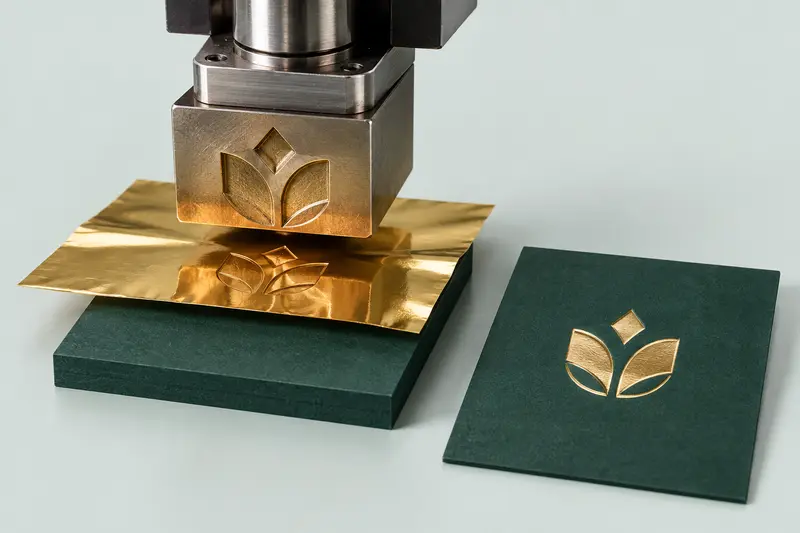
During production the die is heated and pressed against the foil. The packaging material sits underneath it. Heat and pressure release the decorative layer from its carrier film and bond it to the required area.
A typical hot foil process follows these stages:
- The packaging artwork is reviewed and prepared.
- A separate foil layer is created for the design file.
- A custom metal die is produced from the approved artwork.
- The correct foil roll is loaded into the machine.
- The die is heated to a controlled temperature.
- Pressure transfers the foil onto the packaging surface.
- The finished sheets are checked before cutting and assembly.
Temperature and pressure need to suit the material and foil type. Too little pressure may leave missing areas. Excess heat can affect fine artwork or mark certain materials. Production testing helps find the right settings before the full order is completed.
Hot Foil Stamping
Hot foil stamping is one of the most familiar methods used for custom packaging. It transfers the foil through a combination of heat and pressure. The method can produce sharp lettering and solid decorative shapes when the artwork is prepared correctly.
This process works well for paperboard and many paper-wrapped rigid boxes. It may also suit some coated stocks and plastic materials. Testing is important because surfaces react differently to heat and pressure.
A custom die is normally required for hot foil work. This creates an initial setup cost. The die may be used again for a repeat order if the artwork and stamped dimensions remain unchanged.
Cold Foil Stamping
Cold foil stamping does not rely on a heated die to transfer the foil. An adhesive is printed onto the areas that need foil. The foil is then pressed against the adhesive before the carrier film is removed.
Cold foil can suit faster production methods and larger decorative areas. It can also support detailed designs. The foil may be printed over after application which allows brands to create a wider range of colours and effects.
The result can differ from traditional hot foil. The most suitable option will depend on the board surface and artwork. The order quantity and desired finish also need to be considered.
Hot Foil Stamping vs Cold Foil Stamping
| Feature |
Hot Foil Stamping |
Cold Foil Stamping |
| Transfer method |
Uses heat and pressure |
Uses a printed adhesive |
| Custom die |
Usually required |
Not normally required for the transfer |
| Appearance |
Crisp and well-defined |
Smooth and suitable for broader areas |
| Suitable artwork |
Logos and text with clear shapes |
Detailed graphics and larger foil areas |
| Production factors |
Die cost and machine setup |
Adhesive and print compatibility |
Neither method is automatically better for every box. Hot foil is often selected for a defined premium detail. Cold foil may be practical when the design needs broader coverage or additional printed colour over the foil.
Popular Foil Stamping Colours
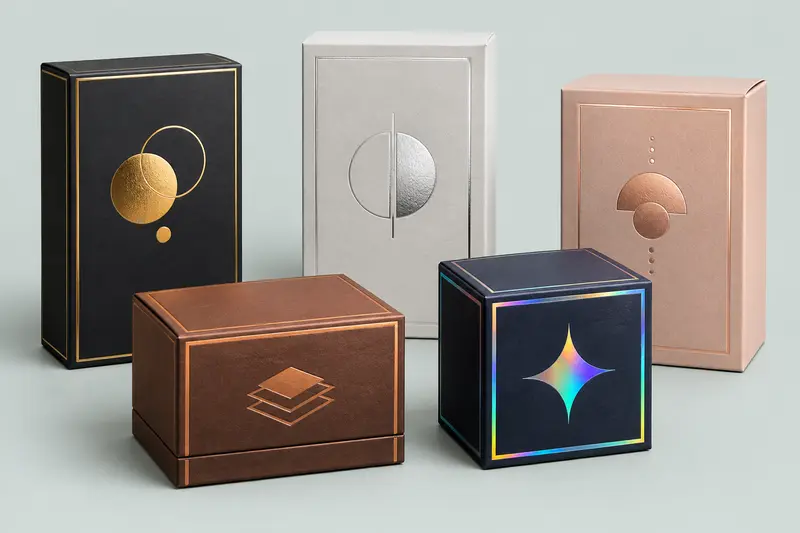
Metallic gold and silver are widely recognised but they are not the only choices. Modern foil stamping colours range from traditional metallic shades to bright pigments and holographic patterns.
Gold Foil Stamping
Gold foil stamping is commonly used for luxury gifts and jewellery packaging. It also appears on chocolate boxes and cosmetic cartons. Gold can create a warm premium look when paired with black or dark green. It also works well with white and natural kraft tones.
Different gold foils can produce different results. Some have a yellow tone while others appear softer or closer to rose gold. Checking a physical foil sample is useful when colour consistency matters.
Silver Foil Stamping
Silver foil stamping gives packaging a clean metallic detail. It is often paired with navy black or cool grey. Silver can also suit white packaging when the brand wants a subtle finish.
The reflective level can vary. Bright silver creates a mirror-like effect while satin silver has less shine. The surface of the board can also affect how the final foil looks.
Coloured and Special-Effect Foils
Other choices may include copper and rose gold. Blue and red foil may also be available. Some projects use pearl or clear foil for a softer decorative effect. Holographic foil changes in appearance as the package moves under light.
Availability may depend on the supplier and the production method. Requesting a sample or foil chart can help you compare the options before approving your artwork.
Foil Printing on Packaging
Foil printing on packaging is often used to highlight one important design element. This may be the brand logo or a short product name. Foil can also define a border or create a small repeating pattern.
Applying foil across every part of a design is not always necessary. A carefully placed detail can produce stronger contrast and keep the layout easy to read. The surrounding print should support the foil rather than compete with it.
Foil stamping can be applied to several styles of packaging. Common examples include:
Can Foil Stamping Be Used on Cardboard?
Yes. Foil stamping on cardboard is possible but the word cardboard covers many materials. Folding paperboard has a smoother surface than many corrugated boards. It can usually hold small text and defined artwork more cleanly.
Corrugated cardboard has a fluted layer. Its surface may show more variation under pressure. Foil can still be considered for some corrugated boxes but the board grade and liner need to be reviewed first.
Rigid boxes often have a paper wrap over a dense board core. The foil is applied to this outer paper. The wrap can be selected to support both the printed design and the required foil effect.
Expert tip: Test the foil on your selected packaging material before approving the full production run. Include small lettering and fine design details in the sample. This can reveal unclear edges or incomplete foil transfer that may not be obvious from the digital artwork alone.
Main Foil Stamping Benefits
The practical value of foil depends on how it is used. The following foil stamping benefits explain why many brands add it to custom packaging.
Creates Visual Contrast
Foil reflects light in a way that standard ink cannot fully reproduce. It can separate a logo from the background and draw attention to important information.
Supports a Premium Presentation
A controlled metallic detail can make a package feel more considered. This is useful for products sold as gifts or items positioned at a higher price point.
Works with Different Brand Styles
Foil is not limited to traditional luxury branding. A silver geometric shape can look modern. Copper foil can feel warm and handcrafted. Holographic foil can suit a bold contemporary product.
Can Be Combined with Other Finishes
Foil may be used with matte or gloss lamination. It can also be paired with embossing or debossing. Spot UV may be added to other areas of the design to create further contrast.
A foil detail can guide the eye towards a product name or special edition message. It works best when the hierarchy of the artwork is already clear.
Foil Stamping vs Embossing
The difference between foil stamping vs embossing is easy to understand. Foil stamping adds a decorative layer to the surface. Embossing changes the physical shape of the board by raising part of the design.
Debossing works in the opposite direction. It presses the design into the surface. Neither embossing nor debossing automatically adds colour.
Foil and embossing can be combined. The foil provides the colour and shine while the embossing creates a raised detail. This combination requires careful registration so both effects remain aligned.
| Finish |
What It Does |
Common Result |
| Foil stamping |
Adds a thin foil layer to selected areas |
Metallic or coloured surface detail |
| Embossing |
Raises selected artwork above the surface |
Raised design with a tactile feel |
| Debossing |
Presses selected artwork into the surface |
Recessed design with added depth |
Metallic ink contains reflective particles that create a soft metallic appearance. It is printed in a similar way to other inks. Foil is transferred as a separate film and usually produces a brighter reflective effect.
Metallic ink may suit fine printed graphics or designs with broader colour variation. Foil can be more effective when the artwork needs a distinct mirror-like feature. The board colour and coating can change how metallic ink appears. A printed proof or production sample can help with the decision.
How to Prepare Artwork for Foil Stamping
Good artwork makes production easier and reduces the chance of unclear details. The foil area should normally be supplied as a separate vector layer. It is often shown as a solid spot colour in the artwork file.
Keep these points in mind when preparing a design:
- Use vector artwork for the foil layer where possible.
- Keep the foil design separate from CMYK print layers.
- Avoid very thin lines unless they have been tested.
- Allow enough space between separate foil elements.
- Convert fonts to outlines before supplying final artwork.
- Check that the design fits the correct dieline panel.
- Do not rely on a screen preview to judge metallic colour.
Small text may fill in or lose clarity during production. Fine gaps can also close under pressure. Your packaging supplier can check the artwork and recommend changes before the die is made.
Common Foil Stamping Problems
Foil application needs accurate setup. Problems can occur when the artwork or surface does not suit the selected method.
Missing Areas
Parts of the design may fail to transfer if the pressure is uneven or the board surface is too rough. The machine settings and foil type may need adjustment.
Edges That Are Not Sharp
Too much heat or pressure can affect fine edges. Artwork with tiny gaps may also become less defined. Simplifying the design can improve the result.
Foil Cracking on Folds
Foil placed across a crease may crack when the box is folded. Keeping important foil details away from score lines can reduce this risk.
Incorrect Registration
The foil may not align with the printed artwork if production tolerances were not considered. Designs that need exact registration should be reviewed before production.
Unexpected Colour
Foil can look different under warm and cool lighting. Its appearance may also change beside certain printed colours. Physical samples provide a more reliable guide than a computer screen.
Is Foil-Stamped Packaging Recyclable?
The recyclability of a package depends on its complete construction. A small foil-stamped area does not always prevent paper packaging from being recycled. Local recycling facilities and material combinations can affect acceptance.
Lamination and plastic windows may have a greater effect than a limited foil detail. Magnets and foam inserts should also be considered when assessing the whole pack.
Brands seeking a lower-impact design can use foil only where it adds value. They can also select recyclable board and avoid unnecessary mixed materials. Recycling directions should reflect the actual packaging and the services available in the customer’s area.
How Much Does Custom Foil Stamping Cost?
The price of custom foil stamping depends on the artwork and the order specifications. A new hot foil design normally needs a custom die. A large stamping area may cost more than a small logo because it uses more foil and may need additional production time.
Other pricing factors include:
- The dimensions of the foil area
- The number of separate foil colours
- The foil type and finish
- The packaging material
- The level of artwork detail
- The required order quantity
- Whether embossing is also required
- The number of box panels receiving foil
Using the same foil colour across one clear design area can help control setup. A quote should be based on the finished dieline and final artwork rather than a rough idea of the box.
Choosing Foil Stamping for Your Packaging
Start with the purpose of the package. Think about where it will be sold and how customers will handle it. A reflective finish may work well in retail lighting but the artwork still needs to remain clear from different angles.
Consider the background colour and board texture. A smooth dark surface can create strong contrast with gold or silver foil. Natural kraft has a different character and may suit copper or a simple dark pigment foil.
It is also worth thinking about how much foil the design really needs. A small detail can look more balanced than full coverage. Leaving clear space around the stamped area can help it attract attention.
Ask your supplier about material testing and artwork limits. A foil chart can show the available colours but a sample on the chosen board gives a better indication of the final appearance.
Foil Stamping in Australia
Businesses looking for foil stamping in Australia should provide clear packaging details when requesting a quote. Include the finished box dimensions and material if known. Add the required quantity and artwork. You should also identify the areas that need foil.
Tell the supplier whether you want hot foil or need advice on the most suitable method. Include your preferred colour and mention if the foil will be combined with embossing. These details make it easier to assess production requirements and prepare accurate pricing.
Fine Packaging can help you compare foil options for custom boxes and other paper-based packaging. We can also review the artwork and material before production.
Add a Distinctive Foil Finish to Your Packaging
The right foil detail can highlight your branding without making the design feel overcrowded. Fine Packaging can produce custom foil packaging in colours and finishes that suit your product. Contact us at support@finepackaging.com.au for free quotes. We offer free shipping on qualifying custom packaging orders across Australia.
Frequently Asked Questions
What is foil stamping on packaging?
Foil stamping is a decorative process that transfers a thin layer of foil onto selected parts of packaging. It is often used for logos and lettering. It may also be applied to borders or patterns.
What is the difference between hot foil and cold foil stamping?
Hot foil stamping uses heat and pressure with a custom die. Cold foil uses an adhesive to hold the foil on the printed surface. The right method depends on the material and design. Production quantity and the required finish also matter.
Can you use foil stamping on cardboard boxes?
Yes. Foil can be applied to many paperboard and paper-wrapped cardboard boxes. Smooth surfaces usually support finer detail. Corrugated cardboard may need testing because its surface can be less even.
Is foil stamping only available in gold and silver?
No. Gold and silver are popular but many other colours may be available. Options can include copper and rose gold. Coloured pigment foil and holographic foil may also be suitable for some projects.
Can foil stamping be combined with embossing?
Yes. Foil adds colour and shine while embossing raises the selected artwork. Both effects need to align correctly. A supplier should review the artwork and board before production.
What artwork is required for foil stamping?
A vector file is usually preferred. The foil design should be placed on its own clearly labelled layer. Fonts should be converted to outlines and the foil area should use a solid spot colour.
Does foil stamping make packaging waterproof?
No. Foil stamping is a decorative finish and does not make paper packaging waterproof. A coating or lamination may add some surface protection but it will not turn a paper box into waterproof packaging.
Is foil-stamped packaging recyclable?
It may be recyclable when foil covers only a limited part of a paper-based package. Acceptance depends on the complete construction and local recycling services. Plastic windows and foam inserts should be considered separately.