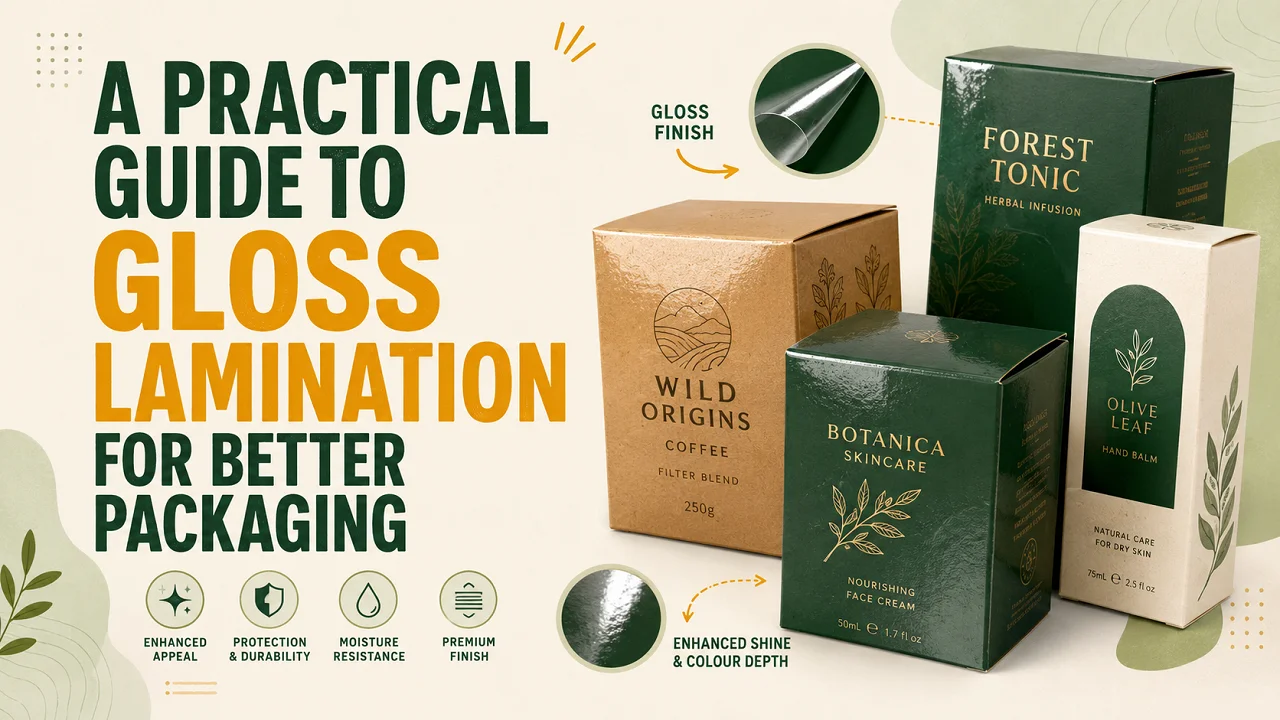
Gloss lamination can turn an ordinary printed box into packaging that looks brighter and feels more polished. It adds a clear film over the printed surface which helps colours appear richer while giving the board added protection during handling. This guide explains how gloss lamination works and where it performs well. It also covers its limits so Australian businesses can choose a finish with confidence.
Quick answer: Gloss lamination is a finishing process that bonds a thin transparent film to printed paper or cardboard. Heat and pressure are normally used to create a smooth and reflective surface. The film can improve colour depth and protect the print from rubbing or light moisture. It is widely used on retail boxes, product sleeves, paper bags, book covers and printed promotional materials.
It is a good option when bold colour and a clean shine suit the brand. It may be less suitable when glare needs to be controlled or the design calls for a soft and understated appearance.
What Is Gloss Lamination?
Lamination places a separate layer of clear film over a printed sheet. In most packaging work the film is bonded after printing and before the sheet is cut, creased and assembled. The result is often described as a gloss finish because it reflects more light than untreated paper.
The transparent film allows the artwork underneath to remain visible. Its smooth surface can make dark tones look deeper and bright colours look more intense. Photographs and detailed illustrations may also appear clearer due to the added contrast.
Gloss laminated packaging is not the same as paper that has a naturally glossy coating. Coated paper receives its surface treatment during paper production. Lamination is an additional finishing stage applied over the completed print.
How the Gloss Lamination Process Works
The exact production method depends on the equipment and the selected film.
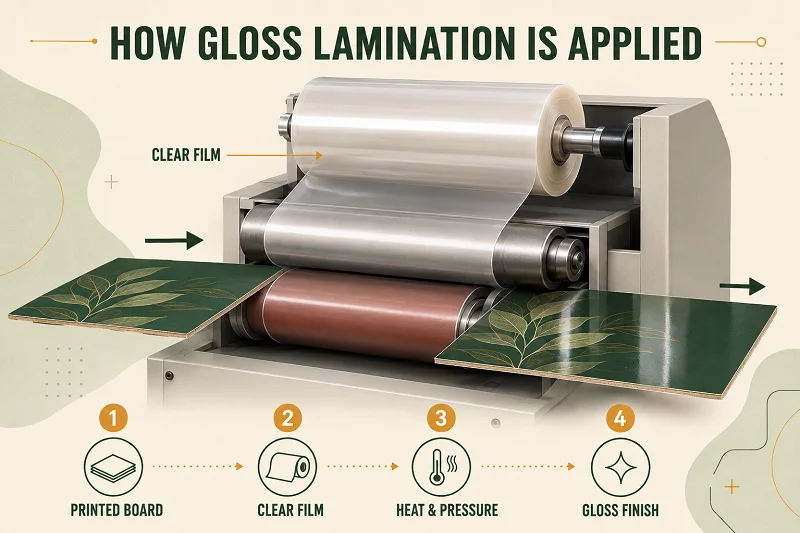
A common process follows these stages:
- The packaging artwork is printed onto paperboard or a printed paper sheet.
- The ink is allowed to dry or cure as required.
- A transparent film is positioned over the printed surface.
- Heat and pressure activate the adhesive and bond the film evenly.
- The laminated sheet is trimmed, die cut and creased.
- The finished pieces are folded and glued into boxes or applied to another board.
A clean bond is important. Dust, damp paper or poorly cured ink can affect the finished surface. Production settings also need to suit the paper and film. This helps prevent bubbles, silvering or areas that lift.
What Does a Gloss Finish Look and Feel Like?
The most noticeable feature is shine. Light reflects from the surface instead of being softly scattered by the paper. This gives packaging a bright and polished look.
The surface usually feels smooth. It does not have the velvety feel of soft-touch film or the muted appearance of matte film. Its visual character is lively and direct. This can work well for brands that want products to look fresh, colourful or energetic.
Results still depend on the artwork. A dark design can become richer while high-contrast graphics may appear more dramatic. Pale colours can look cleaner but reflections may be more noticeable across large empty areas.
Expert tip: Do not choose gloss lamination only because it makes colours look brighter. Consider the artwork and the lighting where the packaging will be displayed. Strong reflections can make small text harder to read. Request a finished sample if your design contains dark colours or detailed product information. This allows you to check the shine, colour depth and readability before approving the full production run.
Main Benefits of Gloss Lamination for Packaging
Brighter Printed Colours
One of the main reasons to choose gloss lamination is its effect on colour. The reflective layer can increase the apparent depth and saturation of printed artwork. Reds, blues and other strong colours often look more vivid. Product photographs can also gain contrast.
This does not correct inaccurate printing. Colour management and a suitable proof are still important. The finish changes the way light interacts with the printed surface rather than adding extra ink.
Protection From Normal Handling
The film creates a barrier over the ink. It can reduce light scuffing, rubbing and dirty marks during packing, transport and retail handling. This is useful for packaging that passes through many hands before reaching the customer.
The amount of protection depends on the film grade and packaging design. Sharp objects and rough treatment can still mark the surface. Lamination should support a sound box structure rather than compensate for weak board.
Resistance to Light Moisture
A laminated surface can be wiped more easily than untreated paper. It may resist an occasional splash or brief contact with damp hands. This can be useful for takeaway sleeves, personal care packaging and other products handled in busy settings.
The finished box is not waterproof. Water can still enter through cut edges, folds and unlaminated areas. Paper fibres may swell if the pack remains wet. Products exposed to ongoing moisture need a material and barrier system designed for those conditions.
A Smooth Retail Presentation
Gloss laminated packaging often looks crisp under retail lighting. The finish can help a colourful box stand out among subdued packs. It is commonly chosen for confectionery, toys, cosmetics, beverages and promotional gift packaging.
Shine should support the brand rather than dominate it. A finish that looks excellent on a bold children’s product may feel out of place on a quiet natural skincare range.
Easier Surface Cleaning
Dust and some light marks can often be removed from the smooth film with a soft dry cloth. This helps samples and display packaging remain presentable. Cleaning advice should be tested because strong chemicals or rough cloths can damage the print or surface.
Possible Disadvantages to Consider
Reflections and Glare
The reflective surface can create glare under bright shop lights or direct sunlight. Fine text may become harder to read from certain angles. This deserves attention when the packaging carries detailed directions or required product information.
A physical sample provides a better guide than an artwork file viewed on a screen. Place the sample under lighting similar to the intended retail setting and check it from several angles.
Fingerprints May Be Visible
Smooth dark surfaces can show fingerprints and handling marks. The problem is more noticeable on large areas of black, navy or other deep colours. A pattern or lighter artwork may make marks less obvious.
Folding and Edge Issues
Heavy ink coverage, tight folds and unsuitable film can increase the risk of cracking or lifting near creases. Correct grain direction and proper creasing help the board fold cleanly. The printer should review difficult structures before full production.
Environmental Trade-Offs
Conventional plastic film adds another material to a paper-based package. This can affect recovery through Australian recycling systems because requirements vary by facility and package construction. A recyclable paper box does not automatically remain suitable for every recycling stream after plastic film is applied. Read our sustainable packaging guide when comparing broader material options.
Ask the supplier for the film specification. You can then assess the whole pack including adhesives, windows, foil and inserts. Fibre-based or cellulose films may be available for some projects. Any environmental claims should be supported by current supplier evidence and local disposal guidance.
Gloss Lamination Compared With Matte Lamination
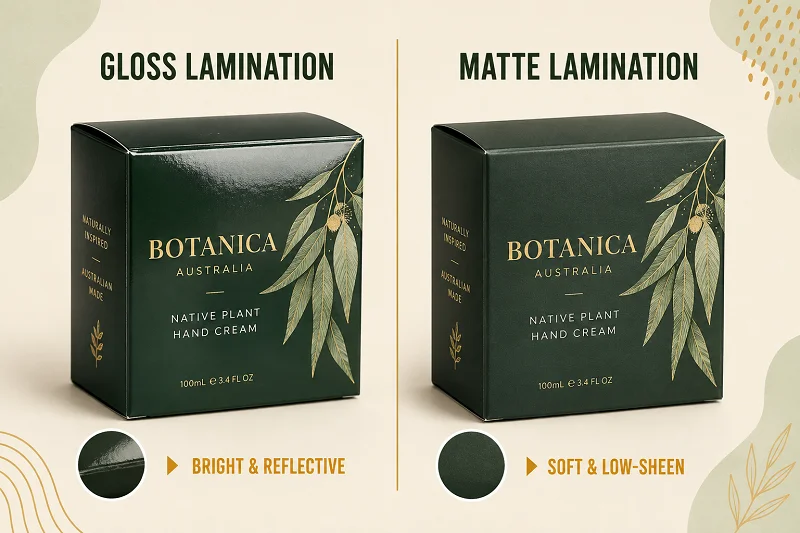
Both finishes add a film over printed material. Their biggest difference is the way the surface reflects light and presents colour. You can learn more about the softer option in our guide to matte lamination in packaging.
| Feature |
Gloss Lamination |
Matte Lamination |
| Appearance |
Bright and reflective |
Soft and low sheen |
| Colour effect |
Often makes colours look deeper |
Usually gives colours a more restrained look |
| Glare |
More noticeable |
Better controlled |
| Feel |
Smooth and polished |
Smooth with a softer character |
| Common brand style |
Bold, lively and promotional |
Minimal, natural or understated |
| Suitable artwork |
Photos and strong colours |
Fine typography and subtle designs |
| Handling marks |
Can show fingerprints on dark areas |
Can show rubbing or scuffing on some films |
Neither finish is the right choice for every job. Choose gloss lamination for packaging that needs strong colour and energy. Consider matte when easy reading and a quieter finish matter more. Soft-touch film is another option when tactile appeal is central to the customer experience.
Gloss Lamination Versus Gloss Coating
These terms are sometimes treated as if they mean the same thing. They describe different processes.
A laminate is a manufactured film bonded onto the printed sheet. A coating is normally a liquid applied to the surface and then dried or cured. Gloss varnish, aqueous coating and UV coating are common examples.
Film can provide a more substantial barrier than a light coating. A coating may use less material and can be suitable when only moderate surface enhancement is required. Cost, folding performance and recycling goals may also influence the choice.
Spot UV is different again. It places a glossy effect on selected areas rather than covering the entire sheet. It is often used over a matte background to create contrast around a logo or graphic. The same spot effect will be less obvious over a fully glossy surface.
Materials Commonly Used With Gloss Laminate
The finish can be applied to many printed paper products. Common packaging bases include:
- Solid bleached sulphate board and other white paperboards used for folding cartons
- Kraft board with a printable outer surface
- Printed paper mounted to rigid greyboard
- Lithographically printed liner mounted to corrugated board
- Paper used for product sleeves and premium shopping bags
Not every surface behaves in the same way. Rough kraft stock can produce a different result from smooth coated paper. Recycled board may also need testing due to variation in the surface. A sample helps confirm colour, adhesion and overall feel.
Packaging Types That Work Well With a Glossy Finish
Folding Cartons
Retail cartons for cosmetics, food, supplements and small consumer goods often use gloss lamination. The finish protects large printed panels and can improve the impact of colourful artwork. Fine Packaging offers these finishing options across a range of custom printed boxes.
Corrugated Boxes
A printed laminated sheet can be mounted to corrugated board. This creates litho-laminated packaging with detailed graphics and useful structural strength. It is suited to retail-ready packs and larger presentation boxes.
Rigid Boxes
Printed and laminated paper can be wrapped over custom rigid boxes. The result combines a solid structure with a smooth decorative surface. Careful wrapping is needed around corners so the film and paper sit neatly.
Paper Bags
Gloss laminated paper bags offer a polished presentation for retail products and events. The film can improve resistance to light handling marks. Reinforced handles and a suitable paper weight are still needed for heavier items.
Sleeves and Belly Bands
A glossy sleeve can add colour to a plain tray or box. It is a practical way to update branding without printing every part of the package.
Products That Can Benefit From Gloss Laminated Packaging
Glossy packaging can suit products where freshness, fun or high colour matters. Examples include confectionery, toys, games, haircare, beauty products, electronics accessories and promotional kits.
Food and beverage packaging may also use it on the external printed surface. Suitability for direct or indirect food contact needs to be assessed separately. The film, adhesive, ink and complete construction must meet the requirements for the intended use.
Premium packaging does not always need a matte finish. A carefully designed gloss surface can look premium when paired with clean typography and strong photography. The decision should come from the brand style and sales setting rather than a fixed rule.
How Artwork Changes After Gloss Lamination
Printed colour viewed before finishing may not look exactly the same once film is applied. The laminate can make dark areas appear deeper and increase visual contrast. Reflections may also affect fine text and subtle gradients.
Check the following artwork details before sending your files for production:
- Follow our packaging artwork guidelines when preparing CMYK colours, images and print files.
- Include bleed and safe areas in the supplied file.
- Keep important text away from folds and cut lines.
- Check small type against reflective or busy backgrounds.
- Request a printed proof when colour is critical.
- Test large areas of dark ink for marks and surface consistency.
An on-screen proof checks position and content. It cannot reproduce the true reflection, feel or finished colour of a laminated box. A physical sample is more useful when the surface treatment is a major part of the design.
Can Other Finishes Be Added?
Some decorative processes can be combined with laminated packaging. Foil stamping can add metallic detail. Embossing or debossing can give logos and patterns a raised or recessed effect. Window cut-outs can reveal the product inside.
Compatibility must be checked before production. Film surface energy can affect how coatings, glue and foil adhere. The order of production also matters. Tell the packaging supplier about every planned finish at the quotation stage so it can be included in sampling and testing.
How Durable Is Gloss Lamination?
Durability depends on more than the word “gloss”. Film thickness, adhesive, paper quality and production settings all influence performance. Storage and transport conditions matter as well.
For ordinary retail use the finish can provide useful resistance to rubbing and light surface moisture. It cannot prevent a carton from crushing under excessive weight. It also cannot seal exposed edges or protect the product from water entering through openings.
Test the completed pack with the actual product inside. A trial should cover packing, stacking, transport and normal customer handling. This gives a more realistic result than testing a flat printed sheet alone.
Choosing the Right Finish for an Australian Product
Start with the conditions in which the package will be sold and used. Bright retail lighting can make shine effective but may also increase glare. Ecommerce packs need to withstand handling and rubbing during delivery. Products stored in humid areas need more than a decorative surface choice.
Consider these questions:
- Should the brand feel bold or understated?
- Does the artwork rely on rich colour or detailed photography?
- Will customers need to read small text under bright light?
- Is the package likely to face light moisture or frequent handling?
- Are there recycling targets or material policies to meet?
- Will glue, foil, embossing or another finish be added?
- Has the completed structure been sampled with the real product?
The answers create a useful production brief. They also help the supplier recommend an appropriate board and film instead of choosing by appearance alone.
Is Gloss Lamination Right for Your Packaging?
Choose gloss lamination when your design needs vivid colour, clear imagery and a polished reflective surface. It can add useful protection to printed packaging and help products attract attention in a busy retail setting.
Consider another finish when glare could affect reading or when the brand needs a calm natural look. Matte film, soft-touch film or a suitable coating may serve what the design needs more accurately.
The best decision comes from viewing a printed sample and testing the complete pack. Board thickness, structure, ink coverage and transport conditions all affect the outcome. When these elements are planned together a gloss finish can look bright and professional without compromising the practical job of the package.
Give Your Packaging a Brighter and More Polished Finish
Fine Packaging can help you compare paperboard, printing options and surface finishes for your custom packaging. Tell us the box style, dimensions, packed weight and expected use. Our team can then recommend an option that suits your product and artwork. Get in touch with Fine Packaging at support@finepackaging.com.au to request a free quote. We offer custom packaging with free shipping across Australia.
Frequently Asked Questions
Does gloss lamination make cardboard packaging waterproof?
No. It can help the printed surface resist light moisture and an occasional splash. It does not seal the edges, folds or openings of a cardboard box. Ongoing contact with water can still weaken or damage the packaging.
Will gloss lamination change my printed colours?
It can make colours appear richer and more vibrant because the shiny surface reflects light. Dark colours may look deeper while photographs can gain stronger contrast. Request a printed sample if an exact colour result is important to your brand.
Can gloss lamination be applied to kraft packaging?
It may be applied to some kraft papers and boards. However, the finished appearance will depend on the texture and colour of the material. Testing is recommended because rough or highly absorbent kraft stock may not produce the same smooth result as coated white paperboard.
Is gloss lamination suitable for food packaging?
It can be used on the outside of some food boxes and sleeves. The film, adhesive, ink and complete packaging structure must be suitable for the intended application. Tell your packaging supplier whether the material will have direct or indirect contact with food.
Can foil stamping or embossing be added over gloss lamination?
Foil stamping, embossing and debossing can be combined with many laminated boxes. Compatibility depends on the film and the chosen production process. All finishes should be confirmed before sampling so the supplier can check adhesion and the order in which each process must be completed.
How can I tell if gloss lamination suits my packaging?
Consider your artwork, brand style and sales setting. It works well when you want bright colours, strong photographs and a polished surface. Matte or soft-touch lamination may be more suitable when you want less glare or a quieter appearance. A physical sample is the best way to compare the final results.