Your Menu Deserves More Than a Plain Brown Goodbye
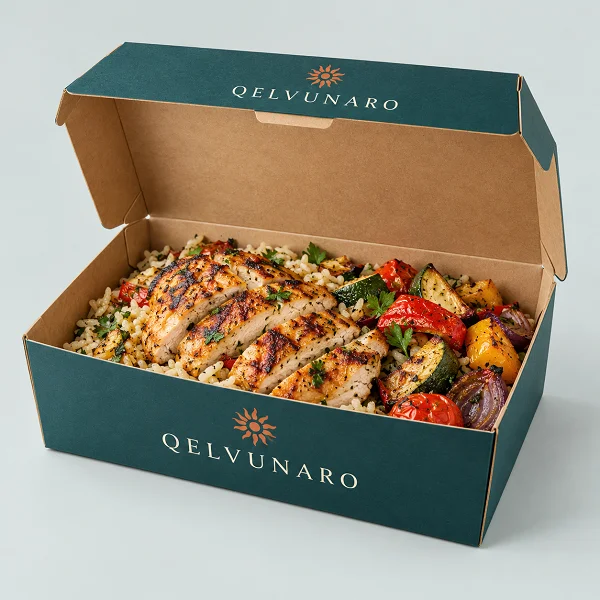
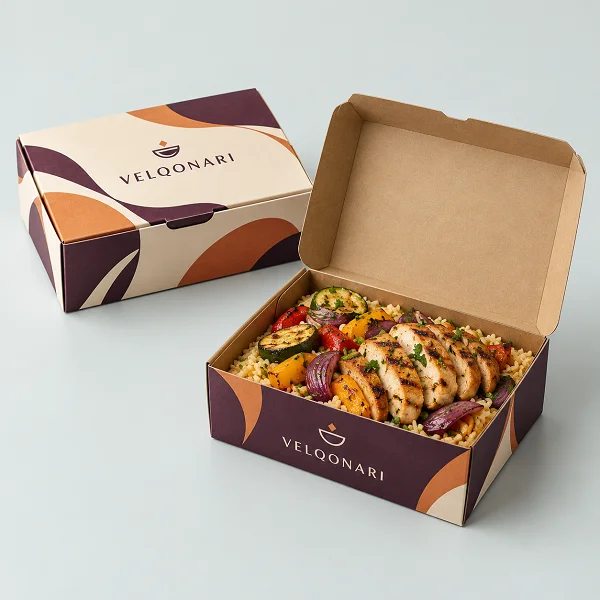
You have put time into the recipe and the service. The box is what customers carry away. The care you put into the meal should show in the box it leaves in. A tidy pack with readable branding can make a weekday lunch feel considered without adding unnecessary fuss to a busy kitchen.
Start with what actually leaves your counter. A loaded burger needs headroom. Hot chips need an approach that accounts for steam. A dressed salad brings a different set of questions. We help shape your custom printed takeaway boxes around those everyday details so your artwork and chosen construction work together.
What Are Custom Takeaway Food Boxes?
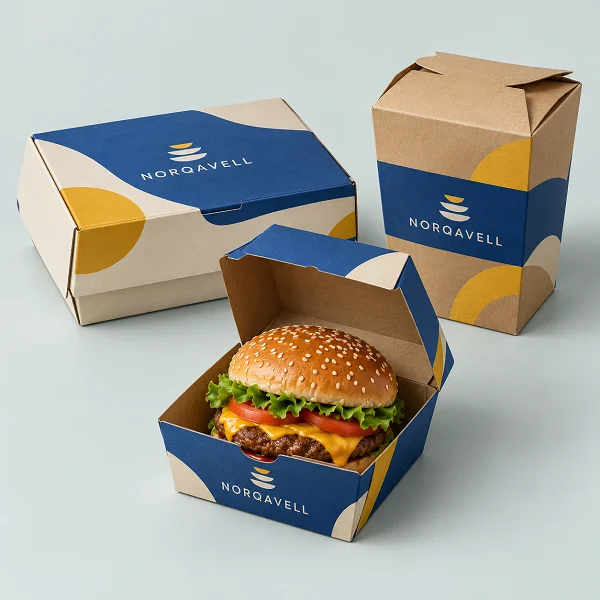
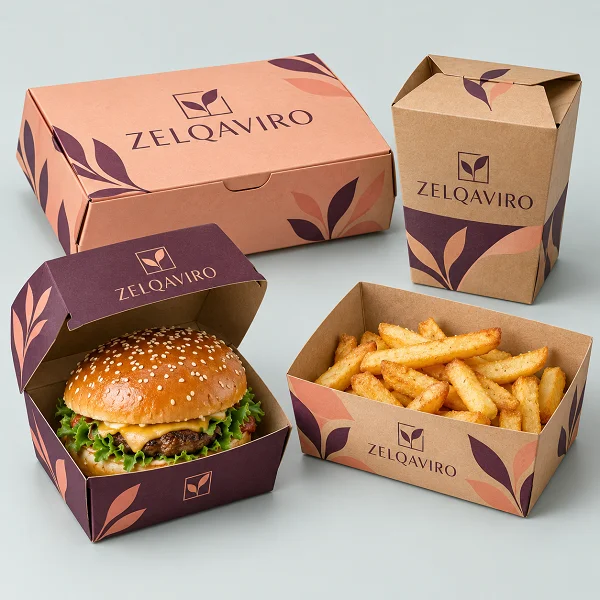
Custom takeaway food boxes are cartons made or printed to suit a food business and its menu. They can feature your logo and colours with dimensions selected for the portion inside. Common formats include hinged boxes and folded lunch cartons. The material and any lining need to suit the food and its intended contact conditions.
Match the Box to What Comes Off the Pass
A carton that looks good empty may behave differently once filled. Think about the portion height and the weight at the base. Add the sauces and extras you normally serve. The most useful starting point is your actual meal rather than a rough description such as small or large.
Burger Boxes With Room for the Whole Stack
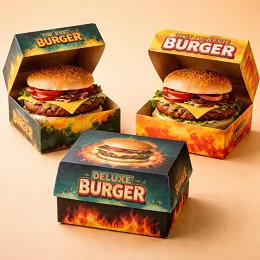
Tall buns and generous fillings can press against a shallow lid. Custom burger boxes can be planned around the finished burger so the top closes without flattening it. Check how the closure holds when staff lift the filled pack. Keep the branding clear on the lid where customers will see it first.
Noodle Cartons for Generous Lunch Orders
For noodles and stir-fries consider the serving volume as well as the food weight. Custom noodle boxes need a suitable construction and lining for the recipe. A lightly dressed noodle dish presents different demands from a meal with plenty of liquid. Confirm the intended use before settling on a format.
Snack Boxes for the Little Extras
Chips and finger food often leave the kitchen alongside a larger meal. Custom snack boxes can give these portions their own space. Check whether staff need an open serving pack or a closed carton for collection. The choice should follow how far the food travels and how customers will eat it.
Pizza and Shared Meal Formats
Pizza cartons need enough clearance above the toppings and a base suited to the pizza size. Larger shared meals may require separate compartments or several packs. Keep these formats consistent with your main branding so a mixed order looks connected. Dedicated pizza packaging can be discussed separately when your menu needs it.
Choose Materials Around the Meal
The right takeaway food boxes start with the food they will carry. Heat and moisture can change how a pack behaves during service. Ask about the complete construction including any barrier layer. A brown surface or a thick board does not tell you everything about suitability.
Paperboard for Neatly Folded Cartons
Paperboard can suit compact meal cartons and lighter food portions when the specified grade meets the application. It offers a surface for detailed print and folds into several useful shapes. Tell us how much food your cardboard takeaway boxes will hold and how long each order usually takes to reach the customer.
Kraft for an Understated Brand Look
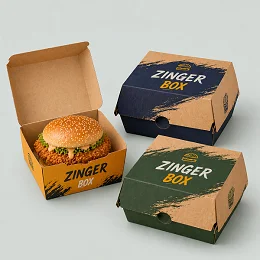
Natural brown stock can work beautifully with a simple logo and a restrained colour palette. Kraft takeaway boxes suit businesses that prefer a warm and straightforward appearance. Print colours can look different on brown stock compared with white board. Review the proposed colour treatment before committing to the full run.
Corrugated Board for Added Structure
Corrugated options have a fluted layer between paper surfaces. They may be considered where the pack needs more structure for its size or load. As with other cardboard packaging boxes the grade and construction should be assessed together. The intended food contact arrangement also needs to be clear.
Give Heat and Moisture Some Thought
Freshly cooked food keeps releasing steam after the lid closes. In some meals that trapped moisture can soften a crisp surface. Venting may help with certain foods but it also changes how the pack retains warmth. Plan takeaway food boxes around the balance your particular menu needs.
Greasy food brings another consideration. A barrier or suitable liner may be needed to limit oil reaching the outside of the carton. For saucy dishes check the folded corners and lid fastening for spots where liquid could escape. Avoid choosing a general snack carton for a saucy dish unless its suitability has been confirmed.
Any microwave or freezer requirement should be raised at the start. Check whether the finished box suits those temperatures with its lining and any added features in place. Food businesses comparing takeaway food containers should request information for the specific item rather than assume all containers in a similar shape perform alike.
Get the Portion Fit Right Before Printing
Too much empty space can let food shift around. Too little room can leave sauce on the lid or force staff to squeeze the portion in. When planning takeaway food boxes measure the finished serving at its widest points and allow room for normal variation between orders.
Example Takeaway Food Box Sizes
Check these example internal sizes against your usual portions. Include toppings and sauce pots when assessing the space you need. Custom dimensions can be discussed with Fine Packaging.
| Box Format |
Example Internal Size (L × W × H) |
What to Include |
Sizing Consideration |
| Small Snack Box |
120 × 90 × 60 mm |
Your usual snack portion with any liner |
Leave room for the lid to close above the food |
| Burger Box |
140 × 140 × 90 mm |
The finished burger with all fillings and wrapping |
Check the bun width and the tallest part of the burger |
| Regular Meal Box |
180 × 120 × 65 mm |
A complete serving with toppings and sides |
Check the portion sits comfortably without pressing against the lid |
| Large Meal Box |
220 × 160 × 75 mm |
The main meal with any sauce pots packed beside it |
Allow space for extras and check the loaded weight |
| Sharing Box |
280 × 200 × 80 mm |
All portions with any dividers or liners |
Check base support and fit inside your takeaway bag |
Note: These are example dimensions rather than confirmed stock sizes. Test your chosen format with a complete serving before approving the box measurements.
Measure the Meal as Customers Receive It
Include toppings and garnishes in your measurements. If a sauce pot sits inside the carton include that too. Specify whether measurements describe the internal space you need or the outside of an existing box. A measurement taken from the outside could leave you with less room for the meal than you expected.
Check the Box Beside Your Other Packaging
Your takeaway food box also needs to fit the rest of the order. Pack the bag as you would for a real order with the meal beside its drinks and sides. Check that staff can remove the meal without tilting it sharply. A box that works on its own may be awkward in a complete delivery order.
Make the Branding Easy to Spot
Clear artwork helps customers recognise your business before they lift the lid. Put your main brand mark where it remains visible during handover. For takeaway boxes with logo a strong lid design and a readable side panel can give you useful visibility without filling every surface with text.
Use the Space With Purpose
Your name and brand colours may be enough for the outside. An ordering address or short message can sit on another panel. If you add a QR code leave clear space around it and check a printed sample at the intended size. Fold lines should not interrupt important information.
Let the Stock Influence the Artwork
A bright illustration on white board creates a different impression from a dark mark on natural kraft. Ask how your artwork will reproduce on the selected material. Printed boxes should be reviewed as packaging with folds and overlapping panels rather than judged only as a flat design on screen.
Printing Options for Your Design
Your artwork and order quantity help determine the printing method. Fine Packaging can discuss suitable options for a simple one-colour logo or a full-colour design. Keep small lettering readable and check how the selected stock affects your brand colours.
Finishes for the Outside of Your Box
A matte finish can give the outside a softer look while gloss adds shine and makes colours appear more vivid. Selected designs may also suit foil or spot UV on an external logo. Availability depends on the board and box construction. Any finish must suit the intended food packaging use and stay clear of direct food contact unless specifically assessed for it.
Keep the Kitchen Moving at Lunchtime
The best-looking pack still has to earn its place beside the pass. Think about where empty cartons will sit and who will assemble them. Takeaway food boxes should suit your team's routine during the busiest part of service when there is little time for fiddly folding.
Cartons supplied flat take up less room before assembly. Preformed options may save a preparation step but need a different storage arrangement. Compare the options against your bench space and stockroom. Test how easily staff can open the pack and secure the closure with a normal portion inside.
For delivery orders check the completed stack under realistic conditions. Sit the weightier meals at the bottom so smaller snack cartons do not take the load. Check whether the lids stay seated as the bag is carried. A short trial with your regular delivery setup can reveal problems that an empty carton check misses.
Plan Quantities Around Real Demand
Start with a minimum order of 50 takeaway food boxes per size and design. This gives you a smaller starting run for a new menu or fresh branding. If you need several formats let Fine Packaging know the quantity required for each when requesting your quote.
Ordering bulk takeaway food boxes can make sense when a format is used consistently across the menu. The decision should also reflect available storage and the chance of artwork changes. A large order is less useful if a rebrand or new portion size leaves cartons sitting unused.
Find Savings in the Right Places
For affordable takeaway food boxes start by checking which menu items fit comfortably in the same carton. You may be able to order fewer sizes without squeezing portions in. Keeping the artwork simple could help with costs too. Ask Fine Packaging to price the quantities you expect to use so you can compare what each option will cost your business.
Allow for Growth Without Overordering
Share your normal usage and any seasonal peaks when enquiring about wholesale takeaway food boxes. Discuss whether separate sizes or artworks affect the order requirements. Include upcoming events and menu changes in the conversation. This gives the quote a clearer basis and helps you plan when another run may be needed.
Ask Clear Questions About Environmental Claims
Many businesses want takeaway food boxes that support their environmental goals. Start by asking what the pack contains. The board is one component. Coatings and windows can also affect disposal options. Natural colour alone does not establish that a carton belongs in a particular recycling or composting stream.
For takeaway food packaging in Australia disposal guidance needs to match the finished construction and the facilities available to the customer. Before adding a certification mark to your artwork ask for documents that cover your chosen box and confirm how the claim can be worded. Avoid putting a broad environmental promise on artwork simply because the base material is paper.
Bring Your Menu Into the Packaging Plan
Send Fine Packaging a brief that explains the food and how it is served. Include portion measurements and the expected packed weight. Tell us whether the meal is hot or cold and whether oil or sauce is involved. These details help narrow down suitable takeaway food boxes before artwork is prepared.
Bring Your Artwork or Ask for Design Help
Supply your logo files and any brand colours you already use. We can assist with a dieline and design support for the proposed format. Check names and contact details carefully during the proof stage. Before giving the go-ahead check where your logo and text sit when the lid closes and the side panels fold into place.
Review Samples and Plan the Delivery
Tell us what you want to check so we can suggest a sample that helps you judge it. A structural sample can help check fit while print review addresses a different part of the job. Businesses sourcing food boxes in Australia should include their delivery postcode and required date so production and freight timing can be discussed.
Manufacturing is scheduled once the artwork and agreed order details have your approval. If the packaging supports an opening or promotion mention that deadline early. Allow time to review proofs and resolve fit questions. Save the final artwork and box measurements so you can send them through when it is time to reorder.
Put Your Next Takeaway Order in Your Own Colours
Bring your menu and packaging ideas to Fine Packaging. We will help you explore takeaway food boxes with a size and printed design that suit your service. Get free quotes and free shipping Australia-wide by emailing support@finepackaging.com.au. Tell us what is on your menu so we can help you plan your next pack.