Turn an Everyday Essential into a Recognisable Product
A tissue box stays on desks, counters and bedside tables long after it leaves the shelf. That gives your artwork repeated visibility in homes, clinics, hotels, salons and offices. Our custom printed tissue boxes can carry brand colours, product information and clear usage details while keeping the tissues neatly contained and easy to dispense.
Custom tissue boxes are made-to-order paperboard cartons that hold a stacked bundle of facial tissues and release them through a shaped opening at the top or side. Unlike a reusable decorative cover, the carton is part of the tissue product itself. Its dimensions, internal layout and perforated opening must suit the folded tissues, dispensing method and packing process.
Fine Packaging works with supplied measurements and artwork to develop custom tissue boxes for new products, private-label ranges and brand updates. You can choose a simple retail box or create tissue boxes with logo details and decorative finishes. We provide a dieline for artwork placement and a digital proof for approval before production begins.
Why the Box Design Matters
The box does more than carry branding. It must stay upright, protect the tissue stack and release one sheet at a time without tearing the surrounding board. A carton that is too loose may allow the contents to shift. One that is too tight may make the first tissues difficult to remove.
Well-planned custom tissue boxes also support clear communication at the point of sale. These custom tissue packaging boxes can show ply, sheet count, tissue dimensions, product claims, disposal guidance and business details. Every statement should be accurate and supported by the product supplied inside.
Brand Visibility in Everyday Settings
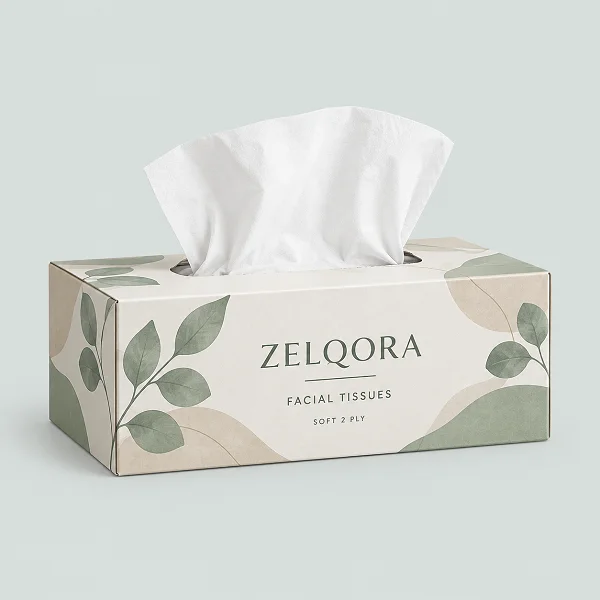
Facial tissues are commonly left in visible places rather than stored after every use. A distinctive tissue box can therefore continue presenting your business in a waiting room, guest room, treatment area or reception space. Consistent colours and typography make different sizes easier to recognise as part of one product family.
Protection from Packing to Use
The paperboard carton helps protect the tissue stack from handling, dust and light contact during transport and display. It is not a moisture-proof container. Storage and delivery conditions still need to remain dry. The correct board thickness and grain direction help the carton hold its shape through filling, packing and normal use.
Cardboard Options for Tissue Packaging
Most custom tissue boxes use folding paperboard because it can be printed, creased and glued efficiently. These cardboard tissue boxes can be produced efficiently once the structure is approved. The appropriate grade depends on the box size, packed weight, distribution method and surface result required. We can review these details before recommending a stock.
White Paperboard
White paperboard provides a clean base for detailed graphics, photographs and bright colours. It suits pharmacy ranges, personal care products and retail tissues that need crisp front-panel information. The printable outer face may be coated for smoother colour reproduction while the reverse can remain uncoated or lightly finished.
Kraft Paperboard
Kraft tissue boxes offer a natural brown appearance that works well with simple artwork and darker ink colours. Kraft is often chosen when a brand wants a warm or understated presentation. Its natural shade affects printed colours so pale tones and photographic artwork may not appear as they would on white board. A white ink layer may be considered for selected designs.
Recycled and Responsibly Sourced Stocks
Recycled-content and responsibly sourced paper options may be available for suitable orders. Availability can vary by thickness, print requirement and quantity. Any environmental statement printed on the carton should match the exact stock and coating selected. We recommend confirming the material first rather than adding broad recycling claims during the early artwork stage.
Choose a Format That Fits the Tissue Stack
Custom tissue boxes can be developed in horizontal, upright or compact formats. The best choice depends on the folded sheet size, number of tissues and way they are interleaved. Existing tissue samples or a complete packed product can make structural planning more accurate.
Horizontal Rectangular Boxes
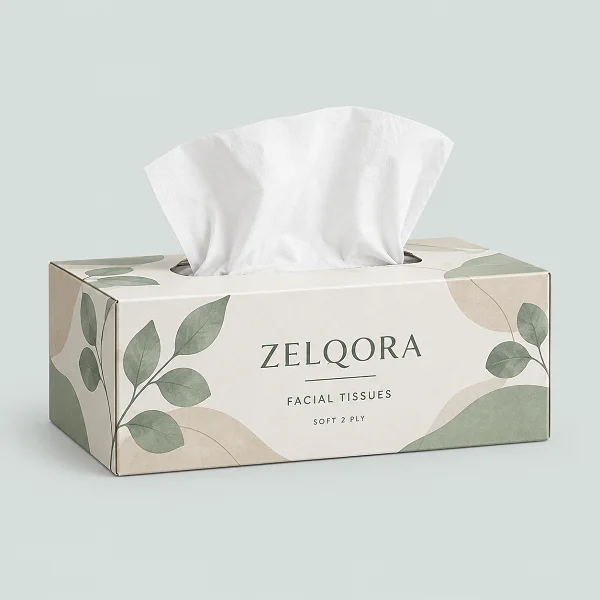
This familiar format uses a wide top panel with a centred dispensing area. It gives plenty of space for branding on the front, back and side panels. Horizontal cartons suit many household and commercial facial tissue ranges. Their broad base also helps them remain steady while tissues are pulled from the opening.
Upright and Cube-Style Boxes
Upright tissue dispenser boxes use less bench or desk space and provide tall panels for prominent artwork. The internal tissue fold and withdrawal direction must work with the extra height. A narrow base may also require careful board selection so the carton remains stable as the contents are used.
Compact Packs for Smaller Spaces
Compact cartons may suit hotel rooms, cars, reception counters and promotional kits. Reducing the box size usually changes the tissue dimensions or sheet count. Final measurements should be based on a real tissue stack under normal packing pressure rather than an estimated volume.
Common Tissue Box Size Starting Points
There is no single universal size for custom tissue boxes or other facial tissue packaging boxes. Tissue fold, ply, sheet count and packing compression can all change the required internal space. The following measurements are general planning examples only. Fine Packaging will manufacture to your confirmed dimensions.
| Format |
Example internal size |
Possible setting |
Planning note |
| Compact rectangle |
180 × 105 × 55 mm |
Guest rooms or desks |
Confirm folded sheet width and count |
| Standard rectangle |
225 × 115 × 90 mm |
Retail and workplace use |
Allow for stack height under light compression |
| Upright carton |
115 × 115 × 130 mm |
Counters and compact areas |
Test stability and tissue withdrawal |
Note: These examples should not be used as production measurements without checking the actual contents. We need the required internal length, width and height in millimetres. A physical sample is useful when tissue compression or interleaving is difficult to describe.
Dispenser Openings and Perforated Panels
The opening is one of the most important parts of custom tissue boxes. It needs to hold the next tissue close enough to reach without gripping it so tightly that it tears. Its position should also leave sufficient board around the opening for strength and artwork.
Oval and Rounded Openings
An oval opening is widely used on horizontal cartons because it follows the direction of withdrawal and avoids sharp internal corners. The exact length and width should be tested with the chosen tissues. Rounded rectangular shapes can provide a broader opening while keeping a balanced look on the top panel.
Removable Perforated Sections
A perforated panel can cover the dispenser area before first use. The customer removes this section to access the tissues. Perforation strength needs careful control. It should survive manufacturing and distribution yet still open without badly tearing the printed top panel.
Film Around the Opening
Some constructions use a flexible film at the dispensing point to help guide the next tissue. This addition can affect material separation and recycling. Tell us whether film is required so its placement and compatibility can be considered during structural development. Film-free options may also be explored where the tissue format allows them.
Printing Personalised Tissue Boxes
Artwork for custom tissue boxes can range from a restrained one-colour layout to full-panel retail graphics. These personalised tissue boxes can use CMYK printing for multicolour artwork and images. Pantone matching may be considered when a particular brand colour needs closer control. The final result will also depend on the board shade, coating and finish.
Each panel should have a clear job. The front can present the product name and main benefit. Side panels can carry sheet count, tissue size and business details. The base or back may be used for barcodes, batch areas, recycling directions and other required information. Important text should remain away from creases, glue areas and the removable opening.
Designing a Family of Tissue Products
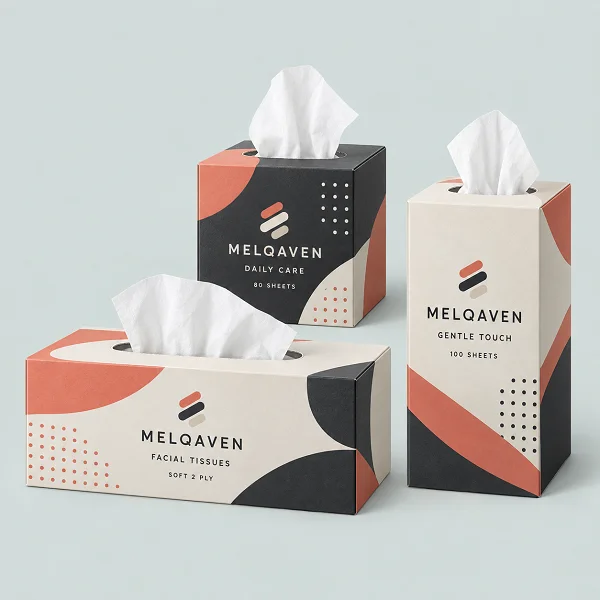
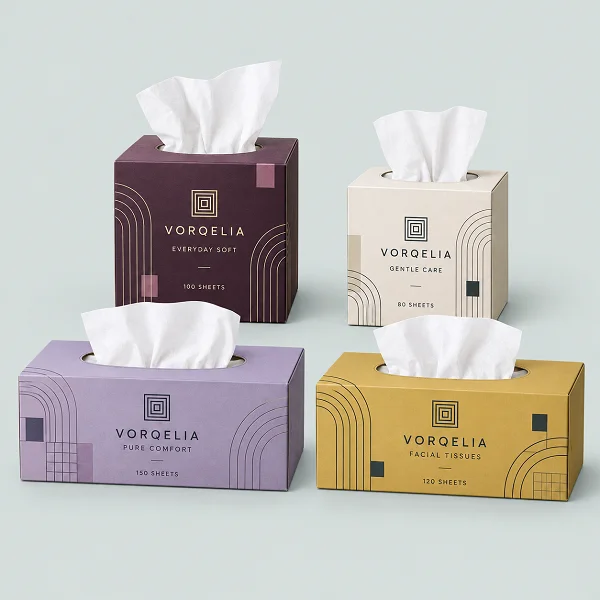
Colour coding can separate standard, sensitive, premium or seasonal variants while retaining the same logo position and general layout. This makes a wider range feel connected. When several sizes are planned, the artwork should be adapted to each dieline rather than stretched or cropped automatically.
Readable Information Comes First
Small type and low colour contrast can make important details hard to read. Keep mandatory information legible and allow enough quiet space around the logo. A clear hierarchy often looks more professional than filling every panel with promotional claims.
Finishes for Shelf Appeal and Surface Protection
A finish can change how the printed carton looks and feels. It may also provide light resistance to scuffing during packing and transport. It does not make paperboard waterproof. The right option for custom printed tissue boxes depends on the artwork, expected handling and budget.
| Finish |
Visual result |
Suitable use |
Consideration |
| Matte lamination |
Smooth low-sheen surface |
Modern or premium ranges |
May affect recyclability depending on construction |
| Gloss lamination |
Bright reflective colour |
Bold retail graphics |
Reflections may reduce small-text readability |
| Spot UV |
Gloss on selected areas |
Logos and graphic details |
Works best with deliberate contrast |
| Foil stamping |
Metallic accent |
Premium or limited editions |
Fine lines need artwork review |
| Embossing |
Raised tactile detail |
Logos or short names |
Avoid weak areas near cuts and creases |
Decorative finishes are most effective when used with purpose. Applying one feature to the logo or a small pattern can create a stronger result than combining several finishes across every panel.
Where Branded Tissue Cartons Are Used
Custom tissue boxes can support both consumer products and business environments. Retail tissue manufacturers use them for supermarket, pharmacy and online ranges. Hotels may place branded cartons in guest rooms. Medical centres, dental practices, beauty clinics and salons can use them in customer-facing areas when the tissue product is suitable for that setting.
Restaurants, property display suites, car dealerships and corporate offices may also order cartons that coordinate with their interiors or customer experience. Event editions can carry campaign artwork or sponsor details. The printed box should never imply a medical, hygienic or environmental performance that the tissue product cannot substantiate.
Ordering Custom Tissue Boxes in Bulk
Ordering custom tissue boxes in larger runs can reduce the setup cost per carton because printing, cutting and finishing are prepared across more units. Businesses often order tissue boxes in bulk when storage space, tissue filling arrangements, artwork lifespan and expected sales support the quantity. Ordering far beyond realistic demand can create waste if details or branding change.
Fine Packaging accepts orders at 50 boxes. The practical quantity for a particular design may depend on its dimensions, stock, printing and finish. We will confirm the available production option after reviewing the complete brief. Businesses comparing wholesale tissue boxes Australia suppliers should check whether quoted prices include design setup, proofs, finishing and delivery.
Information Needed for an Accurate Quote
Start with the internal length, width and height in millimetres. Tell us the tissue sheet dimensions, fold, ply, count and packed stack size. We also need the total packed weight, preferred opening style, required quantity, artwork status and delivery postcode.
If the tissues are filled by another manufacturer, confirm its packing tolerances and machinery requirements before the structure is approved. Automated filling may need different flap, glue and crease specifications from hand assembly. A physical packed sample can help us understand how the contents behave inside the carton.
Artwork and Proof Approval
We can provide a dieline after the size and construction are confirmed. Supply artwork in the requested print-ready format with fonts outlined and linked images included. Our team will check placement and basic production suitability. A digital proof or mock-up is then supplied for approval. Colours viewed on a screen are not a guaranteed match to printed paperboard.
Production and Delivery Planning
Standard production generally takes 10–12 business days after final artwork approval. More complex finishes, samples or large runs can take longer. Allow extra time for delivery across Australia. Expected timing should be confirmed before committing to a launch, promotion or event.
Put Your Tissue Brand in Customers Hands
Build practical custom tissue boxes that fit the contents and present your range with clarity. Send your dimensions, quantity, artwork and delivery postcode to support@finepackaging.com.au. Fine Packaging provides free quotes, dieline and design support plus free shipping across Australia for confirmed custom packaging orders.