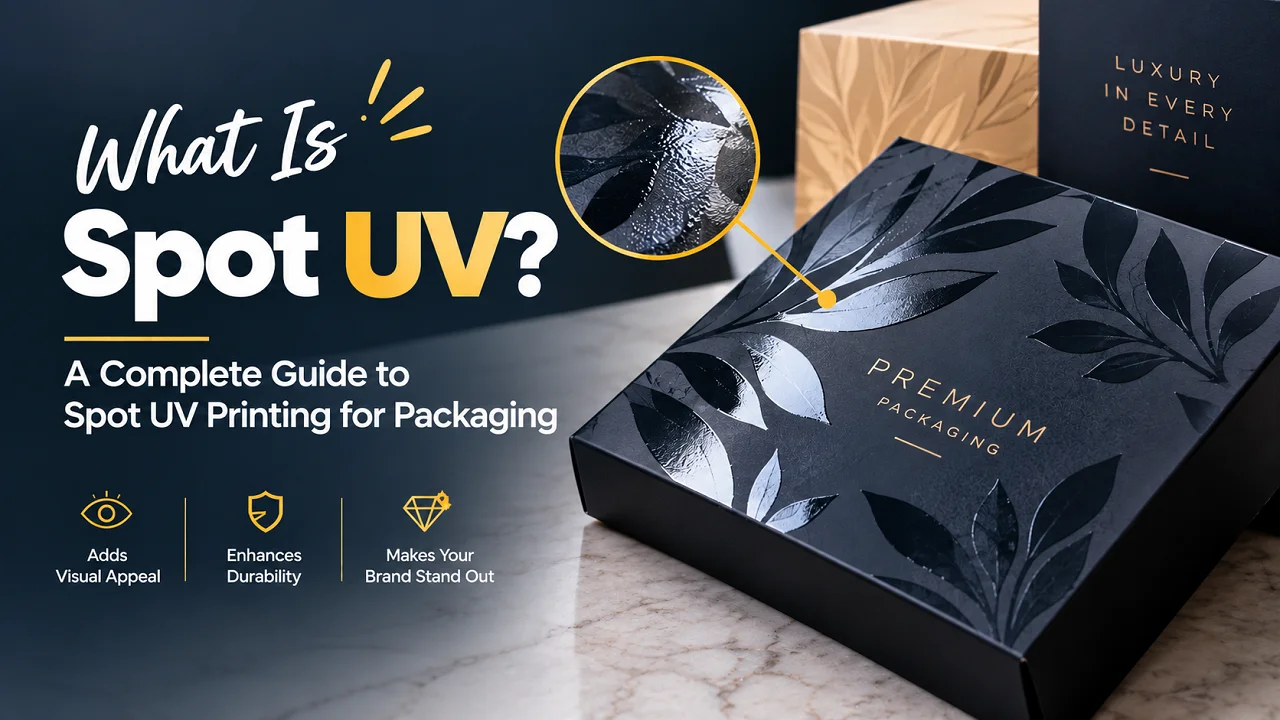
Spot UV is a clear coating placed over selected parts of printed packaging. It creates contrast by making a logo pattern or image look glossier than the surrounding surface. The finish is cured with ultraviolet light to form a smooth and durable layer. Fine Packaging can help you compare suitable finishes and prepare a free quote for your custom packaging project.
Quick answer: Spot UV is a clear coating applied to selected areas of printed packaging. UV light cures the coating to create a smooth glossy finish. It is commonly used to highlight logos product names patterns and illustrations. The effect is most noticeable when applied over a matte or soft-touch surface.
What Is Spot UV?
Spot UV is a print finish used to draw attention to specific parts of a design. A clear coating is placed over chosen areas rather than covering the whole printed sheet. These areas reflect more light and create a visible contrast with the untreated surface.
The finish may be applied over a logo product name illustration border or background pattern. It does not normally add a new colour. Instead it changes the shine and feel of the printed area below it. Dark colours can appear richer when covered with spot gloss.
The term "spot" refers to the selected locations where the coating is used. "UV" refers to the ultraviolet light that cures the liquid coating. This curing process forms a firm surface in a short period.
Spot gloss and spot varnish are common alternative names. People also use the term spot UV printing. However it is more accurate to describe it as a finishing process because the coating is usually added after the main colours have been printed.
How Does Spot UV Printing Work?
The spot UV printing process begins after the packaging artwork has been printed. A coating unit places clear varnish over the areas identified in a separate artwork file. The wet coating then passes under ultraviolet lamps.
The UV light starts a rapid curing reaction. This changes the liquid varnish into a solid finish. The coating becomes smooth and glossy without needing a long drying period.
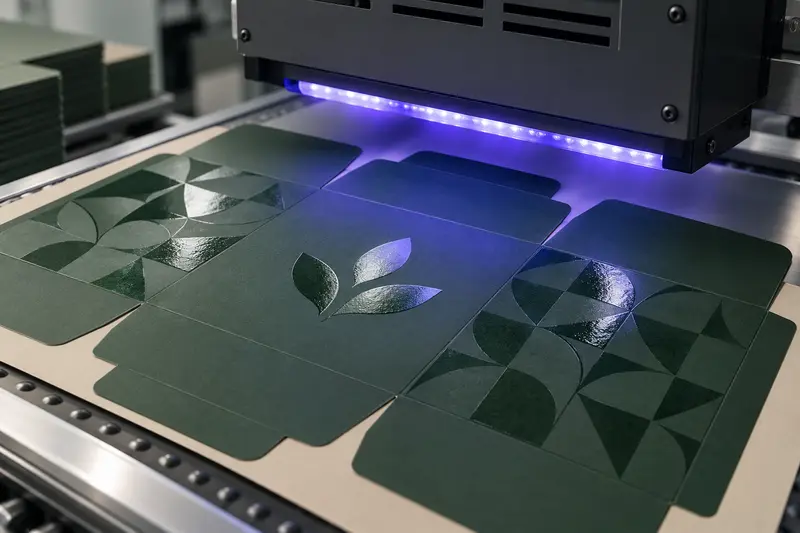
Production methods can differ between printers. Some projects use screen-based application while others use specialised digital equipment. The best method depends on the order quantity design detail stock and required coating height.
Registration is important during production. The clear coating must line up with the printed artwork below it. Poor alignment may leave a visible edge beside a logo or letter. Accurate artwork and suitable production tolerances help prevent this problem.
Spot UV Coating vs Full UV Coating
Spot UV coating covers only selected parts of a printed surface. Full UV coating covers nearly the entire visible area. Both methods can add gloss but they create different results.
A full coating gives the sheet a consistent shiny appearance. This may suit packaging that needs an even gloss across the complete design. Spot UV is used when the designer wants contrast between glossy and non-glossy areas.
The targeted finish can guide the eye towards important information. It may highlight a brand name while leaving the rest of the box matte. It can also create a subtle pattern that becomes visible when light moves across the surface.
Full UV coating should not be confused with UV printing. UV printing refers to a process where UV light cures printed inks. Spot UV refers to a clear finish applied to chosen areas. The exact production method should be confirmed before artwork is prepared.
What Is Raised Spot UV?
Raised spot UV creates a coating with more height than a standard application. This gives the finished area a noticeable texture. Customers can often feel the design when they move a finger over the surface.
This finish can make lettering patterns or simple illustrations stand out. It is often selected for premium packaging where both visual and tactile details matter.
Regular spot UV and raised spot UV are not always the same. A standard coating may create shine with little noticeable height. A raised coating is built up to form a more pronounced layer. The available height depends on the equipment stock design and coating system.
Very small details may not hold the intended shape when a thick coating is used. Wider lettering and clean graphic forms are often more suitable. Your artwork should be reviewed before production to confirm what can be achieved.
What Is Blind Spot UV?
Blind spot UV is a clear design that does not need to follow printed artwork underneath. The varnish itself creates the visible pattern. It may be placed over a plain colour or an unprinted surface.
For example a repeating symbol can be added across a black matte box without printing that symbol in ink first. The pattern appears as the packaging catches the light. From another angle it may look more subtle.
This approach works well for understated branding. It can add detail without introducing another colour. It may also suit brands that want a clean design with a hidden visual element.
Blind spot UV still needs its own mask file. The designer must show exactly where the clear coating will appear even when there is no printed image below it.

| Feature |
Standard Spot UV |
Raised Spot UV |
Blind Spot UV |
| Main effect |
Gloss on selected areas |
Gloss with noticeable height |
Clear design without a printed image below |
| Texture |
Usually smooth and low |
More tactile and prominent |
Depends on the chosen coating |
| Common use |
Logos text and images |
Bold logos and tactile patterns |
Subtle patterns and hidden branding |
| Artwork |
Separate mask required |
Separate mask with suitable detail |
Independent mask design required |
Each Spot UV option creates a different level of shine and texture. The right choice will depend on your artwork packaging material and the result you want customers to notice.
Where Can Spot UV Be Applied on Packaging?
Spot UV on packaging can be placed wherever a design needs greater visual emphasis. Logos and brand names are common choices because the extra shine separates them from the surrounding print.
It can also highlight product names icons borders and parts of an illustration. A cosmetic box may use it over a shade name. A jewellery box may feature a glossy monogram. Food gift packaging may use the coating over a decorative pattern while important product information stays easy to read.
Spot UV on boxes works best when the selected area is visible on a flat panel. Front panels lids and sleeves are practical locations. The finish may also be used inside a rigid box when the construction and production method allow it.
Areas close to folds cut lines glue tabs and edges need careful planning. Movement during cutting and creasing can affect registration. A coating placed across a fold may crack or behave differently from the flat areas. Suitable clearance should be included in the artwork.
Best Materials and Surfaces for Spot UV
Coated paperboard is commonly used for custom packaging with spot UV. The smooth surface supports clean print and controlled varnish application. It can suit folding cartons sleeves and wrapped rigid boxes.
Spot UV on cardboard is possible when the cardboard has a suitable printable liner or paper wrap. The surface must be smooth enough to support the intended detail. Rough exposed corrugated material may absorb or spread the coating. A coated outer liner can provide a better result.
The strongest visual contrast is often achieved over matte lamination or soft-touch lamination. These finishes have a low level of shine. The glossy coating therefore appears more noticeable when the box moves under light.
Kraft stock can produce a more natural look but the result may differ from a smooth coated sheet. The colour texture and absorbency of the stock can affect the appearance. A sample or production test may be helpful when an exact result matters.
Spot UV may not adhere well to every laminate coating or synthetic surface. Material compatibility should be checked before production. The final choice will depend on the stock finish box construction artwork and required quantity.
Benefits of Spot UV for Custom Packaging
One of the main benefits of spot UV is its ability to create contrast without adding another printed colour. The clear coating works with the artwork that is already present. This can keep a design controlled while still giving it a premium detail.
The finish can direct attention towards a logo or important message. It can help a brand name remain visible on a detailed layout. It can also make a dark colour look deeper in the coated area.
Texture is another advantage. Even a low coating can create a slight change in feel. Raised spot UV can provide a stronger tactile feature for customers to notice when handling the box.
Spot UV also offers design flexibility. It can follow lettering or create an independent background pattern. Large areas can produce a bold gloss effect while small areas can add restrained detail.
The cured coating may give treated areas some resistance to light scuffing and fingerprints. However the performance depends on the coating thickness surface and use. It should not be treated as a substitute for suitable board strength or protective packaging.
Limitations and Practical Considerations
Spot UV should not automatically be described as waterproof. It covers only selected areas and does not seal the complete package. Water can still reach untreated sections cut edges folds and joins.
Registration tolerance must also be considered. Very fine lines or tiny text may be difficult to align. The coating can spread slightly or appear uneven when a design includes detail below the recommended production size.
Large solid coating areas may show surface variation. The effect can depend on the stock and curing method. Your supplier should review broad coverage before confirming that it is suitable.
Fingerprints may be more visible on high-gloss areas. This is particularly noticeable on dark packaging. A balanced design can reduce the amount of large glossy space that customers frequently touch.
The finish adds another production stage. This can affect the price and turnaround time. Setup costs may have a greater effect on short orders. The overall value should be judged against the packaging style and customer experience.
Spot UV vs Gloss Lamination
Gloss lamination usually covers the complete printed surface with a shiny film. Spot UV is placed only over chosen areas. This makes gloss lamination suitable for an even finish while spot UV is better for selective emphasis.
Matte lamination is often used below spot UV because the two surfaces create a stronger contrast. The matte film reduces general reflection. The selected coating then becomes clearer under direct light.
Lamination can add surface protection across a larger area. Spot UV does not offer the same complete coverage. The choice should depend on whether the main goal is protection overall shine or a decorative focal point.
Both finishes may be combined when the materials are compatible. A matte laminated box with selective gloss is a common example. Adhesion should be tested because not every coating works with every laminate.
Spot UV vs Foil Stamping
Spot UV creates shine through a clear coating. Foil stamping transfers a coloured or metallic film onto the packaging. Foil can add gold silver holographic or pigmented detail. Spot UV usually allows the printed colour below it to remain visible.
Foil stamping is useful when a design needs a distinct metallic appearance. Spot UV is useful when the goal is gloss texture or tonal contrast. Either process can highlight a logo but the visual result will be different.
A design may use both finishes if the layout and budget allow it. The effects should have separate roles so the surface does not become too busy. Clear spacing between foil and varnish can also help with production.
Spot UV vs Embossing and Debossing
Embossing changes the shape of the stock by raising an area. Debossing presses the design into the surface. Spot UV adds coating without forming the board itself.
Raised spot UV can feel three-dimensional but it is still a coating. It should not be described as embossing. Embossing uses pressure and dies to reshape the material. Raised coating builds height on top of it.
Embossing may create a strong structural impression. Debossing can produce a recessed mark. Spot gloss provides reflected light and may add texture. The right option depends on the desired appearance stock thickness artwork and box style.
| Feature |
Spot UV |
Foil Stamping |
Embossing |
| Method |
Clear coating cured with UV light |
Foil transferred to the surface |
Material pressed into a raised shape |
| Main appearance |
Glossy contrast |
Metallic or coloured detail |
Raised surface |
| Colour |
Normally clear |
Available in many foil colours |
Uses the existing surface colour |
| Tactile effect |
Low or raised coating |
Usually flat with a slight surface change |
Material is physically raised |
| Suitable uses |
Logos patterns and tonal effects |
Logos borders and premium highlights |
Logos symbols and bold lettering |
Each finish creates a different visual and tactile result. Your choice should suit the artwork packaging material and the way you want the design to stand out.
How to Prepare Artwork for Spot UV
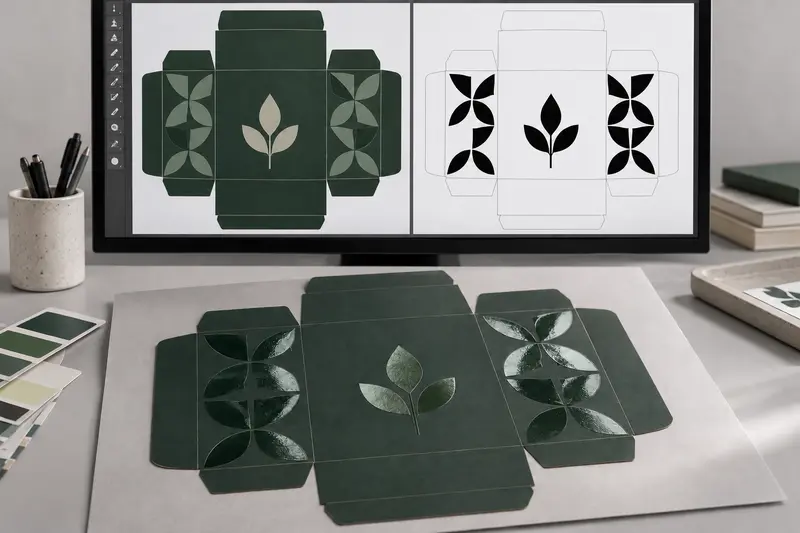
Spot UV artwork requirements usually include a separate mask or layer. This file tells the printer where the coating must be applied. It should match the final packaging dieline and printed artwork.
The mask is commonly prepared as solid vector artwork using one clearly named spot colour. Black often represents the areas that will receive coating. White or empty areas indicate where no coating should be applied. Your printer may provide different file instructions so these should be checked before submission.
Avoid tints and gradients unless the chosen production method supports them. Standard mask artwork often uses a solid value. Transparent effects shown on a screen may not translate into the same physical result.
Keep important coating areas away from cut lines creases glue zones and narrow edges. The exact clearance will depend on the packaging structure and production tolerance. Fine lines and small gaps may need to be enlarged.
Convert important lettering to outlines before supplying final artwork. Check that the mask aligns with the printed design at full size. The dieline should remain on its own non-printing layer.
A digital proof can check position and general layout. It may not show the exact shine or texture of the finished coating. A physical sample is more useful when colour stock and finish interaction must be assessed.
Expert tip: Test Spot UV on your chosen packaging material before approving the full production run. Include small lettering fine lines and larger coated areas in the sample. This helps you check the gloss level surface adhesion and artwork alignment under real lighting.
Packaging Products That Suit Spot UV
Spot UV is commonly considered for cosmetic boxes and skincare packaging. It can also suit perfume boxes and jewellery boxes. Other suitable products include candle packaging and technology accessories. These products often benefit from a clear focal point on the front panel or lid.
Rigid gift boxes can use the finish over a paper wrap. Folding cartons can feature it over a matte laminated surface. Sleeves and presentation folders can also use the coating when the material and construction are suitable.
Food packaging may use spot UV on the outside printed surface. The coating should not be assumed suitable for direct food contact. The packaging structure must use appropriate food-contact materials and keep non-approved finishes away from exposed food.
The finish is not limited to luxury packaging. A restrained gloss detail can suit simple retail boxes as well. The design should match the product price brand personality and conditions of use.
Is Spot UV Environmentally Friendly?
The environmental impact of UV coating for packaging depends on the full packaging system. This includes the coating formulation board laminate inks adhesives box structure and available recycling process.
A small coated area does not automatically make a package recyclable or non-recyclable. Recycling facilities use different sorting and processing systems across Australia. The amount and type of coating may affect how easily fibres can be recovered.
Plastic lamination may have a greater effect on material separation than a small amount of varnish. However this varies between constructions. Claims such as recyclable sustainable or eco-friendly should be supported by information about the complete finished package.
Brands can reduce unnecessary coverage and select a board with recycled or responsibly sourced fibre where suitable. They can also ask whether lower-impact coating options are available for the required result. A simple structure is often easier to assess than packaging that combines several decorative materials.
How to Choose the Right Packaging Finish
Start with the result you want customers to notice. Spot UV may be suitable when you want selective shine without changing the printed colour. Raised spot UV may suit a tactile logo. Foil stamping may be better when you need a metallic accent. Embossing may suit a design that relies on physical depth.
Consider how the packaging will be handled and displayed. High-gloss details can look strong under retail lighting. They may appear more subtle in soft light. Dark surfaces can create dramatic contrast but may also show fingerprints.
The artwork should remain clear without the special finish. Decorative treatments work best when they support the design rather than carry all of its meaning. Product names and required information should still be readable from practical viewing angles.
Material tests and physical samples can help when the outcome is difficult to judge on screen. The final recommendation should consider the box size board surface artwork quantity budget and production schedule.
Add a Clear Point of Difference to Your Packaging
Fine Packaging can help you compare spot UV foil stamping embossing lamination and other premium packaging finishes Australia-wide. Share your box dimensions quantity artwork product details and delivery postcode with our team. We can review the design and recommend a practical finish for your project. Contact support@finepackaging.com.au for free quotes and free shipping on your custom packaging order.
Frequently Asked Questions
What is Spot UV on packaging?
Spot UV is a clear coating applied to chosen parts of printed packaging. It can highlight a logo product name pattern or image. UV light cures the coating and creates a glossy surface. The untreated parts keep their original finish.
Is Spot UV the same as gloss lamination?
No. Gloss lamination normally covers the whole printed surface with a shiny film. Spot UV covers selected areas only. It is often placed over matte lamination to create a clear contrast between glossy and non-glossy sections.
What is the difference between standard and raised Spot UV?
Standard Spot UV adds shine with little noticeable height. Raised Spot UV uses a thicker coating that can be felt above the surface. The best option depends on the artwork material and intended result.
Can Spot UV be applied to cardboard boxes?
Yes. Spot UV can be applied to many cardboard boxes with a smooth coated surface or printed paper wrap. Rough or highly absorbent cardboard may not produce the same clean result. We will check the chosen material before recommending the finish.
Does Spot UV make packaging waterproof?
No. Spot UV should not be treated as a waterproof finish. It covers selected areas and does not seal the entire package. Moisture can still reach untreated panels folds edges and joins.
What artwork is needed for Spot UV printing?
A separate Spot UV mask or artwork layer is normally required. This layer shows the exact areas that will receive the clear coating. Fine lines and small gaps may need adjustment. The coating should also have enough clearance from folds cut lines and glue areas.
Can Spot UV be used over matte or soft-touch lamination?
Yes. Matte and soft-touch surfaces are popular bases for Spot UV. Their low shine creates a strong contrast with the glossy coating. Material compatibility should still be checked before production.
Is Spot UV suitable for small text and detailed patterns?
It can work with detailed artwork but very fine lines and tiny lettering may not reproduce clearly. Small elements can also be harder to align with the printed design. Slightly wider lines and simple shapes often produce a cleaner finish.
Can Spot UV and foil stamping be used together?
Yes. Both finishes can be used on the same packaging when the design and production method allow it. Spot UV adds clear gloss while foil stamping adds a metallic or coloured feature. Enough space may be needed between the two finishes.
Is packaging with Spot UV recyclable in Australia?
Recyclability depends on the complete package rather than the coating alone. The board laminate inks adhesives and other finishes must also be considered. Recycling requirements can vary between Australian facilities. Avoid making a recycling claim until the finished packaging structure has been assessed.