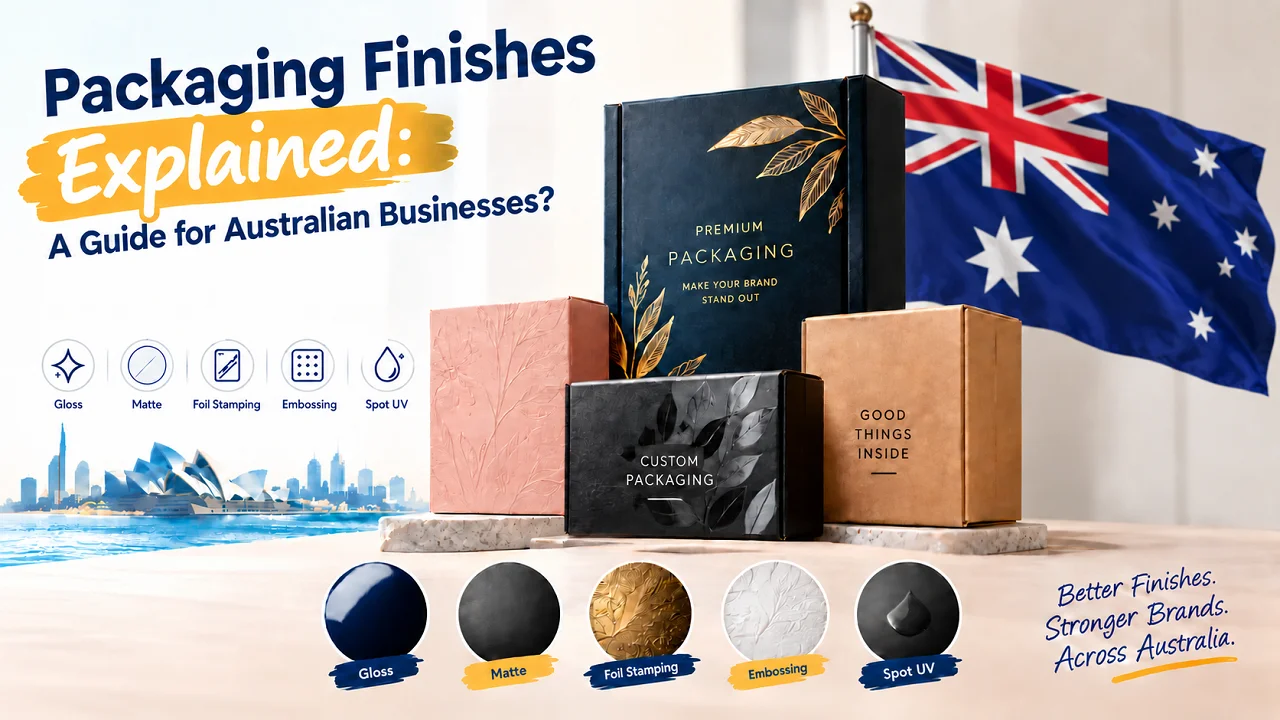
The surface of a box can change how customers see the product before they even open it. This guide explains the most widely used packaging finishes in straightforward terms. You will learn how each option looks and feels as well as where it works best. Use the information to narrow down suitable choices before requesting samples or a free quote.
Quick Answer: There is no fixed number of packaging finishes because printers and manufacturers may group the processes differently. Most packaging projects use around 10 to 15 common options. These include matte and gloss lamination, soft-touch film, aqueous coating, UV coating, Spot UV, foil stamping, embossing, debossing, varnish and holographic effects. Some protect the printed surface while others add shine, texture or decorative detail.
What Are Packaging Finishes?
A finish is a treatment applied during or after printing. It can cover the whole exterior or appear only on chosen details such as a logo. Depending on the process, packaging finishes may alter the shine, texture, colour depth or resistance of the surface.
Finishing is not the same as printing. Printing places the artwork and colour onto the material. Finishing changes or protects that printed surface. A carton might have CMYK artwork followed by matte lamination and a small area of raised gold foil. Each stage performs a different job.
The stock and construction still matter. A treatment that looks crisp on smooth coated board may appear more natural and restrained on kraft. Rigid boxes can accept some premium processes that may not be practical for a thin folding carton. This is why the material, artwork and finishing method should be planned together.
Why Does the Finish Matter?
A suitable surface treatment can improve the look of a pack while helping it cope with everyday handling. Well-chosen packaging finishes can reduce scuffing during packing and handling. They can also create a tactile cue that helps a product feel more refined. Shine can strengthen colour contrast while a low-sheen surface can give artwork a calm and understated character.
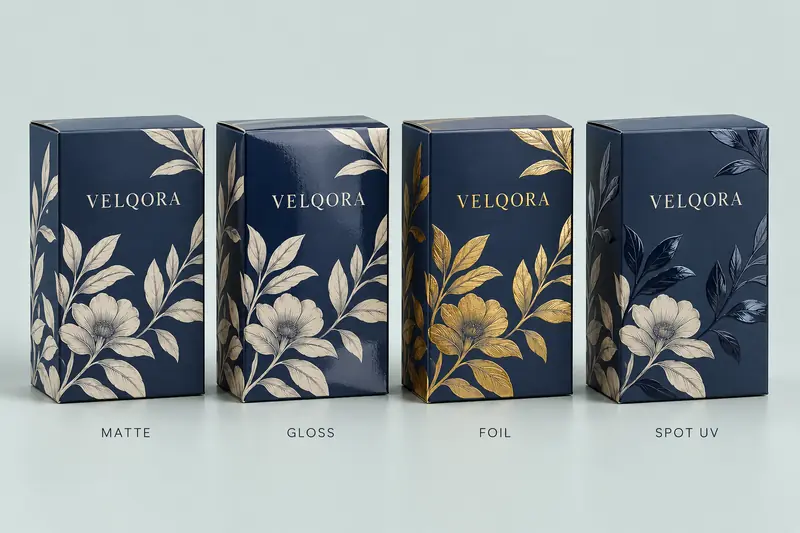
Good finishing also creates hierarchy. A customer may notice a foiled name or glossy symbol before reading the smaller copy. This helps customers find the most important details when the pack contains several messages. The finish directs attention without requiring more artwork.
A box can lose its visual balance when several bold effects are used together. Start by deciding what the finish needs to achieve. You might want better protection, more shelf presence, a distinct texture or extra focus on the logo. A clear purpose makes it easier to choose the right option.
Matte Lamination
Matte lamination is one of the most familiar packaging finishes. It uses a thin film to create a smooth surface with limited reflection. Colours often look softer than they do beneath a glossy layer. The low-shine appearance is popular for skincare, jewellery, apparel, corporate gifts and products with restrained artwork.
The film adds a useful barrier against light rubbing and ordinary handling marks. Deep black and navy surfaces may reveal fingerprints or light scratches more easily. Check a finished sample before approving artwork that uses large areas of these colours. Matte film can also provide a contrasting base for foil or Spot UV.
Gloss Lamination
Gloss lamination gives the outside of a box a bright polished look. The reflective film can give photographs more depth and make bright artwork appear livelier. It is often chosen for confectionery, toys and promotional packaging where bold graphics need to attract attention.
The smooth film can be wiped more easily than untreated paper in many everyday situations. It does not make paperboard waterproof. Glare may also affect the readability of fine text under strong retail lighting. Review both appearance and use conditions before choosing it.
Soft-Touch Lamination
Soft-touch lamination has a velvety feel and a subdued appearance. Among premium packaging finishes, it is often selected when touch is an important part of the unboxing experience. Cosmetics, fragrance, technology accessories and rigid gift boxes are common applications.
Soft-touch film generally has a higher price than regular matte lamination. Some colours and stocks may show rub marks more readily than others. Ask for a printed sample when the project includes large areas of dark ink. Foil, embossing or a restrained gloss detail can provide contrast against the soft surface.
Aqueous Coating
Aqueous coating is a water-based liquid treatment applied to printed board. It dries quickly and can provide a gloss, satin or matte appearance. It is commonly used on folding cartons and other commercial print work where a light protective layer is needed.
It generally feels less substantial than lamination because it does not add a separate plastic film. The exact result varies with the board and coating formulation. Suitability for food-related or low-migration work must be confirmed with the supplier for the specific application.
UV Coating
UV coating starts as a liquid and hardens when exposed to ultraviolet light. The cured surface can create a high level of shine and make printed colours appear deeper. Full-surface UV is often used when bright artwork and shelf impact are priorities.
The cured layer can improve resistance to ordinary rubbing. It is not ideal for every fold line or every stock. Heavy application may crack where the board bends if the material and production setup are unsuitable. Areas that need writing, gluing or overprinting should be identified before production.
Spot UV
Spot UV is one of the selective packaging finishes. It places a glossy cured coating on chosen parts of the design rather than the entire surface. A logo, pattern, product name or illustration can catch the light while the surrounding area remains matte. The contrast is often more noticeable than gloss alone.
Simple shapes and reasonably sized details tend to reproduce more reliably than extremely fine lines. Registration tolerance must be considered because the glossy area needs to align with the printed artwork. This method is frequently combined with matte lamination on presentation boxes and premium cartons.
Foil Stamping
Foil stamping uses heat and pressure to press a thin foil layer onto selected parts of the box. Gold and silver are popular choices. The foil range may also include copper, rose gold, custom colours and holographic styles. Brands often use foil for logos, borders, seals or small artwork details that need extra attention.
Foil does not need to cover a large area to be effective. A compact mark can provide a clear focal point. Very fine gaps, tiny lettering and artwork close to folds may need adjustment. The die and setup add cost so foil becomes more economical when used consistently across a suitable production quantity.
Embossing
Embossing lifts selected artwork above the surrounding surface. Light and shadow make the detail visible even when no extra colour is added. A blind emboss creates a raised detail without adding colour. A registered emboss places the raised section in line with printed artwork or foil.
The depth and sharpness depend on the board, die and size of the design. Heavy texture or very small type can limit clarity. Embossing is often used on rigid lids, sleeves and folding cartons where customers can see and touch the raised feature.
Debossing
Debossing presses a design below the surrounding surface. It creates a recessed mark with a quiet tactile quality. Logos, monograms and short lines of type can work well when the artwork has enough weight and space.
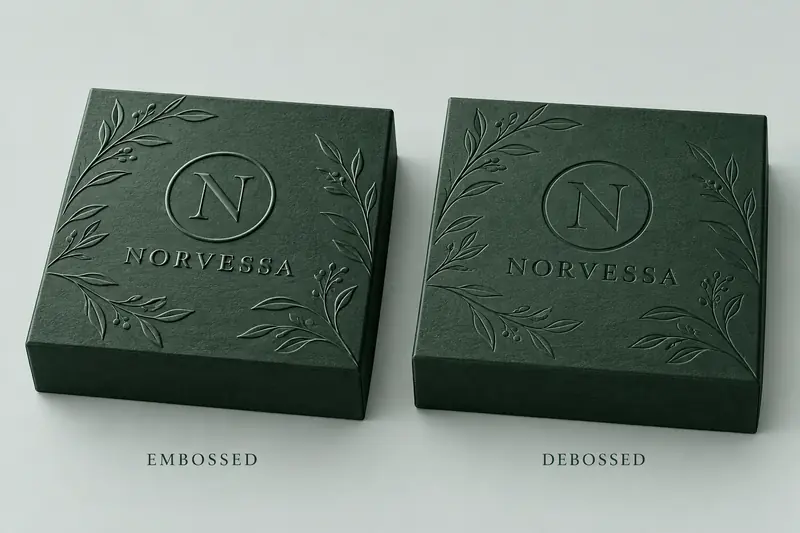
The reverse side may show pressure from the process. This needs consideration on thin board or when the inside face will remain visible. A thicker wrapped board can support a deeper impression although the exact result should still be tested.
Varnish Coatings
Print varnish is a clear liquid applied through the printing process. It may cover the full sheet or selected areas. Gloss, satin and matte versions are available. Varnish adds a thin protective layer to printed packaging and adjusts the level of shine without using a separate laminate film.
The finished surface tends to look softer and less reflective than lamination or a high-gloss UV coating. That can be an advantage for high-volume cartons with a modest budget. The stock absorbs part of the liquid so results vary. Uncoated paper will not usually produce the same crisp shine as a smooth coated board.
Holographic and Speciality Effects
Holographic foil reflects shifting colours as the viewing angle changes. Other speciality choices include pearlescent coatings, glitter effects, textured films and metallic papers. Cosmetic boxes, event packaging and limited-release packs can use these effects to attract more attention on display.
A speciality surface should suit the audience and the artwork. Text can lose clarity when it sits across a broad reflective section. Small accents often give the design breathing room. Availability can differ by supplier so confirm colour, minimum quantity and lead time early.
Matte vs Gloss Packaging Finishes
| Point of comparison |
Matte |
Gloss |
| Appearance |
Low reflection and restrained colour |
Bright shine and stronger colour contrast |
| Common use |
Luxury goods, wellness and minimalist branding |
Food, toys, promotions and image-led artwork |
| Under lighting |
Less glare |
More reflection |
| Design pairing |
Foil or Spot UV can create contrast |
Bold print can remain the main feature |
Neither option is automatically more premium. These packaging finishes serve different visual goals. Matte suits some brand systems while gloss suits others. View a finished sample in the same type of lighting used in the shop or product photography setup. Also check how the surface behaves when handled.
Coating vs Lamination
A liquid coating is spread across the printed surface during the finishing stage. Lamination places a separate film over the surface. Both options can change the level of shine and provide some print protection. However, each uses a different material and application process.
| Feature |
Coating |
Lamination |
| Form |
Liquid applied to the sheet |
Film bonded to the sheet |
| Typical feel |
Lighter and closer to the paper |
Smoother with a more noticeable surface layer |
| Visual range |
Matte, satin, gloss or selective effects |
Matte, gloss, soft-touch and speciality films |
| Selection factor |
Board, print method and required sheen |
Durability target, feel and recyclability pathway |
The most suitable choice depends on the full pack rather than appearance alone. Ask whether the treatment affects gluing, folding, recycling or product contact. A supplier can then match the process to the construction.
Which Finishes Suit Cardboard, Kraft and Rigid Boxes?
Cardboard Folding Cartons
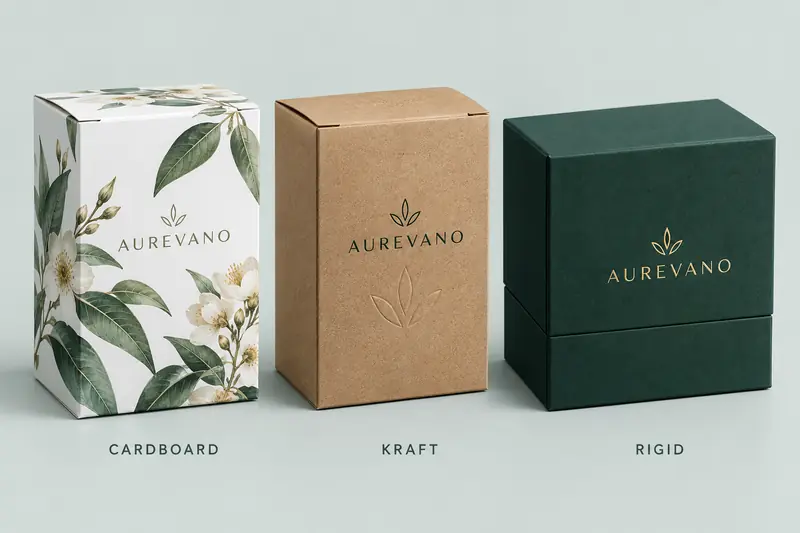
Folding cartons accept a broad range of packaging finishes. Matte or gloss lamination can cover the outside while varnish and aqueous coatings support lighter commercial applications. Foil, embossing and Spot UV can highlight selected artwork. Fold lines and glue areas need to be allowed for in the production file.
Kraft Packaging
Kraft board keeps its natural brown shade and shows some of the paper fibres through the surface. Varnish, clear coatings, debossing and small foil details can suit its natural look. A layer of white ink may help lighter colours appear more clearly. Lamination gives the board a smoother surface but can reduce some of its raw paper feel.
Rigid Boxes
Rigid boxes with logo in Sydnay are often wrapped with printed or coloured paper. Soft-touch and matte films are widely used on the wrap. Foil, embossing and debossing can add tactile detail to lids, sleeves and magnetic closures. The wrap material and the underlying board affect how sharply a pressed feature appears.
Food Packaging Considerations
Food packs need more than an attractive surface. The complete format must be assessed for its intended product and conditions of use. Direct contact, temperature, grease, moisture, storage time and filling method can all change the specification.
A decorative treatment on the outside is not proof that the pack is suitable for food contact. Inks, coatings, adhesives, films and inner barriers must be reviewed as part of the whole structure. Tell the supplier how the packaging will be used and ask which material specification suits those conditions. Provide clear details about whether food is wrapped, placed in an inner bag or touches the board.
Greasy bakery items may need a suitable liner or barrier. Chilled and frozen products can expose a carton to condensation. Hot contents create another set of demands. Samples should be tested with the actual product and packing process before a larger order is approved.
Eco-Friendly Finishing Options
Environmental claims need to consider the finished item rather than one component in isolation. Some packaging finishes add films while others use a liquid coating. A plain paper stock or a light water-based treatment can keep the finished pack simpler. Film-free options can be worth investigating where the required performance allows them.
Recyclability depends on the material combination and the collection systems available to the end user. A small foiled area may be treated differently from a fully laminated surface. Recycling services and accepted materials are not the same across every Australian council area. Avoid broad claims unless there is evidence for the exact pack.
Using less material can be as important as selecting a different treatment. Keep the box close to the product size. Limit decorative layers that do not serve the design. Ask whether a lower-coverage effect could achieve the same visual result. A simple pressed logo or one-colour artwork can feel more natural than a design covered with extra effects.
How to Choose a Finish for Your Product
- Start with the sales setting. Consider retail lighting, ecommerce photography, transport and the way customers will handle the box.
- Set one main goal. Decide whether the priority is print protection, vivid colour, low glare, tactile appeal or a highlighted logo.
- Confirm the material. A finish cannot be selected properly without knowing the board, wrap or paper surface.
- Review the artwork. Fine lines, large ink areas and details near folds may affect the available processes.
- Consider the packed product. Food, cosmetics, chilled goods and heavy products may introduce technical requirements beyond appearance.
- Set a realistic budget. Dies, screens and extra production passes add setup costs. Use premium effects where they have the greatest impact.
- Check a sample. Screen colours cannot show the true shine, texture or depth. A physical mock-up provides better evidence.
Expert Tip: Ask to see the finish on the same board or a closely matched stock before approving production. Colour, shine and texture can appear different across coated cardboard, natural kraft paper and rigid box wrap.
Create a short brief before asking for prices. Include the box dimensions, quantity, board preference, print colours and delivery postcode. Attach artwork or a clear visual reference. Mention which areas should have a special treatment. These details help the supplier recommend packaging finishes that can be produced reliably.
How Finishes Affect Price and Production
Every added process can influence the unit cost and setup charge. Lamination and coatings add materials and machine time. Foil, embossing and debossing normally require purpose-made tooling. Spot treatments need separate artwork and careful alignment.
Quantity matters because setup costs are spread across the run. A complex effect may be expensive for a very small order but more manageable per box at a larger volume. The finished area can also affect cost. A small foil logo usually uses less material than a broad metallic panel.
Extra stages may extend the manufacturing schedule. Some film types and foil colours may need to be ordered specifically for the job. Detailed artwork can require a trial before the main run. Allow time for dieline checks, proof approval and sample review. Tell the supplier about a launch date at the quoting stage rather than after artwork approval.
Cost matters but the finish also needs to suit the material, artwork and way the box will be handled. A finish that scuffs during packing may lead to waste. An elaborate feature that customers barely notice may not earn its place either. Compare the expected appearance, performance and production cost together.
Plan the Surface Around the Whole Pack
A successful box combines structure, material, print and finishing in one practical design. Start with the product and the way it will be packed. Then choose one or two surface effects that support the brand. Fine Packaging can help Australian businesses compare stocks, printing and packaging finishes for custom box projects. For free quotes and Australia-wide free shipping details contact Fine Packaging at support@finepackaging.com.au.
Frequently Asked Questions
Which packaging finish is best for printed boxes?
The best option depends on the box material, artwork and intended presentation. Matte lamination suits designs that need a soft low-shine surface. Gloss lamination can make colours and photographs appear brighter. You can draw attention to a logo or small design feature with Spot UV, foil stamping or embossing.
Can I combine more than one finish on the same box?
Yes. You can pair a soft matte base with shiny UV accents or foil so key design elements catch the light. Embossing may also be aligned with printed or foiled elements. Keeping the design to a main surface treatment and one highlighted detail can make the finished box feel more balanced and easier to recognise.
Which finishes work well on kraft packaging?
Kraft packaging can use varnish, clear coating, debossing, foil and selected print effects. The natural brown surface changes how some ink colours appear. A white ink base can help pale colours show more clearly on brown kraft paper. Reviewing a printed kraft mock-up helps you judge the colour and detail before approving the full order.
Do packaging finishes make cardboard boxes waterproof?
No. Lamination and certain coatings can improve resistance to light moisture and everyday handling but they do not make a cardboard box completely waterproof. Packaging that may face condensation, grease or wet conditions needs a structure and barrier selected for that particular use.
Can finished packaging still be recycled in Australia?
Recycling suitability comes down to the combination of board, glue, coating and decorative features in the finished package. Local collection services can also differ between councils. Ask about film-free treatments or lower-coverage effects if recyclability is a priority. Any recycling statement should relate to the finished packaging rather than the paperboard alone.