How to Choose Custom Packaging for Your Product in Australia
Choosing packaging involves more than finding a box that looks good. The right pack should protect your product through storage and delivery while supporting your brand and remaining practical to use. This guide explains how to choose custom packaging for products sold in Australia. It covers sizing materials box styles printing and samples. You can also request a free quote from Fine Packaging.
Quick Answer: Start with the product rather than the appearance of the box. Measure the complete packed item and consider its weight fragility and delivery method. Then compare suitable structures such as folding cartons corrugated boxes and rigid boxes. Choose a material that provides enough support and request a sample before approving full production.
Start With the Product You Need to Pack
The product should guide every major packaging decision. A lightweight skincare tube has different needs from a glass candle jar. A pair of earrings needs a much smaller pack than a kitchen appliance. Starting with colours or decorative finishes before understanding the product can lead to a box that looks appealing but does not perform properly.
Check the maximum length width and height of the product rather than measuring only its main body. Measurements should include any caps handles cables accessories wrapping or protective components that will sit inside the box. If several items will be packed together then arrange them in their intended positions before taking measurements.
It is generally better to work with internal box dimensions. These dimensions describe the usable space inside the packaging. External measurements will be slightly larger because they include the thickness of the board and the construction of the box.
How to Work Out the Required Box Size
Record measurements in millimetres and use the complete packed arrangement. The table below shows what should be included for common product formats.
| Product format |
Measurements required |
What to include |
Sizing consideration |
| Single rectangular product |
Length × width × height |
Product and any protective wrapping |
Allow enough room for easy packing and removal |
| Bottle or jar |
Widest diameter × full height |
Cap pump lid and protective insert |
Check the widest point rather than the body alone |
| Several products in one box |
Combined length × width × height |
Every product divider and accessory |
Arrange all items before measuring the full set |
| Product with a fitted insert |
Insert length × width × total packed height |
Product insert tabs and finger access |
The insert affects the final internal box size |
| Ecommerce pack |
Complete packed length × width × height |
Retail box cushioning and shipping protection |
Test the final arrangement inside the mailer |
Note: These measurements provide a starting point rather than a finished production size. Board thickness folds inserts and the required fit can change the final dimensions. Try the finished size with your product before giving the go-ahead for the complete production run.
When learning how to choose custom packaging you should also consider the product shape. A regular rectangular item may fit a straightforward carton. A round bottle an unusually shaped tool or a multi-piece gift set may need a fitted insert to prevent movement. The insert can be made from folded paperboard corrugated board moulded pulp or another suitable material.
Record the Full Packing Details
Prepare a simple list before asking for a quote. It should include:
- Product length width and height
- Total packed weight
- Number of items inside each box
- Fragile points such as glass corners or delicate fittings
- Accessories instructions or promotional material
- Preferred product orientation
- Storage and delivery conditions
- Required order quantity
Accurate information helps a packaging supplier recommend a suitable structure. It also reduces the chance of needing to change the dieline after artwork preparation has started.
Consider Product Weight and Fragility
Weight affects the type and thickness of material required. A lightweight retail product may only need a paperboard folding carton. A heavier item may require thicker board or a corrugated structure that can handle greater pressure during lifting stacking and transport.
Fragility is equally important. Glass ceramics electronics and products with delicate edges may need more than an outer box. An insert can hold the product away from the walls of the pack and reduce movement. Corrugated dividers can separate several items while padded or moulded components may provide added protection for sensitive products.
A snug fit does not mean the box should press tightly against the item. There should be enough room for easy packing and removal. There should not be so much empty space that the product slides around during delivery.
Think About the Entire Distribution Journey
Consider what happens after the product leaves your premises. Will cartons be stacked in a warehouse? Will each product be posted directly to a customer? Will the box travel inside a larger shipping carton? Packaging that works on a retail shelf may not be strong enough to act as a postal box on its own.
Direct-to-customer orders can experience repeated handling across depots and delivery vehicles. A corrugated mailer or protective outer carton may be needed even when the product already has attractive retail packaging. Using separate presentation and transport layers can help preserve the printed box until it reaches the customer.
Decide How the Product Will Be Sold
The sales channel influences the best packaging for a product. A box intended for a shop shelf needs to communicate quickly with customers. It may require clear branding product information and a structure that displays neatly beside competing products.
Online products have different priorities. The customer has already seen the product on a website before the parcel arrives. Protection and an enjoyable unboxing experience may therefore be more important than long shelf-facing panels. A mailer box with a printed interior can create a strong presentation while remaining practical for delivery.
Wholesale products may need packaging that can be packed into master cartons efficiently. Wasted space can increase storage needs and freight volume. If products are supplied to retailers then the individual cartons should also be easy to count stack and place on shelves.
Businesses selling at markets pop-up shops or events may benefit from boxes that are quick to assemble and easy to transport flat. This is why choosing product packaging should involve the people who store pack display and dispatch the goods.
Match the Packaging to the Customer Experience
Think about how the customer opens the pack and removes the product. A simple tuck-end carton may suit an everyday item that needs fast access. A magnetic rigid box may be more appropriate for a premium gift where the opening experience forms part of the purchase.
Packaging should be easy to understand. Customers should not need to tear apart an expensive-looking box just to reach the product. Openings closures inserts and pull tabs should feel deliberate and work without unnecessary effort.
Compare Three Box Structures for the Right Product Fit
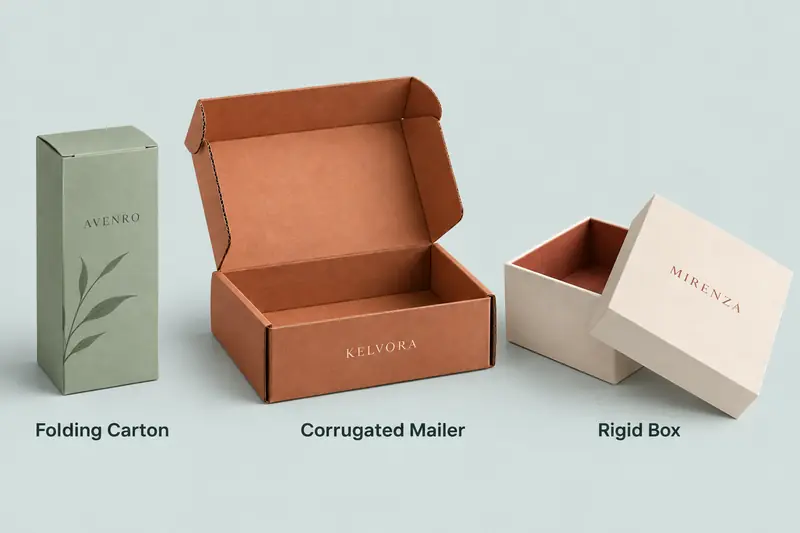
These three packaging groups cover many retail, ecommerce, and presentation requirements. Each one has a different construction and purpose. Comparing them is a useful step when deciding how to select packaging.
| Packaging type |
Construction |
Often suited to |
Main consideration |
| Folding cartons |
Paperboard supplied flat and folded into shape |
Cosmetics food sleeves small retail goods and lightweight products |
Efficient for storage but may need an outer shipper for delivery |
| Corrugated boxes |
Fluted material placed between liner sheets |
Ecommerce orders subscription packs heavier products and shipping |
Offers stronger protection but can occupy more space |
| Rigid boxes |
Dense board wrapped with printed or decorative paper |
Luxury gifts jewellery electronics and premium product launches |
Creates a premium feel but usually costs more and needs extra storage |
No single structure is the best choice for every product. The right option depends on the level of protection presentation and convenience you need.
Folding Cartons
Folding cartons are commonly made from paperboard. They can be printed in full colour and supplied flat for efficient storage. Popular custom box styles include straight tuck end reverse tuck end auto-lock bottom sleeves and crash-lock bottom cartons.
This format can suit cosmetics confectionery supplements small accessories and many other lightweight products. Inserts or partitions can be added when the product needs a more secure fit. The board grade should be selected according to the size and packed weight rather than appearance alone.
Corrugated Boxes
Corrugated material contains a fluted layer that provides cushioning and structural support. It is widely used for shipping ecommerce and heavier goods. Custom mailer boxes with logo, shipping cartons and product trays can all be produced from corrugated board.
The flute profile and board combination affect thickness strength and print appearance. A fine flute may offer a smoother presentation for smaller branded mailers. A stronger grade may be needed for heavier products or demanding delivery conditions.
Rigid Boxes
Rigid boxes are made from thick board that is normally wrapped rather than folded from a single thin sheet. They retain their shape and can provide a substantial premium presentation. Common styles include lift-off lid magnetic closure drawer book-style and shoulder-and-neck boxes.
This format may suit jewellery gifts high-end cosmetics corporate packs and premium electronics boxes. Rigid packaging is not usually supplied flat unless it has been designed as a collapsible structure. Allow enough room to store assembled boxes before choosing this option.
Choose the Right Custom Packaging Material
The material needs to support the product and the intended box style. It also affects printing finishing storage and overall cost. Avoid selecting material based only on a sample photograph because two boards that look similar can behave differently once cut folded and loaded.
Common custom packaging materials include solid bleached paperboard kraft board recycled board corrugated board and rigid greyboard. Each material has useful qualities as well as limitations.
| Packaging type |
Construction |
Often suited to |
Main consideration |
| Folding cartons |
Paperboard supplied flat and folded into shape |
Cosmetics food sleeves small retail goods and lightweight products |
Efficient for storage but may need an outer shipper for delivery |
| Corrugated boxes |
Fluted material placed between liner sheets |
Ecommerce orders subscription packs heavier products and shipping |
Offers stronger protection but can occupy more space |
| Rigid boxes |
Dense board wrapped with printed or decorative paper |
Luxury gifts jewellery electronics and premium product launches |
Creates a premium feel but usually costs more and needs extra storage |
Ask whether the proposed material is suitable for the packed weight and box dimensions. A board that works well for a small carton may bow or lose shape when used for a much larger box.
Consider the Product Environment
Packaging may be exposed to moisture grease heat or cold depending on the product and supply chain. Food packaging requires materials and coatings suited to the intended food-contact application. Chilled goods may also need packaging that performs in changing temperatures and humid conditions.
Tell your packaging supplier where the box will be stored and how it will be used. This information is particularly important for packaging for Australian businesses that ship across areas with different climates and delivery conditions.
Review Environmental Claims Carefully
A natural colour does not automatically make packaging environmentally preferable. Likewise a white or fully printed box is not necessarily unsuitable for recycling. The complete structure matters including coatings windows adhesives magnets inserts and decorative components.
Ask what each part is made from and whether components can be separated after use. Keep disposal instructions accurate and easy for customers to follow. Broad claims such as eco-friendly can be unclear without details explaining the material or design choice behind them.
Plan Printing and Finishes Around the Brand
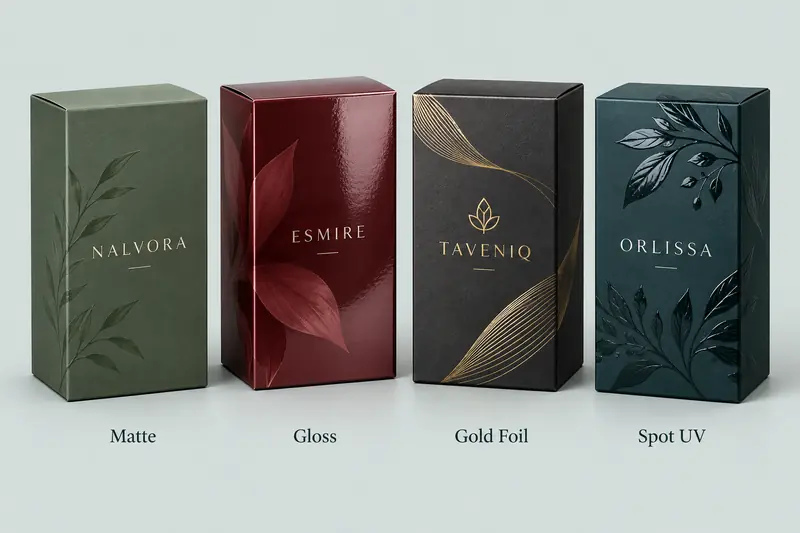
Printing should make the packaging recognisable while keeping important details clear. Begin with your logo brand colours product name and required information. You can then compare printing methods and finishes that suit the material artwork and intended presentation.
| Printing or finish |
Appearance |
Often suited to |
Main consideration |
| CMYK printing |
Full-colour images illustrations and gradients |
Detailed artwork and designs using several colours |
Printed colours can vary across different board surfaces |
| Pantone colour printing |
A specified solid colour with closer matching |
Logos and important brand colours |
Review the colour on the chosen packaging material |
| Matte lamination |
Smooth surface with reduced shine |
Minimal premium and understated designs |
May soften the appearance of printed colours |
| Gloss lamination |
Shiny surface with stronger colour contrast |
Bright graphics photographs and retail packaging |
The reflective surface may show glare under direct light |
| Soft-touch lamination |
Smooth surface with a soft tactile feel |
Luxury gifts cosmetics and premium product boxes |
Suitability depends on the material and final artwork |
| Foil stamping |
Metallic or coloured detail with a reflective effect |
Logos borders names and selected design elements |
Fine details need artwork suited to the foiling process |
| Embossing or debossing |
Raised or pressed detail on the packaging surface |
Logos patterns and tactile brand elements |
The result depends on board thickness and artwork detail |
| Spot UV |
Gloss applied to selected parts of the artwork |
Logos text patterns and areas needing contrast |
It usually stands out best against a matte surface |
The right option depends on the artwork material and presentation you want to achieve. A proof or sample can help you review colour contrast texture and placement before full production begins.
Packaging artwork may need room for ingredients warnings barcodes batch details recycling instructions or other product information. Confirm what must appear on the pack before the visual design is finalised.
Small text should remain readable after printing. Important details should not sit across folds cut lines glue areas or closure points. A dieline supplied by the manufacturer will show the working panels and production zones.
Check Storage and Assembly Requirements
A box can perform well but still be inconvenient for your team. Before ordering ask how it will arrive and how much space it will require. Folding cartons and many corrugated styles can be supplied flat. Standard rigid boxes generally arrive assembled and need considerably more storage room.
Assembly time also matters. A simple carton may take only a few seconds to open and close. A complex presentation box with several parts may need more handling. Even a small difference becomes significant when staff must pack hundreds or thousands of units.
Test the packing process with the people who will complete the work. Check whether the box opens easily and whether the product can be inserted without damage. Confirm that tabs lock properly and that any adhesive areas are practical to use.
Consider Your Available Packing Space
A small Australian business may not have room for pallets of assembled packaging. Flat-packed options can make stock easier to manage. Larger operations may place greater value on quick assembly because labour time has a greater effect on the overall packing cost.
Your product packaging guide Australia checklist should therefore include storage dimensions cartons per pallet assembly steps and the number of units packed each day.
Balance Order Quantity and Unit Cost
Our guide explaining what custom packaging is covers how made-to-order packs differ from standard options. Custom packaging normally involves setup work such as dieline preparation printing plates cutting tools or machine configuration. These costs are shared across the production quantity. A larger run can reduce the cost per box but ordering more than you can use may create storage issues or leave you with outdated packaging.
Consider how quickly the product sells and whether the artwork is likely to change. A smaller quantity may be sensible for a new product launch. Once demand becomes predictable you can compare larger runs and plan stock more confidently.
Fine Packaging can prepare custom packaging in Australia in a wide range of sizes structures and printed finishes. Share your product measurements packed weight quantity and preferred style when requesting a free quote. This gives the team enough information to suggest a practical starting point.
Order a Sample Before Full Production
A sample helps you check decisions that are difficult to judge from a screen. The type of sample you need will depend on the project stage and the level of confirmation required.
Expert Tip: Test the sample with the exact product and every item that will go inside the finished box. Use the planned insert wrapping instructions and accessories. This simple check can reveal tight areas excess movement or wasted space before the full order enters production.
A plain sample can be used to test dimensions structure and product fit. A digital or printed prototype may provide a closer indication of the artwork and overall presentation. A production sample can offer the most accurate reference but may require more setup time and cost.
Place the actual product and every planned accessory inside the sample. Close the box and handle it as a customer or delivery driver might.
Check the following points:
- The product fits without being squeezed
- Empty space does not allow excessive movement
- The base supports the packed weight
- Tabs and closures remain secure
- The insert holds each component correctly
- The product can be removed without difficulty
- Important artwork appears on the intended panels
- The finished pack fits inside any shipping carton
A sample is especially valuable when ordering a new structure or using unfamiliar materials. Approving a sample can prevent a minor sizing issue from being repeated across the full production run.
Common Packaging Selection Mistakes
Understanding common problems can make choosing product packaging much easier. Most errors occur when appearance is considered before fit strength and everyday use.
Guessing the Box Size
Using an estimated size can create a box that is too tight or unnecessarily large. Measure the complete packed arrangement rather than relying only on dimensions listed by the product manufacturer.
Ignoring the Packed Weight
Dimensions alone do not show how much support the box needs. Two products can occupy the same amount of space while placing very different loads on the base and closures.
Using Retail Packaging as a Shipping Box
A folding carton may present a product well on a shelf but provide limited protection during parcel delivery. Add an appropriate outer mailer or shipping carton when required.
Choosing Too Many Finishes
Foiling can add shine while embossed details create texture and spot UV brings gloss to selected artwork. Combining too many treatments may make the design feel crowded and increase production complexity. Choose finishes that support a clear purpose.
Forgetting About Assembly
An elaborate structure can slow down packing. Request an assembled sample and test how long it takes to prepare each box before approving a large quantity.
Ordering Without Testing the Product Fit
A digital dieline shows the box layout but it cannot confirm exactly how your product will fit once the packaging is assembled. A plain sample can reveal movement pressure points and access problems before production.
Leaving Artwork Until the Last Moment
Artwork needs time for preparation review and approval. Delays can occur when fonts images colours or required product details are missing. Begin gathering brand assets while the packaging structure is being developed.
Focusing Only on the Unit Price
The lowest unit price may not provide the best overall result. A cheaper box can become costly if it takes longer to assemble causes product damage or requires additional protective material. Compare the full packing and delivery process rather than the box price alone.
A Practical Checklist for Choosing Product Packaging
Use this checklist when speaking with a packaging supplier:
- Measure the full product in millimetres
- Confirm the total packed weight
- Identify fragile areas and required protection
- Decide whether the box is for retail ecommerce or both
- Select a suitable folding carton corrugated or rigid structure
- Compare material strength print quality and storage needs
- Plan essential artwork before decorative details
- Allow room for product information and barcodes
- Check how the boxes will be supplied and assembled
- Choose an order quantity that suits realistic demand
- Test the product in a physical sample
- Approve the dieline artwork and production details carefully
Choose Packaging That Works Beyond the First Impression
Good packaging should look suitable for the brand but it must also work through packing storage transport display and customer use. The most reliable way to understand how to choose custom packaging is to begin with accurate product information. From there you can compare structures materials and finishes without losing sight of practical needs.
Fine Packaging creates custom boxes for Australian businesses across retail, ecommerce, gifting, food, cosmetics, and many other sectors. Send us your product dimensions packed weight quantity and delivery postcode to request free quotes. We can help you compare suitable materials box styles and printing options. We also provide free shipping across Australia. Send your project details to support@finepackaging.com.au and the Fine Packaging team will help you plan the next step.
Frequently Asked Questions
Start with the internal length width and height required for the packed product. You should also provide the total weight order quantity delivery postcode and intended use. Tell your supplier if the box needs an insert window special closure or protective outer carton. Photos or a physical sample can help when the product has an unusual shape.
Should I measure the product or the finished packed arrangement?
Measure the complete arrangement that will sit inside the box. Include wrapping inserts instructions accessories and any protective components. Measuring the product alone may result in a box that is too small. Internal dimensions should provide a secure fit while still allowing the item to be packed and removed without difficulty.
Which packaging material is best for my product?
The best material depends on the product weight fragility sales channel and required presentation. Paperboard may suit lightweight retail goods. Corrugated board provides added support for shipping and heavier items. Rigid board can create a more substantial presentation for gifts and premium products. A packaging supplier can recommend a suitable grade after reviewing the packed product.
Do retail boxes need separate packaging for delivery?
Retail packaging may need an outer shipping carton when products are sent by post or courier. A folding carton can present the product well but may not handle repeated movement across warehouses and delivery vehicles. A corrugated mailer or shipping box can protect the printed retail pack and help it arrive in better condition.
Is it worth ordering a packaging sample before production?
Yes. A sample allows you to check the dimensions structure and packing process before the complete order is produced. Place the actual product and all planned accessories inside it. Test the closures and check for unwanted movement. A printed sample or proof can also help you review artwork placement colours and finishes.
How can Australian businesses avoid ordering the wrong packaging?
Use accurate internal measurements and confirm the packed weight before requesting a quote. Consider how the boxes will be stored assembled displayed and delivered. Do not approve production from a visual design alone. Review the dieline carefully and test a physical sample whenever possible. Fine Packaging can also help you compare materials box styles and finishing options for your product.